Nutrition for Athletes: Complete Guide to Sports Nutrition, Recovery, and Performance
Nutrition plays an important role in athletic performance, recovery, energy, and overall health. Whether you are a professional athlete, recreational runner, strength-training enthusiast, cyclist, swimmer, or someone who exercises several times a week, the foods and fluids you consume can influence how well you train and recover. Nutrition for Athletes is not simply about eating more protein or following a strict diet. Effective sports nutrition is about providing the body with enough energy and the right balance of carbohydrates, protein, fats, fluids, vitamins, and minerals to support training and everyday health.
An athlete’s nutritional needs can also change from day to day. A demanding training day may require more energy and carbohydrates than a rest day. Similarly, nutrition before exercise can have different goals from nutrition after exercise.
At Ritz Clinic’s Nutritional Counseling, nutritional guidance can be personalized around an individual’s lifestyle, activity level, goals, preferences, and health needs.
The goal is not to create an unnecessarily restrictive diet. Instead, effective sports nutrition should be practical, sustainable, flexible, and appropriate for the athlete’s training demands.
What Is Nutrition for Athletes?
Nutrition for Athletes refers to nutritional strategies designed to support physical activity, exercise, training, recovery, and overall health.
Athletes generally need sufficient amounts of:
- Carbohydrates
- Protein
- Dietary fats
- Fluids
- Vitamins
- Minerals
- Fibre
- Other nutrients obtained from a balanced diet
The exact requirements vary considerably.
A marathon runner, powerlifter, soccer player, swimmer, and recreational gym user do not necessarily need the same diet.
Nutrition can also change according to the athlete’s training phase.
For example, nutritional priorities may differ during:
- Regular training
- High-volume training
- Competition
- Recovery
- Rest days
- Off-season
- Injury rehabilitation
- Weight-management phases
Therefore, sports nutrition should be individualized rather than based on one universal meal plan.
Why Is Nutrition Important for Athletes?
Training creates physical demands.
During exercise, the body uses energy, muscles experience mechanical stress, fluids are lost through sweating, and carbohydrate stores can be reduced.
Appropriate nutrition helps provide the resources needed to support these processes.
Good nutrition can help athletes:
- Meet energy needs
- Support training
- Maintain muscle
- Replenish carbohydrate stores
- Support recovery
- Maintain hydration
- Support immune function
- Maintain healthy bones
- Support normal physiological function
However, nutrition is only one part of athletic performance.
Training quality, sleep, recovery, genetics, technique, psychology, and injury status also influence performance.
A good nutrition plan should therefore complement a well-designed training program rather than attempt to compensate for poor recovery or excessive training.
Energy Needs for Athletes
One of the most important principles of sports nutrition is adequate energy intake.
The body needs energy for more than exercise.
Energy is required for:
- Breathing
- Heart function
- Brain function
- Digestion
- Temperature regulation
- Daily movement
- Exercise
- Recovery
- Tissue maintenance
Athletes who consistently consume less energy than they need may experience reduced training capacity and difficulty recovering.
Low energy availability can affect several aspects of health and performance.
Possible signs of inadequate energy intake can include:
- Persistent fatigue
- Reduced training performance
- Poor recovery
- Increased irritability
- Difficulty concentrating
- Frequent illness
- Changes in menstrual function in some athletes
- Unintentional weight changes
- Reduced motivation
The solution is not always simply to eat more of one food.
A nutritional assessment can help determine whether overall energy intake and food quality are appropriate for the athlete’s activity level.
Carbohydrates for Athletes
Carbohydrates are an important source of energy during many types of exercise.
They can be particularly important for activities involving moderate-to-high intensity or prolonged exercise.
Carbohydrate-rich foods include:
- Oats
- Rice
- Potatoes
- Whole-grain bread
- Pasta
- Fruit
- Beans
- Lentils
- Cereals
- Milk and yogurt
The amount an athlete needs depends on factors such as:
- Training duration
- Training intensity
- Body size
- Sport
- Competition schedule
- Overall energy requirements
For example, an endurance athlete may require substantial carbohydrate intake during periods of high training volume.
A person doing short, low-intensity workouts may have different needs.
Why Are Carbohydrates Important?
During exercise, carbohydrates can contribute to energy production.
The body stores carbohydrate primarily as glycogen in muscles and the liver.
During prolonged or intense activity, these stores can become depleted.
Replenishing carbohydrate after demanding exercise can therefore support recovery and preparation for future training.
This is especially relevant when an athlete has another demanding session within a short period.
Protein for Athletes (Nutrition for Athletes)
Protein plays an important role in maintaining and repairing body tissues.
For athletes, protein is particularly relevant because training can increase the need to support muscle repair and adaptation.
Protein-rich foods include:
- Eggs
- Fish
- Chicken
- Turkey
- Lean meat
- Greek yogurt
- Milk
- Cottage cheese
- Tofu
- Tempeh
- Lentils
- Beans
- Chickpeas
- Nuts and seeds
Protein requirements vary according to body size, training type, age, total energy intake, and goals.
Resistance-training athletes may have different requirements from endurance athletes.
Instead of focusing only on a large amount of protein at dinner, athletes can distribute protein across meals and snacks throughout the day.
A practical meal pattern might include a protein source at:
- Breakfast
- Lunch
- Dinner
- One or more snacks
This approach can make it easier to meet total daily protein needs.
Protein After Exercise
Post-exercise nutrition is often discussed because exercise creates a period in which the body needs to recover.
A meal or snack containing protein after training can contribute to the nutritional needs of recovery.
Examples include:
- Greek yogurt with fruit
- Eggs with toast
- Chicken with rice
- Tofu with noodles
- Milk with cereal
- Cottage cheese with fruit
- Beans with potatoes
- A balanced sandwich
The best choice depends on the athlete’s preferences, schedule, tolerance, and overall diet.
A protein shake is not automatically better than whole foods.
Supplements can be convenient, but a balanced diet can provide protein through many ordinary foods.
Healthy Fats for Athletes
Dietary fats are essential nutrients.
They contribute to:
- Energy
- Cell structure
- Hormone-related functions
- Absorption of fat-soluble vitamins
- General health
Sources of unsaturated fats include:
- Olive oil
- Avocado
- Nuts
- Seeds
- Nut butters
- Fatty fish
Athletes should not automatically eliminate dietary fat in an attempt to improve performance or lose body weight.
Instead, overall energy intake and dietary quality should be considered.
Very restrictive diets can make it difficult to obtain sufficient energy and nutrients.
Hydration for Athletes
Hydration is another important part of sports nutrition.
The amount of fluid an athlete needs depends on:
- Exercise duration
- Exercise intensity
- Temperature
- Humidity
- Sweat rate
- Clothing
- Body size
- Individual differences
Athletes who train in hot environments may lose considerable fluid through sweating.
Dehydration can affect physical and cognitive performance, particularly during prolonged exercise.
However, drinking excessive amounts of fluid can also be dangerous.
Therefore, hydration should be individualized.
For shorter and lower-intensity workouts, water is often sufficient.
For prolonged or intense exercise, especially in hot conditions, athletes may benefit from a more structured hydration strategy that also considers electrolytes and carbohydrate needs.
Electrolytes and Athletic Nutrition (Nutrition for Athletes)
Electrolytes include minerals such as:
- Sodium
- Potassium
- Magnesium
- Calcium
Sodium is particularly important for fluid balance and is lost through sweat.
The amount lost varies substantially between individuals.
Some athletes are heavy sweaters, while others lose relatively little fluid during the same activity.
For prolonged exercise or heavy sweating, electrolyte replacement may become more relevant.
However, athletes do not automatically need sports drinks for every workout.
For many short sessions, ordinary meals and water can provide adequate nutrition and hydration.
The appropriate strategy depends on exercise duration, intensity, environment, and individual needs.
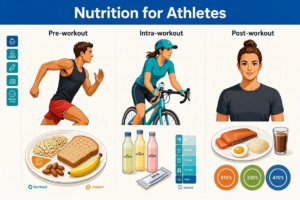
What Should Athletes Eat Before Exercise?
Pre-workout nutrition should provide energy without causing unnecessary digestive discomfort.
A meal eaten several hours before training might include:
- Carbohydrates
- Moderate protein
- Some healthy fat
- Fluids
Examples include:
Oatmeal With Banana and Yogurt
This provides carbohydrates, protein, and fluid.
Rice With Chicken
A balanced meal that can work well several hours before training.
Toast With Eggs and Fruit
A practical breakfast option before morning exercise.
Yogurt With Fruit and Cereal
A lighter option for some athletes.
The closer the meal is to exercise, the more important individual digestive tolerance becomes.
Some people tolerate high-fibre or high-fat foods well before exercise. Others may experience stomach discomfort.
Therefore, athletes should experiment during normal training rather than testing a completely new meal before an important competition.
Nutrition During Exercise
Not every workout requires food during exercise.
For shorter sessions, normal meals before and after training may be sufficient.
However, carbohydrate intake during exercise can become useful during prolonged or high-intensity activity.
This may be relevant for:
- Long-distance running
- Cycling
- Triathlon
- Long tournaments
- Extended hiking
- Endurance events
Possible carbohydrate sources include:
- Sports drinks
- Gels
- Bananas
- Dried fruit
- Energy chews
- Other easily digested carbohydrate foods
The choice depends on personal preference and digestive tolerance.
Athletes should practice their competition nutrition strategy during training.
What Should Athletes Eat After Exercise?
Post-workout nutrition should support recovery.
A balanced post-exercise meal can contain:
- Protein
- Carbohydrates
- Fluids
- Vitamins and minerals
For example:
Chicken + rice + vegetables + water
provides a combination of protein, carbohydrate, micronutrients, and fluids.
Another option could be:
Greek yogurt + oats + berries + nuts
For plant-based athletes:
Tofu + rice + vegetables
can provide a balanced recovery meal.
The key is not one specific food.
The overall diet matters more than a single meal.
Nutrition for Athletes on Rest Days
Rest days are still important nutrition days.
The body continues to recover even when the athlete is not exercising.
Therefore, athletes should not necessarily drastically reduce food intake on every rest day.
Instead, nutrition can be adjusted according to overall activity.
Rest days may still require:
- Protein
- Carbohydrates
- Healthy fats
- Micronutrients
- Fluids
- Adequate total energy
An athlete recovering from a demanding training week may need substantial nutrition even on a day without formal exercise.
Nutrition for Endurance Athletes (Nutrition for Athletes)
Endurance sports can create high energy demands.
Examples include:
- Running
- Cycling
- Triathlon
- Long-distance swimming
- Rowing
- Hiking
Endurance athletes often need to pay particular attention to:
- Total energy intake
- Carbohydrate availability
- Hydration
- Electrolytes
- Recovery nutrition
During high-volume training, insufficient carbohydrate intake can make it difficult to maintain training intensity.
A structured nutrition plan can help athletes match food intake with training demands.
Nutrition for Strength Athletes
Strength athletes have different priorities.
Examples include:
- Powerlifting
- Weightlifting
- Bodybuilding
- Strength training
- Cross-training
Protein intake, adequate energy, carbohydrate availability, and overall diet quality are important considerations.
Carbohydrates can support demanding training sessions, while protein contributes to muscle maintenance and adaptation.
However, strength athletes should not assume that increasing protein indefinitely will produce better results.
Total energy intake, training quality, sleep, and adequate recovery remain important.
Nutrition for Team-Sport Athletes
Team sports often combine endurance, sprinting, strength, and repeated high-intensity activity.
Examples include:
- Soccer
- Hockey
- Basketball
- Volleyball
- Rugby
Nutrition needs may change according to:
- Training day
- Match day
- Tournament schedule
- Recovery day
- Travel
Carbohydrates can be especially important around demanding games and training sessions.
Hydration can also become important when athletes train or compete for extended periods.
Because team-sport schedules can be unpredictable, athletes benefit from having practical meals and snacks available.

Nutrition for Young Athletes
Young athletes have additional nutritional considerations because they are still growing.
Nutrition should support:
- Growth
- Development
- Physical activity
- Bone health
- Training
- Recovery
Young athletes should generally avoid unnecessary restrictive diets unless medically indicated and supervised by an appropriate healthcare professional.
Parents and coaches should focus on balanced meals, regular eating patterns, hydration, and healthy relationships with food.
If a young athlete has concerns about weight, growth, eating behaviour, or performance, professional nutritional guidance can be particularly valuable.
Nutrition for Athletes During Weight Loss (Nutrition for Athletes)
Some athletes want to reduce body weight while maintaining performance.
This requires careful planning.
Aggressive calorie restriction can reduce:
- Training quality
- Recovery
- Energy
- Mood
- Muscle maintenance
- Concentration
Instead, gradual changes may be more appropriate.
A nutritional professional can help determine whether weight loss is necessary and how it can be approached without unnecessarily compromising performance or health.
The goal should not simply be a lower number on the scale.
Athletes should consider:
- Performance
- Strength
- Recovery
- Energy
- Health
- Body composition
- Sport-specific requirements
Nutrition for Athletes During Injury Recovery
Nutrition can also matter during injury rehabilitation.
The body requires energy and nutrients for normal tissue maintenance and recovery.
When an athlete becomes less active because of an injury, they may reduce food intake dramatically.
However, the body may still require adequate nutrition during recovery.
Important considerations can include:
- Adequate total energy
- Sufficient protein
- Fruits and vegetables
- Calcium-rich foods
- Vitamin D sources
- Healthy fats
- Adequate hydration
Nutritional needs depend on the type of injury and the individual.
An athlete recovering from a major injury should consider working with appropriate healthcare professionals rather than following generic internet diets.
Vitamins and Minerals for Athletes
Vitamins and minerals are essential for normal physiological function.
Important nutrients for athletes can include:
- Iron
- Calcium
- Vitamin D
- Magnesium
- Zinc
- Vitamin B12
- Folate
However, more is not necessarily better.
Athletes should avoid taking large doses of vitamins or minerals without a clear reason.
Deficiencies can occur in certain populations, but supplementation should ideally be based on individual needs and, where appropriate, professional assessment.
A varied diet containing vegetables, fruit, whole grains, legumes, dairy or alternatives, nuts, seeds, fish, meat, eggs, or other suitable protein sources can provide many important nutrients.
Iron and Athletes
Iron deserves particular attention because it plays an important role in oxygen transport.
Athletes at higher risk may include:
- People with low dietary iron intake
- Some endurance athletes
- Menstruating athletes
- Vegetarians and vegans
Good food sources include:
- Red meat
- Poultry
- Fish
- Lentils
- Beans
- Tofu
- Fortified cereals
- Dark leafy vegetables
People concerned about iron deficiency should speak with a healthcare professional rather than taking high-dose iron supplements without assessment.
Supplements for Athletes (Nutrition for Athletes)
Sports supplements are widely marketed.
Products may include:
- Protein powders
- Creatine
- Caffeine products
- Electrolyte products
- Sports drinks
- Energy gels
- Vitamin supplements
Some supplements have evidence supporting specific uses, while others have limited evidence.
The first priority should always be a strong nutritional foundation.
Athletes should also consider that supplements can carry risks, including contamination or inaccurate labeling.
Competitive athletes may face additional concerns because some products can contain prohibited substances.
Therefore, athletes should carefully evaluate supplements and seek professional guidance when necessary.
Common Nutrition Mistakes Athletes Make
Even motivated athletes can make nutritional mistakes.
Eating Too Little
Insufficient energy can reduce training quality and recovery.
Focusing Only on Protein
Protein is important, but athletes also need carbohydrates, fats, vitamins, minerals, and fluids.
Ignoring Carbohydrates
Very low carbohydrate intake may not be appropriate for high-volume or high-intensity training.
Drinking Only When Extremely Thirsty
Hydration needs can increase significantly during prolonged exercise or hot conditions.
Using Supplements Instead of Food
Supplements should complement a balanced diet rather than replace it unnecessarily.
Changing Diet Before Competition
Major dietary changes shortly before competition can create digestive problems.
Following Someone Else’s Diet
An athlete’s nutritional requirements are individual.
Restricting Food on Rest Days
Recovery continues even when formal training stops.
How to Build a Balanced Athlete Meal
A simple meal structure can make sports nutrition easier.
Consider including:
A Protein Source (Nutrition for Athletes)
Examples include chicken, fish, eggs, dairy, tofu, beans, or lentils.
A Carbohydrate Source
Examples include rice, potatoes, oats, pasta, bread, fruit, or whole grains.
Vegetables or Fruit
These provide fibre, vitamins, minerals, and other beneficial compounds.
A Source of Healthy Fat
Examples include olive oil, avocado, nuts, or seeds.
Fluids
Water is appropriate for many meals and training situations.
This flexible structure is often easier to maintain than a rigid diet containing exact foods for every meal.
Nutrition Timing for Athletes
Nutrition timing can be useful, but total daily intake generally matters greatly.
Athletes can think about nutrition in several periods:
Before Training
Provide appropriate energy and fluids.
During Training (Nutrition for Athletes)
Replace carbohydrates and fluids when exercise duration and intensity make this useful.
After Training
Provide protein, carbohydrates, and fluids to support recovery.
Between Sessions
Replace nutrients and fluids when another training session is approaching.
Timing becomes particularly important when athletes have multiple training sessions or competitions close together.
How Nutritional Counseling Can Help Athletes
Generic nutrition advice can be useful, but athletes sometimes need more individualized guidance.
A nutritional counseling session can consider:
- Current diet
- Training schedule
- Exercise intensity
- Goals
- Food preferences
- Allergies
- Dietary restrictions
- Lifestyle
- Sleep
- Recovery
- Body composition goals
- Health history
This allows recommendations to become more practical.
For example, a professional may help an athlete determine what to eat before early-morning training, how to prepare meals during a busy workweek, or how to fuel a competition without digestive discomfort.
At Ritz Clinic’s Nutritional Counseling, nutrition guidance can be tailored to individual needs rather than relying on a one-size-fits-all diet.
Creating a Sustainable Nutrition Plan for Athletes
The best nutrition plan is one an athlete can follow consistently.
A sustainable plan should consider:
- Budget
- Cooking ability
- Schedule
- Food preferences
- Cultural eating habits
- Training times
- Work or school
- Travel
- Social activities
For example, an athlete who works long hours may need simple meal-preparation strategies.
Practical options can include:
- Preparing rice or potatoes in advance
- Cooking protein in batches
- Keeping fruit available
- Preparing portable snacks
- Using convenient but nutritious foods
- Planning meals around training
A perfect diet that cannot be maintained is less useful than a good diet that fits the athlete’s actual lifestyle.
Nutrition for Athletes and Sleep (Nutrition for Athletes)
Nutrition and sleep interact with athletic recovery.
Poor sleep can affect appetite, energy, concentration, and training performance.
Athletes should therefore avoid viewing nutrition in isolation.
A recovery-focused lifestyle can include:
- Consistent sleep
- Adequate energy intake
- Balanced meals
- Hydration
- Appropriate training
- Recovery periods
- Stress management
Late-night heavy meals may cause discomfort for some athletes, while others may tolerate them well.
Again, individual tolerance matters.
Nutrition for Athletes During Competition
Competition nutrition should be practiced in advance.
Athletes should know:
- What they will eat
- When they will eat
- How much fluid they need
- Which foods they tolerate
- Whether carbohydrates are needed during the event
- What recovery food will be available afterward
The competition itself is not the time to test an unfamiliar supplement or meal.
A practical competition plan can reduce unnecessary uncertainty.
Frequently Asked Questions About Nutrition for Athletes
What is the best diet for athletes?
There is no single best diet for every athlete. A good sports nutrition plan provides sufficient energy, carbohydrates, protein, healthy fats, fluids, vitamins, and minerals according to the individual’s sport, training, health, and goals.
How much protein does an athlete need?
Protein requirements vary based on body size, training type, age, goals, and total energy intake. Athletes should focus on adequate total daily protein and include protein-rich foods throughout the day.
Are carbohydrates important for athletes?
Yes. Carbohydrates can provide an important source of energy, particularly during prolonged or high-intensity exercise. Requirements vary according to the athlete and training schedule.
Should athletes avoid fat?
No. Dietary fat is an essential nutrient. Athletes can include sources of unsaturated fats such as olive oil, nuts, seeds, avocado, and fatty fish as part of a balanced diet.
What should I eat before a workout?
A suitable pre-workout meal usually contains carbohydrates, some protein, and fluids. The exact food depends on how long before training you eat and what your digestive system tolerates.
What should I eat after exercise?
A balanced post-workout meal can include protein, carbohydrates, fluids, and nutrient-rich foods. Examples include chicken and rice, yogurt with fruit and oats, or tofu with rice and vegetables.
Do athletes need sports drinks?
Not necessarily. Sports drinks can be useful during prolonged or intense exercise, particularly when carbohydrate and electrolyte replacement are needed. For many shorter workouts, water and normal meals may be sufficient.
Do athletes need supplements?
Not automatically. Supplements should not replace a balanced diet. Some supplements may have specific evidence-based uses, but individual needs should be considered carefully.
Can nutrition improve athletic performance?
Appropriate nutrition can support energy availability, training quality, recovery, and overall health. However, performance depends on many factors, including training, sleep, genetics, technique, and recovery.
What should athletes eat on rest days?
Athletes still need adequate nutrition on rest days because recovery continues. Food intake can be adjusted according to activity, but protein, nutrients, fluids, and sufficient energy remain important.
Is nutrition important during injury recovery?
Yes. Adequate energy and nutrients can support normal physiological processes during recovery. Athletes should avoid unnecessarily restrictive diets while recovering from injury.
Can nutritional counseling help athletes?
Yes. Personalized nutritional counseling can help athletes match their diet with training, competition, recovery, health needs, food preferences, and lifestyle.
Should young athletes follow a strict sports diet?
Young athletes are still growing and generally need sufficient energy and nutrients for development as well as exercise. Restrictive diets should not be followed without appropriate professional guidance.
How important is hydration for athletes?
Hydration is important for normal physical function and can become particularly important during prolonged exercise, heavy sweating, and hot conditions. Fluid needs vary between individuals.
Can I lose weight while maintaining athletic performance?
It may be possible, but aggressive restriction can negatively affect energy, recovery, training quality, and health. Weight-management goals should be approached carefully and individually.
Final Thoughts (Nutrition for Athletes)
Nutrition for Athletes is not about following the most restrictive diet or purchasing the most expensive supplements.
Effective sports nutrition starts with the basics: adequate energy, balanced meals, sufficient protein, appropriate carbohydrate intake, healthy fats, hydration, vitamins, and minerals.
From there, nutrition can be adjusted according to the athlete’s sport and goals.
An endurance athlete may need to focus heavily on carbohydrate availability and hydration. A strength athlete may place greater emphasis on protein and overall energy intake. A team-sport athlete may need flexible strategies that work around training and competition schedules.
Most importantly, nutrition should support the whole athlete.
Training, recovery, sleep, hydration, mental wellbeing, and injury management all work together.
A personalized nutritional approach can make sports nutrition easier to understand and more practical to follow.
If you are unsure whether your current diet supports your training, performance, recovery, or health goals, professional nutritional counseling can help you build a strategy based on your individual needs rather than generic diet advice.