What Causes Knee Pain After Sitting for a Long Time? Causes, Treatment, and Relief
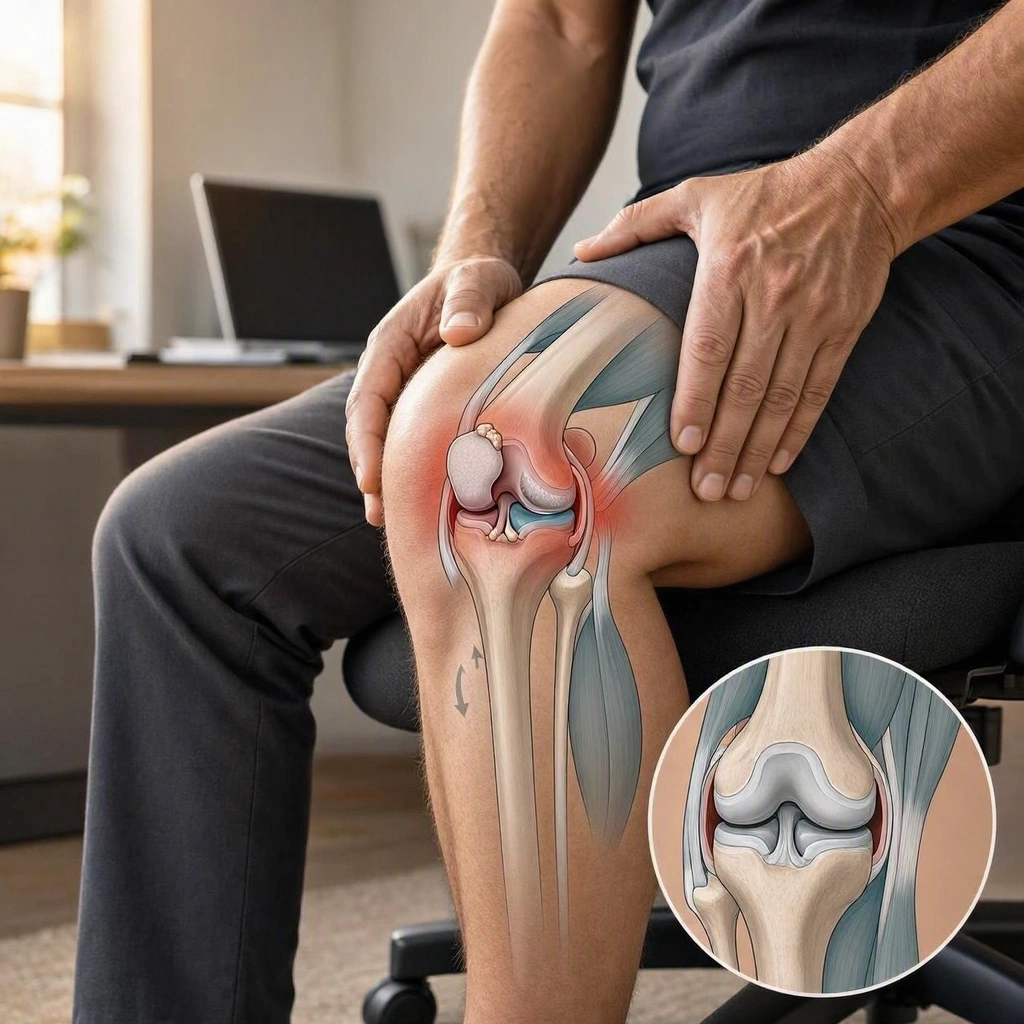
Have you ever stood up after sitting at your desk, driving, or watching a movie and noticed pain or stiffness in your knees? If so, you may be wondering, what causes knee pain after sitting for a long time?
This problem is relatively common and can affect people of different ages and activity levels. You might feel discomfort around your kneecap, stiffness inside the joint, or pain during the first few steps after standing. In some cases, the symptoms improve after walking for a few minutes. However, persistent or worsening pain may indicate an underlying knee condition that needs attention.
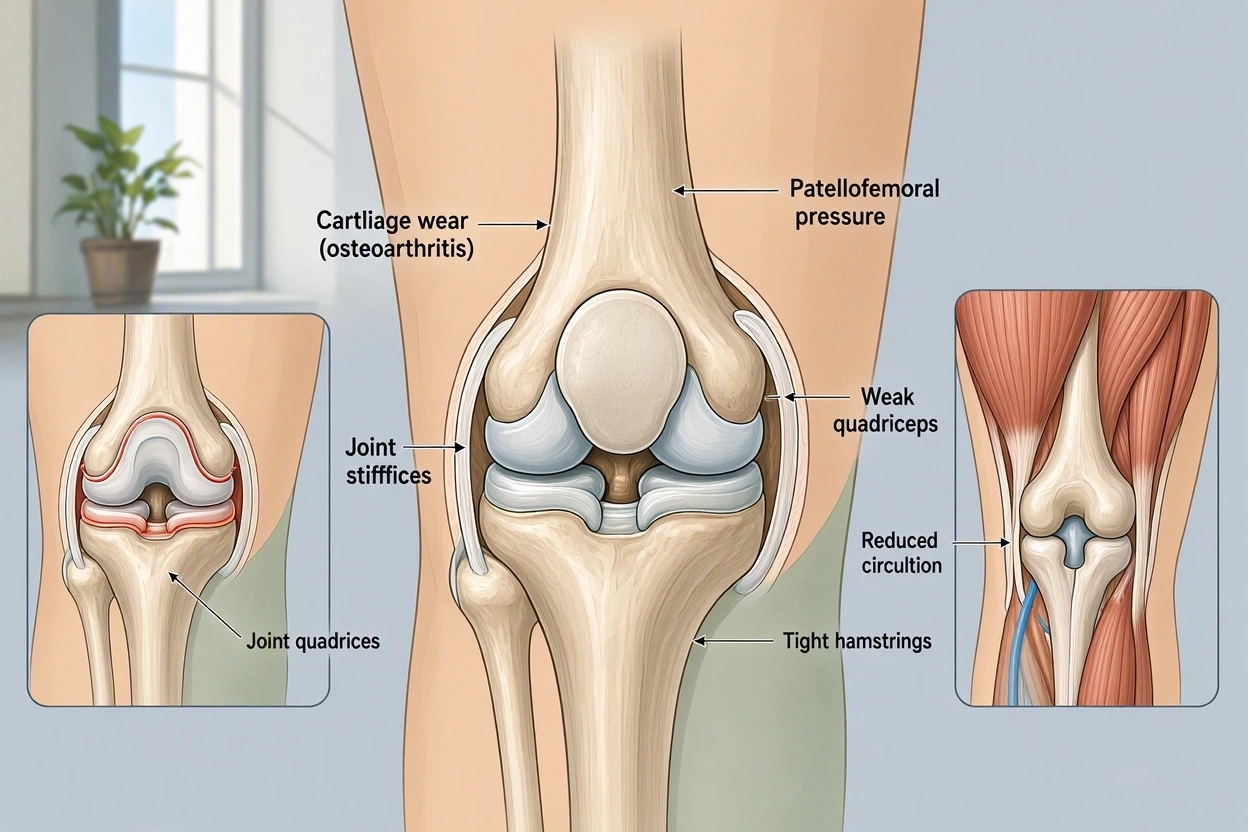
One possible cause is patellofemoral pain syndrome, which affects the area around or behind the kneecap. Knee osteoarthritis, muscle weakness, previous injuries, and other joint problems may also contribute.
Understanding why your knees hurt after sitting can help you make informed decisions about movement, symptom management, and when to seek professional care.
Why Does My Knee Hurt After Sitting for a Long Time?
When you sit for an extended period, your knees often remain bent in the same position. This can place sustained pressure on the joint between the kneecap and thigh bone. If the surrounding tissues are sensitive or the joint is already irritated, discomfort may become noticeable when you stand up.
Remaining still can also make an already stiff joint feel less comfortable. When you begin moving again, your muscles and joints must adjust to the change in position.
Several factors may explain why this happens:
- Prolonged knee bending: Keeping your knees bent for a long time can aggravate pain around the kneecap.
- Joint stiffness: Some knee conditions cause stiffness after periods of inactivity.
- Muscle weakness: Weak quadriceps and hip muscles may affect how your knee handles everyday movement.
- Osteoarthritis: Changes in the joint can cause pain and stiffness after sitting.
- Previous injury: An old injury may leave the knee more sensitive to certain positions or activities.
Pain after sitting does not automatically mean that your knee is damaged. Nevertheless, if the discomfort occurs frequently, limits your movement, or gradually becomes worse, a professional assessment can help identify the cause.
6 Common Causes of Knee Pain After Sitting
1. Patellofemoral Pain Syndrome
Patellofemoral pain syndrome is a common cause of pain around or behind the kneecap. It is sometimes called runner’s knee or, informally, moviegoer’s knee because symptoms may develop after sitting with bent knees for an extended period.
The kneecap moves along a groove in the thigh bone as you bend and straighten your leg. When this area becomes sensitive, activities that load the knee in a bent position may trigger discomfort.
Common symptoms include:
- Pain at the front of the knee.
- Discomfort when standing up after prolonged sitting.
- Pain when climbing or descending stairs.
- Discomfort during squats, lunges, or running.
- Occasional clicking or grinding sensations.
This condition may develop after increasing physical activity too quickly, changing an exercise routine, or experiencing weakness in the muscles around the hips and thighs.
If your knee hurts mainly around the kneecap after sitting, patellofemoral pain may be one possible explanation. However, a clinician should assess your symptoms before confirming the diagnosis.
2. Knee Osteoarthritis
Osteoarthritis is a joint condition involving changes in cartilage and other joint structures. It can lead to pain, stiffness, swelling, and difficulty moving the knee comfortably.
People with knee osteoarthritis often notice that their knees feel stiff after sitting, particularly when they first stand up. The stiffness may improve after gentle movement, although symptoms can return after prolonged activity.
Other signs may include:
- Aching during walking or standing.
- Difficulty using stairs.
- Reduced knee flexibility.
- Swelling around the joint.
- A grinding sensation during movement.
Age is one risk factor, but osteoarthritis can also occur after previous joint injuries or due to other individual risk factors.
Not everyone with knee pain after sitting has arthritis. A healthcare professional can assess your symptoms and determine whether further investigation is necessary.
3. Muscle Weakness and Reduced Mobility
The muscles around your hips and knees help support your body during walking, standing, and other daily activities. When these muscles lack strength or endurance, everyday movements may become more demanding.
People who spend much of the day sitting may also have lower overall activity levels. Although sitting alone does not necessarily cause knee pain, prolonged inactivity combined with reduced strength or an existing joint problem may contribute to discomfort.
You might notice that your knees feel uncomfortable when you stand up, walk after sitting, or begin exercising again.
Depending on the cause, a suitable exercise programme may include quadriceps strengthening, hip strengthening, and gradual increases in daily movement.
The goal is not to push through pain. Instead, activity should progress at a level your knee can tolerate.
4. Tendon Irritation
Tendons connect muscles to bones and help transfer force during movement. Tendons around the knee can become irritated after repetitive loading, sudden increases in exercise, or other physical demands.
Patellar tendon problems commonly cause pain below the kneecap, while other tendon conditions may cause discomfort in different areas.
Symptoms may be more noticeable when you stand up, climb stairs, squat, or return to exercise after a period of rest.
If the pain started after running, jumping, or a change in training intensity, tendon irritation may be worth considering. However, pain after sitting is not enough to confirm a tendon problem.
A healthcare professional can help distinguish tendon-related pain from kneecap pain, arthritis, and other conditions.
5. Previous Knee Injury
An old knee injury may continue to influence how comfortably you sit, stand, and move.
Injuries involving the meniscus, ligaments, tendons, or kneecap can affect joint movement, strength, and stability. Even after the initial injury improves, some people experience stiffness or discomfort during specific activities.
You may be more likely to notice symptoms if you previously injured your knee during sports, had knee surgery, or experienced a significant fall or twisting movement.
If your knee repeatedly swells, locks, gives way, or becomes difficult to straighten, arrange a medical assessment instead of assuming the problem is simply caused by sitting.
6. Bursitis and Other Inflammatory Conditions
Bursae are small fluid-filled sacs that help reduce friction between tissues around joints. When a bursa becomes irritated, it can cause local pain and swelling.
Knee bursitis may cause tenderness around the front of the knee, especially when kneeling or putting pressure on the affected area.
Other inflammatory conditions can also cause knee pain, stiffness, warmth, or swelling.
A suddenly hot, red, swollen knee, particularly when accompanied by fever or feeling unwell, requires urgent medical assessment because infection is one possible cause.
What Does Knee Pain After Sitting Feel Like?
The type and location of your symptoms may provide useful clues, although they cannot establish a diagnosis by themselves.
| Symptom | Possible explanation |
|---|---|
| Pain around or behind the kneecap | Patellofemoral pain syndrome |
| Stiffness when first standing | Osteoarthritis or another joint-related problem |
| Pain below the kneecap | Patellar tendon irritation or another source of front-of-knee pain |
| Pain with swelling after an injury | Meniscus, ligament, or other structural injury |
| Tenderness and swelling near the front of the knee | Bursitis or another inflammatory problem |
| Pain that improves after gentle movement | Stiffness associated with inactivity or certain joint conditions |
Pay attention to how long the pain lasts after standing. Also consider whether it occurs after every period of sitting or only after driving, working at a desk, or sitting with your knees deeply bent.
These details can help a healthcare professional understand your symptoms.
How to Relieve Knee Pain After Sitting
The most appropriate treatment depends on the underlying cause. However, several practical changes may help reduce discomfort associated with prolonged sitting.
1. Take Regular Movement Breaks
If you work at a desk or spend long periods driving, try to avoid remaining in the same position for too long.
When practical, stand up, walk briefly, or gently straighten and bend your knees at comfortable intervals.
There is no single break schedule that works for everyone. The aim is to change position regularly and avoid allowing stiffness to interfere with your daily activities.
If movement causes severe pain, do not force it. Seek advice about the most appropriate activity level.
2. Adjust Your Sitting Position
Your sitting position may influence how much pressure or discomfort you experience around your knees.
Consider these practical adjustments:
- Use a chair that allows your feet to rest comfortably on the floor.
- Avoid keeping your knees tightly bent for extended periods.
- Change position throughout the day.
- Adjust your chair height if it causes uncomfortable pressure around your knees.
- Take breaks during long journeys when it is safe and practical to do so.
You do not need to maintain one perfect sitting posture all day. Regularly changing position may be more useful than remaining rigidly still.
3. Stay Active Within Your Comfort Level
Gentle movement can help maintain mobility and reduce the effects of prolonged inactivity.
Depending on your symptoms, activities such as short walks or gentle range-of-motion exercises may be appropriate.
If running, deep squats, or repeated stair climbing aggravate your knee, temporarily reduce those activities and gradually return to them as tolerated.
Avoid complete inactivity unless a healthcare professional advises it for your specific condition.
4. Use Ice for Pain or Swelling When Appropriate
If your knee is painful or swollen after a recent flare-up or injury, a cold pack wrapped in a towel may help relieve discomfort.
Apply it for around 15–20 minutes at a time. Do not place ice directly on your skin.
If you have reduced skin sensation or circulation problems, ask a healthcare professional whether cold therapy is suitable for you.
5. Consider a Suitable Strengthening Programme
Strengthening the muscles around the hips and knees may improve your ability to perform everyday activities.
Depending on the cause of your pain, a programme may include gentle quadriceps exercises, hip strengthening, and controlled functional movements.
However, exercises should be selected according to your symptoms and physical abilities. If your knee is acutely injured, significantly swollen, locked, or unable to bear weight, seek medical advice before exercising.
Can Physiotherapy Help With Knee Pain After Sitting?
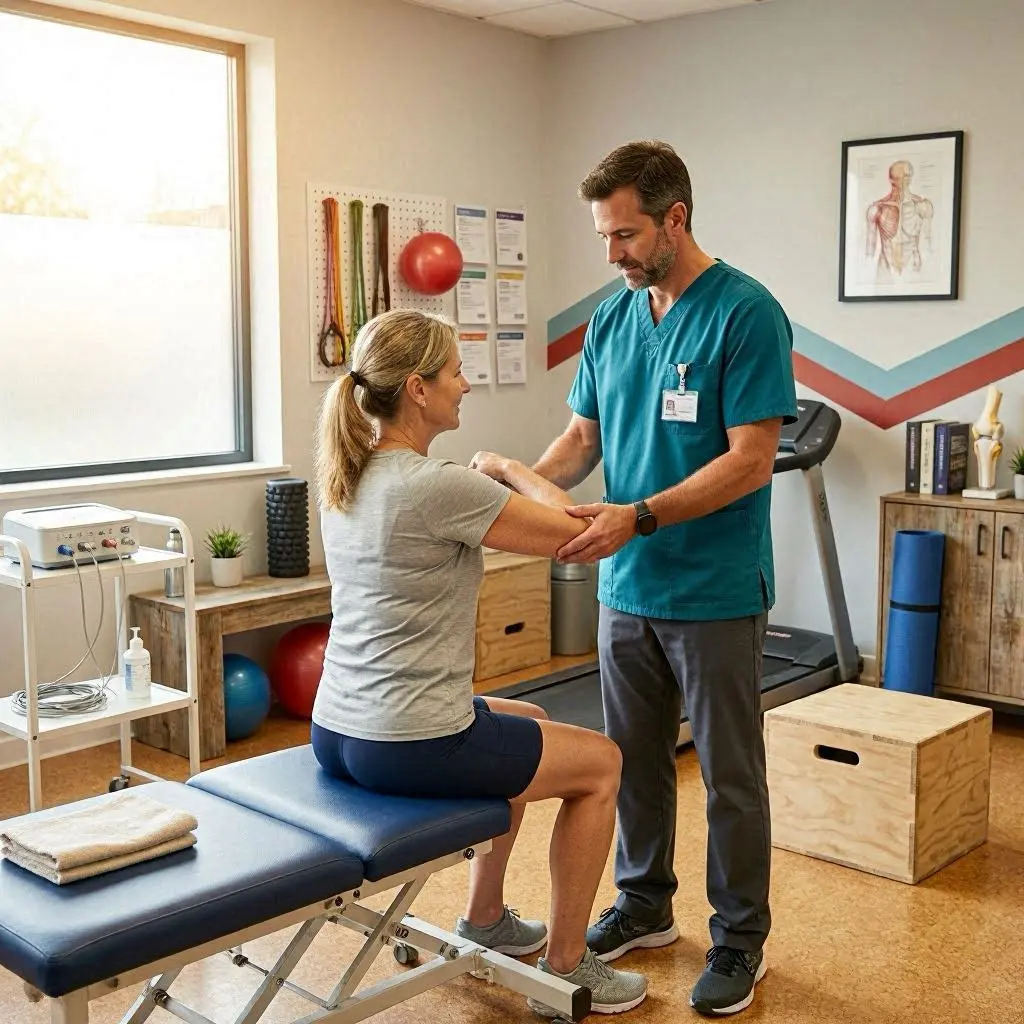
Physiotherapy may help when knee pain is associated with muscle weakness, movement difficulties, certain joint conditions, or recovery after an injury.
A physiotherapist can assess your symptoms, knee mobility, muscle strength, movement patterns, and ability to perform everyday tasks. This helps determine which factors may be contributing to your discomfort.
Depending on the findings, treatment may include:
Therapeutic exercises: Targeted exercises may improve the strength and endurance of the muscles supporting your knee.
Mobility exercises: Appropriate movements may help address relevant stiffness and improve comfortable movement.
Movement education: Guidance can help you adjust daily activities, including sitting, standing, walking, and using stairs.
Activity modification: Your physiotherapist may help you find a suitable balance between movement, exercise, and recovery.
Progressive rehabilitation: If an injury or long-term condition is involved, treatment may gradually rebuild strength and functional ability.
Treatment should be tailored to the individual. For example, someone with patellofemoral pain may need a different programme from someone recovering from a meniscus injury.
If knee pain is affecting your work, mobility, or daily routine, you can learn more about physiotherapy services at Ritz Clinic. A professional assessment can help determine whether physiotherapy is appropriate and whether further medical evaluation is needed.
Simple Exercises That May Support Knee Mobility
When appropriate for your condition, gentle exercises may help maintain movement and build strength.
Quadriceps Tightening
- Sit or lie down with your leg extended comfortably.
- Gently tighten the muscles at the front of your thigh.
- Hold the contraction for a few seconds while breathing normally.
- Relax and repeat if comfortable.
This movement activates the quadriceps without requiring repeated bending of the knee.
Gentle Knee Bends
- Sit in a stable chair with your feet supported.
- Slowly slide one foot backwards, bending the knee within a comfortable range.
- Return to the starting position.
- Repeat gently if the movement does not worsen your symptoms.
Avoid forcing the knee into a painful position.
Short Walks
If walking is comfortable, try brief periods of walking throughout the day rather than remaining seated for several uninterrupted hours.
Begin with a distance you can manage comfortably. Increase the duration gradually if your symptoms remain stable.
Important: These exercises are general examples, not an individual treatment plan. Stop if you experience sharp pain, increasing swelling, or instability. If your symptoms are persistent or unexplained, seek professional guidance before beginning a new exercise programme.
When Should You See a Healthcare Professional?
Occasional mild stiffness may improve after changing position and moving gently. However, persistent knee pain should not be ignored.
Arrange a medical or physiotherapy assessment if:
- Your knee pain continues for several weeks.
- Symptoms repeatedly return after sitting.
- Pain interferes with walking, work, or sleep.
- You experience persistent swelling or reduced movement.
- Your knee feels unstable or repeatedly gives way.
- You have difficulty fully bending or straightening the joint.
Seek urgent medical attention if you cannot bear weight or move the knee, the knee is badly swollen or changes shape, or you develop severe pain following an injury.
A hot, red knee accompanied by fever or feeling unwell also requires urgent assessment.
For additional information about knee symptoms and when to seek care, visit the NHS knee pain guidance.
How to Prevent Knee Pain After Prolonged Sitting
Although not all causes of knee pain can be prevented, a few habits may help support comfortable movement.
Change position regularly. Avoid sitting in the same position for unnecessarily long periods.
Build strength gradually. Appropriate strengthening exercises can improve the capacity of the muscles supporting your knees.
Increase activity progressively. Sudden increases in exercise intensity may aggravate sensitive joints and tendons.
Choose a comfortable sitting arrangement. Make sure your chair and leg position allow you to sit without unnecessary discomfort.
Respond to recurring symptoms. If pain continues to return, consider a professional assessment rather than repeatedly ignoring it.
Maintain a balanced activity routine. Combining suitable movement, strength exercises, and recovery can support overall joint function.
These habits may help, but ongoing symptoms still require attention because knee pain can have several different causes.
Frequently Asked Questions
Why do my knees hurt when I stand up after sitting?
Knee pain when standing up may be related to stiffness, patellofemoral pain syndrome, osteoarthritis, muscle weakness, or another joint condition. If your pain occurs frequently or limits your movement, a healthcare professional can assess the likely cause.
Why does my knee pain improve after walking?
Gentle movement may help reduce stiffness associated with certain joint conditions or prolonged inactivity. However, improvement after walking does not identify the exact cause. If the pain repeatedly returns, consider seeking professional advice.
Is knee pain after sitting a sign of arthritis?
Not necessarily. Osteoarthritis can cause pain and stiffness after sitting, but patellofemoral pain, tendon irritation, muscle weakness, and previous injuries may cause similar symptoms. A clinical assessment is needed to distinguish between these possibilities.
Can sitting too long damage my knees?
Sitting for long periods does not automatically damage the knee joint. However, remaining in one position may aggravate symptoms in people with existing joint sensitivity or stiffness. Regular movement breaks can help reduce prolonged inactivity.
Should I exercise if my knees hurt after sitting?
That depends on the cause and severity of your symptoms. Gentle, comfortable movement may help some people, while certain exercises can aggravate other conditions. Avoid pushing through severe pain, and seek professional advice if you have swelling, instability, or persistent symptoms.
How long does knee pain after sitting last?
The duration varies according to the cause. Mild stiffness may improve after moving, while osteoarthritis, patellofemoral pain, and injuries may require longer-term management. If symptoms persist, worsen, or interfere with daily activities, arrange an assessment.
Can physiotherapy help with knee stiffness after sitting?
Physiotherapy may help when stiffness is related to weakness, movement limitations, or a condition that responds to rehabilitation. A physiotherapist can assess your symptoms and recommend appropriate exercises and activity modifications.
Conclusion
If you experience knee pain after sitting for a long time, several conditions could be responsible. Patellofemoral pain syndrome and knee osteoarthritis are two possible explanations, but muscle weakness, tendon irritation, previous injuries, and other joint problems may also contribute.
Taking regular movement breaks, adjusting your sitting position, and staying active within your comfort level may help reduce discomfort. However, persistent pain, swelling, instability, or difficulty moving your knee deserves professional assessment.
With an appropriate evaluation and treatment plan, many people can improve their mobility and manage knee symptoms more effectively.
Medical disclaimer: This article is for educational purposes only and does not replace professional medical advice, diagnosis, or individualised treatment.