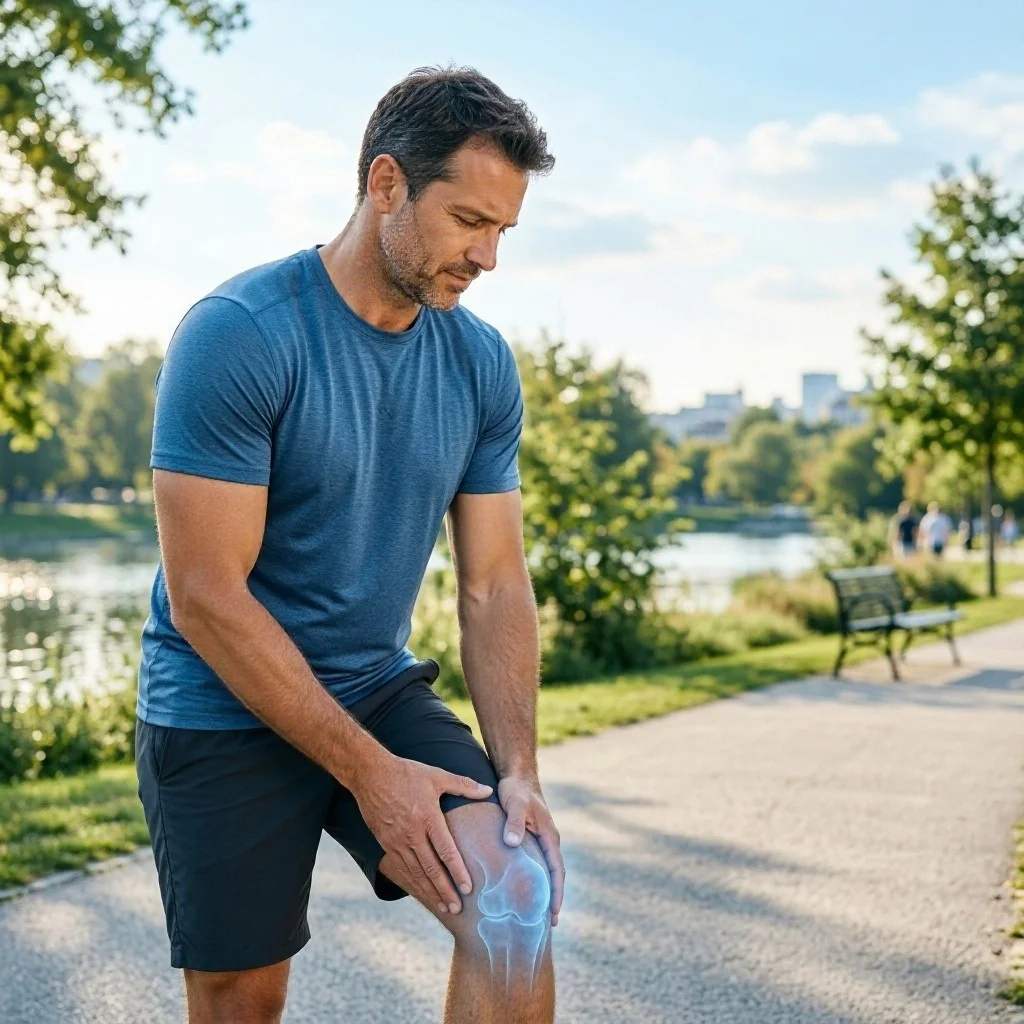
Why Do My Knees Feel Stiff After Walking?
Walking is one of the simplest ways to stay active and maintain good physical health. However, if your knees feel stiff after walking, even a short walk can become uncomfortable. You may notice difficulty bending your knees, tightness around the joint, or discomfort when standing up after sitting down.
Some people experience knee stiffness immediately after walking, while others notice it after longer distances or when they stop moving. In certain cases, the stiffness improves after a few minutes of gentle movement. In others, it is accompanied by swelling, pain, or reduced knee mobility.
So, why do your knees feel stiff after walking?
Several conditions can contribute to this problem, including knee osteoarthritis, muscle weakness, overuse, tendon irritation, and inflammation around the joint. Understanding the cause is important because the right treatment depends on the structures involved.
In this guide, we explain the most common causes of knee stiffness after walking, how to recognize different symptoms, what you can do to improve knee mobility, and when physiotherapy may help.
Why Do My Knees Feel Stiff After Walking?
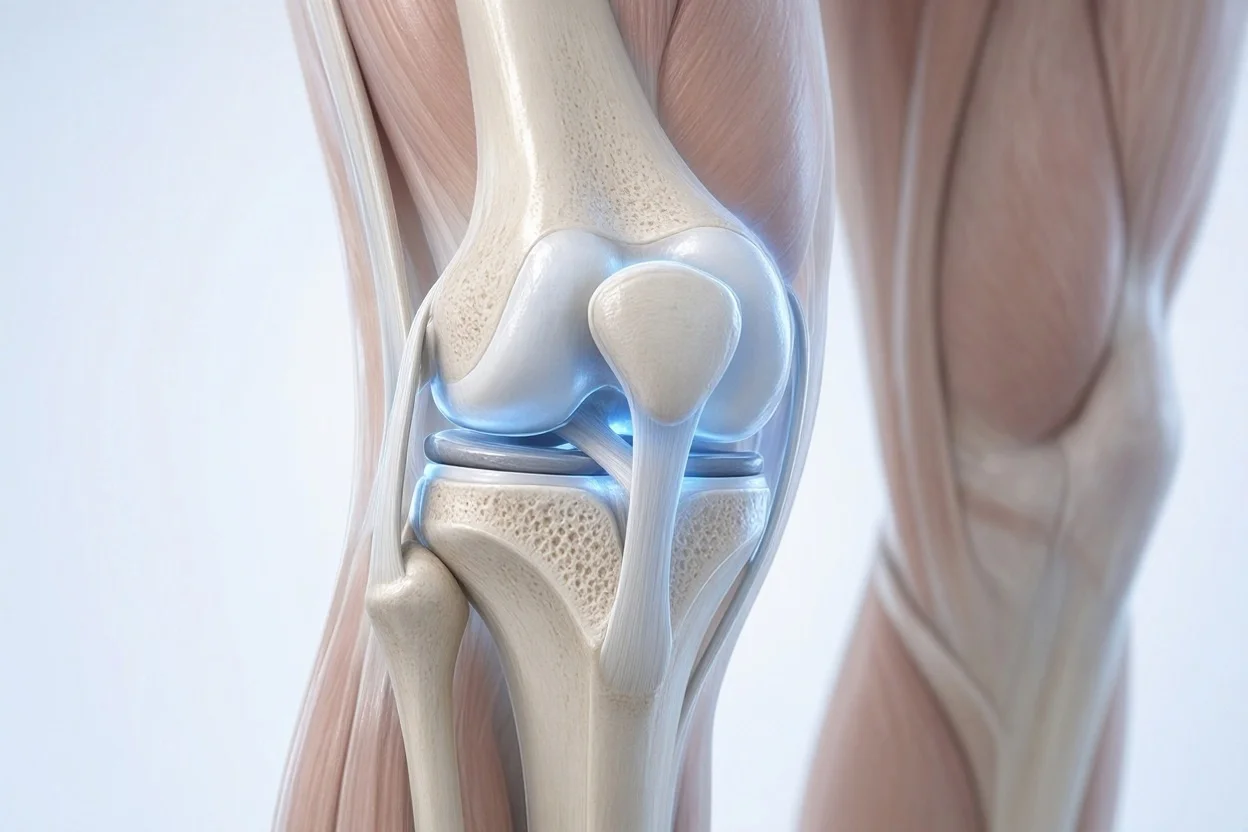
Your knee is a complex joint that connects your thighbone (femur) to your shinbone (tibia). It also includes the kneecap (patella), cartilage, ligaments, tendons, and surrounding muscles.
These structures work together to support your body weight and allow your legs to bend and straighten during walking.
When you walk, your knees repeatedly absorb forces and move through a range of motion. If the joint or surrounding tissues become irritated, inflamed, weak, or overloaded, you may experience stiffness.
Common reasons include:
- Knee osteoarthritis and cartilage changes.
- Muscle weakness around the knee and hip.
- Inflammation inside or around the joint.
- Tendon irritation or overuse.
- Previous knee injuries.
- Reduced joint mobility.
- Increasing walking distance too quickly.
- Prolonged sitting or inactivity before walking.
The timing of your symptoms also matters. For example, stiffness that appears after resting may have a different explanation from stiffness that gradually increases during a long walk.
Common Causes of Knee Stiffness After Walking
1. Knee Osteoarthritis
Knee osteoarthritis is one of the most common causes of persistent knee stiffness, particularly in older adults.
This condition develops when the tissues within the knee joint gradually change, including the cartilage that helps the joint surfaces move smoothly.
As osteoarthritis progresses, the knee may become painful, swollen, and less flexible.
You may notice:
- Knee stiffness after walking.
- Discomfort when climbing stairs.
- Stiffness after sitting for a long time.
- Difficulty fully bending or straightening the knee.
- A grinding or clicking sensation during movement.
- Swelling around the knee.
- Pain when standing up from a chair.
One characteristic feature of knee osteoarthritis is stiffness after periods of inactivity. Some people experience morning stiffness or discomfort when getting up after sitting.
Movement may help ease stiffness, although prolonged or demanding activity can increase pain.
If your knee repeatedly feels stiff after walking and you also experience swelling or reduced mobility, an assessment can help determine whether osteoarthritis is contributing to your symptoms.
2. Muscle Weakness Around the Knee
Your knee depends on surrounding muscles for stability and movement control.
The quadriceps at the front of your thigh and the hamstrings at the back help control knee movement. Your gluteal muscles also contribute to hip stability and lower-limb alignment.
When these muscles are weak or have limited endurance, everyday activities such as walking may place additional demands on the knee joint.
You might experience:
- Knee fatigue after walking.
- A feeling of heaviness around the joint.
- Difficulty walking longer distances.
- Reduced control when going downstairs.
- Stiffness after prolonged activity.
- Discomfort when standing up from a seated position.
Muscle weakness does not always indicate an injury. It may develop after reduced physical activity, prolonged sitting, or a period of recovery following a previous injury.
Gradual strengthening exercises may help improve muscle function and support more comfortable walking.
3. Knee Joint Inflammation
Inflammation inside the knee can contribute to stiffness, swelling, tenderness, and reduced movement.
The joint lining, known as the synovium, produces fluid that helps lubricate the knee. When the joint becomes inflamed, excess fluid may accumulate and make the knee feel swollen or difficult to bend.
Inflammation can occur for several reasons, including:
- Osteoarthritis-related irritation.
- Rheumatoid arthritis.
- Gout.
- Joint injuries.
- Other inflammatory conditions.
Common symptoms include:
- Swelling around the knee.
- Warmth or tenderness.
- Stiffness after walking.
- Pain when bending or straightening the joint.
- Reduced knee movement.
If your knee becomes unusually warm, red, or significantly swollen, especially with fever, seek urgent medical assessment. A joint infection is one possible cause and needs prompt treatment.
4. Patellofemoral Pain Syndrome
Patellofemoral pain syndrome involves discomfort around or behind the kneecap.
The kneecap moves along a groove at the lower end of the thighbone as you bend and straighten your knee.
If this area becomes irritated, activities that repeatedly bend the knee may cause discomfort.
These activities include:
- Walking for extended periods.
- Climbing or descending stairs.
- Squatting.
- Running.
- Getting up after sitting for a long time.
You may experience:
- Pain around the front of your knee.
- Discomfort after longer walks.
- A feeling of tightness around the kneecap.
- Pain when bending your knee.
- Clicking or grinding sensations.
Muscle weakness around the hips and thighs may contribute to altered movement control.
A physiotherapy assessment can help identify whether knee movement, muscle strength, or activity levels are contributing to your symptoms.
5. Meniscus Problems
The menisci are two pieces of cartilage inside each knee that help distribute pressure and absorb forces during movement.
A meniscus injury may occur after twisting the knee, sudden changes in direction, or gradual degenerative changes.
Depending on the severity and location of the injury, you may notice:
- Pain along the inner or outer knee joint.
- Stiffness after walking.
- Swelling that develops after activity.
- Difficulty fully bending or straightening the knee.
- Catching or locking sensations.
- Discomfort when twisting or squatting.
Not every meniscus problem causes significant symptoms. However, persistent locking or an inability to fully straighten your knee should be assessed by a healthcare professional.
6. Tendon Irritation Around the Knee
Tendons connect muscles to bones and help transfer force during movement.
The patellar tendon connects the kneecap to the shinbone, while the quadriceps tendon connects the quadriceps muscle to the upper part of the kneecap.
Repeated loading, jumping, running, or sudden increases in exercise intensity can irritate these structures.
Possible symptoms include:
- Tenderness around the kneecap.
- Pain when walking uphill.
- Discomfort when climbing stairs.
- Stiffness after exercise.
- Pain when bending or straightening the knee.
Tendon-related symptoms may become more noticeable after physical activity or when performing movements that place greater demands on the knee.
7. Bursitis Around the Knee
Bursae are small fluid-filled sacs that help reduce friction between bones, tendons, muscles, and skin.
When a bursa becomes irritated or inflamed, it can cause localized swelling and discomfort.
Knee bursitis may develop after repeated kneeling, direct pressure, an injury, or overuse.
Depending on which bursa is affected, symptoms may include:
- Swelling at the front or side of the knee.
- Tenderness when touching the affected area.
- Discomfort when bending the knee.
- Stiffness during walking.
- Pain when kneeling or putting pressure on the joint.
If swelling is accompanied by redness, warmth, or fever, seek prompt medical evaluation to rule out infection.
8. Reduced Joint Mobility After Prolonged Sitting
Spending long periods sitting can make your knees feel stiff when you start moving again.
During inactivity, your joints move less frequently, and surrounding muscles may become temporarily less flexible.
You may notice stiffness when:
- Getting up from your office chair.
- Walking after a long car journey.
- Standing after watching television.
- Starting a walk after sitting for several hours.
For some people, gentle movement helps reduce this temporary stiffness.
However, if the problem occurs frequently or is accompanied by persistent pain and swelling, an underlying joint or soft tissue condition may need to be assessed.
Why Do My Knees Feel Stiff After Walking but Not During Walking?
This is a common pattern.
You may feel comfortable while walking but notice stiffness when you stop, sit down, or try to stand again.
Several factors may explain this.
Joint irritation: Repeated movement may increase irritation in an already sensitive knee joint. Stiffness can become more noticeable when you stop moving.
Osteoarthritis: People with knee osteoarthritis often experience stiffness after periods of inactivity, even when movement initially feels comfortable.
Muscle fatigue: The quadriceps and surrounding muscles may become tired after prolonged walking, making the knee feel heavy or less stable.
Reduced mobility: If your knee has limited flexibility, repeated activity may make the restriction more noticeable afterward.
Inflammation: Fluid accumulation or irritation within the joint may contribute to stiffness after physical activity.
Pay attention to whether your symptoms disappear after a few minutes or continue for several hours. This information can help a healthcare professional understand your condition.
What Does Knee Stiffness After Walking Feel Like?
Knee stiffness can present differently depending on the underlying cause.
Some people experience tightness, while others describe difficulty moving their knee normally.
Common symptoms include:
- Difficulty fully bending the knee.
- Trouble straightening the leg.
- Tightness around the kneecap.
- Mild swelling after walking.
- A feeling of heaviness in the joint.
- Clicking or grinding during movement.
- Discomfort when standing up after sitting.
- Reduced walking endurance.
Where Do You Feel the Stiffness?
| Location | Possible Causes | Other Symptoms |
|---|---|---|
| Front of the knee | Patellofemoral pain or tendon irritation | Pain around the kneecap |
| Inner knee | Osteoarthritis or meniscus problems | Joint-line tenderness |
| Outer knee | Meniscus or surrounding soft tissue problems | Discomfort during bending |
| Behind the knee | Baker’s cyst or other joint-related problems | Tightness and swelling |
| Entire knee | Osteoarthritis or joint inflammation | General stiffness and reduced mobility |
These patterns are not diagnostic. A physical examination is needed to identify the actual cause.
How to Relieve Knee Stiffness After Walking
The best way to manage knee stiffness depends on its cause and severity.
However, several practical steps may help improve comfort and maintain mobility.
1. Start With Gentle Movement
If your knees feel stiff after walking, gentle movement may help reduce temporary tightness.
Try:
- Slowly bending and straightening your knees while seated.
- Walking at a comfortable pace for a short period.
- Performing gentle ankle movements.
- Changing positions regularly instead of sitting for extended periods.
Avoid forcing movements that cause sharp pain.
2. Adjust Your Walking Distance
If your knees become stiff after longer walks, consider reducing your walking distance temporarily.
You can divide one long walk into several shorter sessions.
For example, instead of walking continuously for 40 minutes, try shorter sessions with breaks between them if this feels more comfortable.
Gradually increase the duration as your symptoms improve.
3. Apply Heat or Cold When Appropriate
Heat may help some people feel more comfortable when their main complaint is stiffness without significant swelling.
A warm compress can be applied for a short period before gentle movement.
Cold packs may be more comfortable when the knee feels irritated or swollen after activity.
Wrap cold packs in a towel and avoid direct contact with the skin.
Stop using either treatment if your symptoms worsen.
4. Avoid Prolonged Sitting
Remaining in the same position for several hours can contribute to temporary knee stiffness.
Try to change positions regularly throughout the day.
If possible, take short movement breaks and perform gentle knee bends within a comfortable range.
5. Wear Comfortable Footwear
Shoes that fit properly and provide suitable comfort can make walking more comfortable.
Avoid footwear that causes discomfort or changes your natural walking pattern.
If you have persistent foot or knee problems, a professional assessment may help determine whether footwear or lower-limb mechanics are contributing to your symptoms.
6. Strengthen the Muscles Around Your Knee
Improving the strength of your quadriceps, hamstrings, and hip muscles may help support knee function.
However, exercise selection should depend on the underlying condition.
If you have significant swelling, severe pain, or a suspected injury, seek an assessment before starting a strengthening program.
Exercises That May Help Knee Stiffness
Appropriate exercises can help maintain knee mobility, improve muscle strength, and support comfortable movement.
The following exercises are general examples for people with mild stiffness who can perform them comfortably.
Stop if you experience sharp pain, increasing swelling, or worsening symptoms.
1. Seated Knee Extensions
This exercise activates the quadriceps muscles at the front of your thigh.
How to perform it:
- Sit upright on a stable chair.
- Keep both feet flat on the floor.
- Slowly straighten one knee.
- Hold the position briefly.
- Lower your foot in a controlled movement.
- Repeat with the other leg.
Avoid forcing your knee into a painful position.
2. Heel Slides
Heel slides help maintain comfortable knee bending.
How to perform it:
- Lie on your back with both legs extended.
- Slowly slide one heel toward your body.
- Allow your knee to bend comfortably.
- Pause briefly.
- Slide your heel back to the starting position.
Keep the movement smooth and controlled.
3. Straight Leg Raises
Straight leg raises help strengthen the quadriceps and support knee control.
How to perform it:
- Lie on your back with one knee bent.
- Keep the other leg straight.
- Tighten the thigh muscle of the straight leg.
- Slowly lift it a short distance.
- Lower it gently.
- Repeat without arching your lower back.
Only perform this exercise if it does not increase your knee pain.
4. Glute Bridges
Your gluteal muscles help stabilize your hips and support lower-limb movement.
How to perform it:
- Lie on your back with both knees bent.
- Place your feet flat on the floor.
- Gently tighten your abdominal and gluteal muscles.
- Lift your hips slowly.
- Pause briefly.
- Lower your hips with control.
Avoid arching your lower back.
5. Gentle Hamstring Stretch
The hamstrings are located at the back of your thigh and help control knee and hip movement.
How to perform it:
- Sit near the edge of a stable chair.
- Extend one leg forward.
- Keep your heel on the floor.
- Maintain a comfortable, upright back position.
- Lean forward slightly from your hips.
- Stop when you feel a gentle stretch behind your thigh.
Do not bounce or force the movement.
6. Supported Mini Squats
Mini squats help activate the muscles around your knees and hips.
How to perform it:
- Stand beside a stable counter or chair.
- Place your feet approximately hip-width apart.
- Hold the support for balance.
- Slowly bend your knees a small amount.
- Keep your movements controlled.
- Return to a standing position.
Avoid deep squatting or movements that increase discomfort. (Knees Feel Stiff After Walking)
Can Physiotherapy Help Knee Stiffness After Walking?
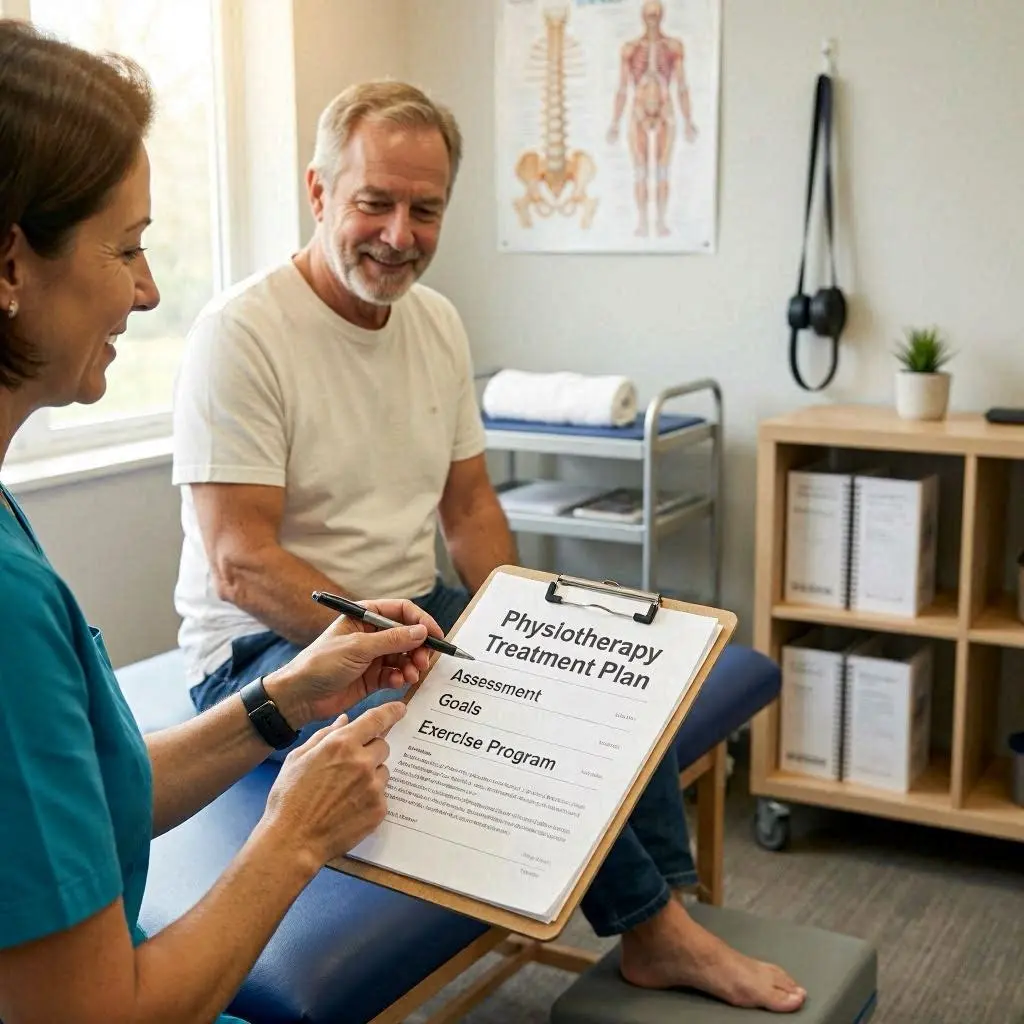
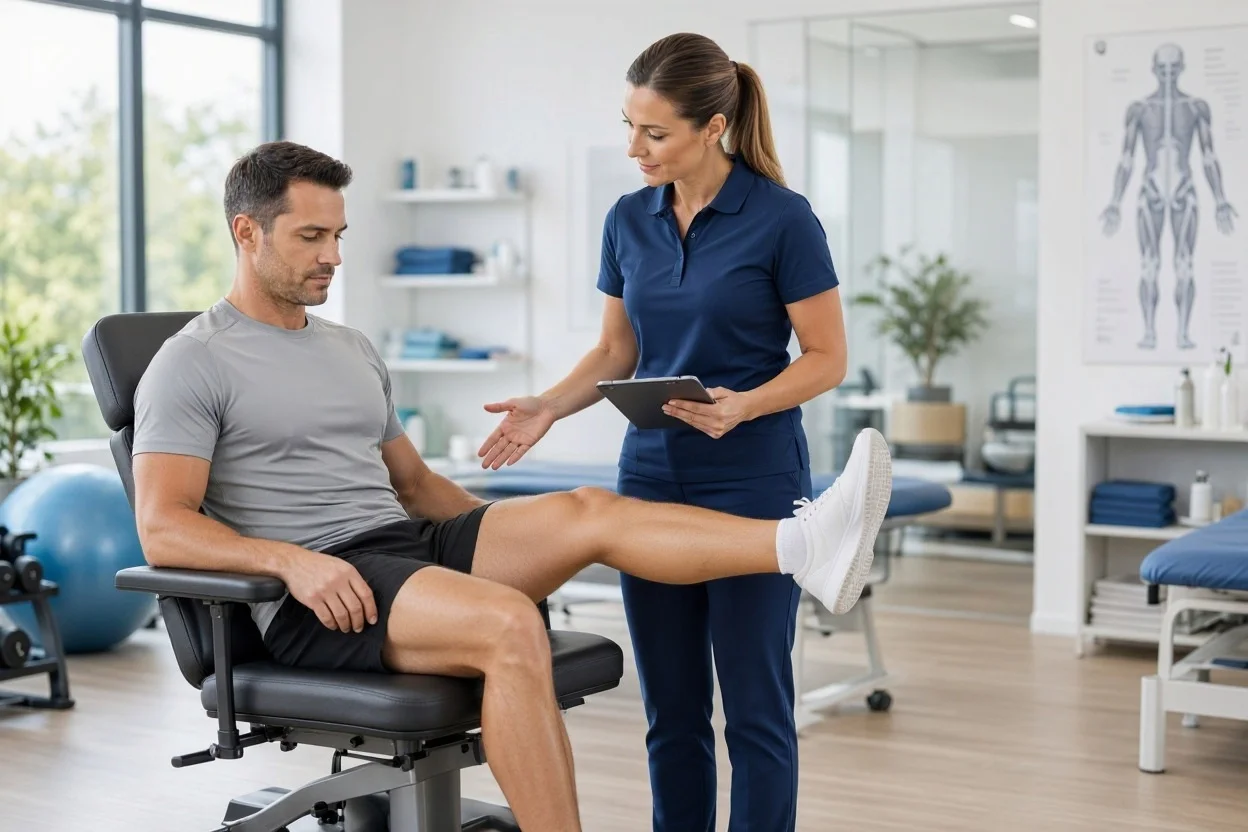
Yes. Physiotherapy can help people experiencing knee stiffness related to muscle weakness, reduced mobility, osteoarthritis, tendon irritation, and certain movement problems.
However, treatment should begin with identifying why your knees feel stiff.
A physiotherapist may assess:
- Knee range of motion.
- Quadriceps and hamstring strength.
- Hip muscle strength and stability.
- Walking patterns and movement control.
- Knee swelling and tenderness.
- Balance and lower-limb coordination.
- Your physical activity levels and previous injuries.
Based on the assessment, your rehabilitation plan may include:
Targeted strengthening: Exercises designed to improve the strength of the quadriceps, hamstrings, and hip muscles.
Mobility exercises: Gentle movements to improve comfortable knee bending and straightening.
Gait assessment: Reviewing your walking pattern to identify movement difficulties that may contribute to knee discomfort.
Progressive rehabilitation: Gradually increasing exercise intensity as your strength and movement tolerance improve.
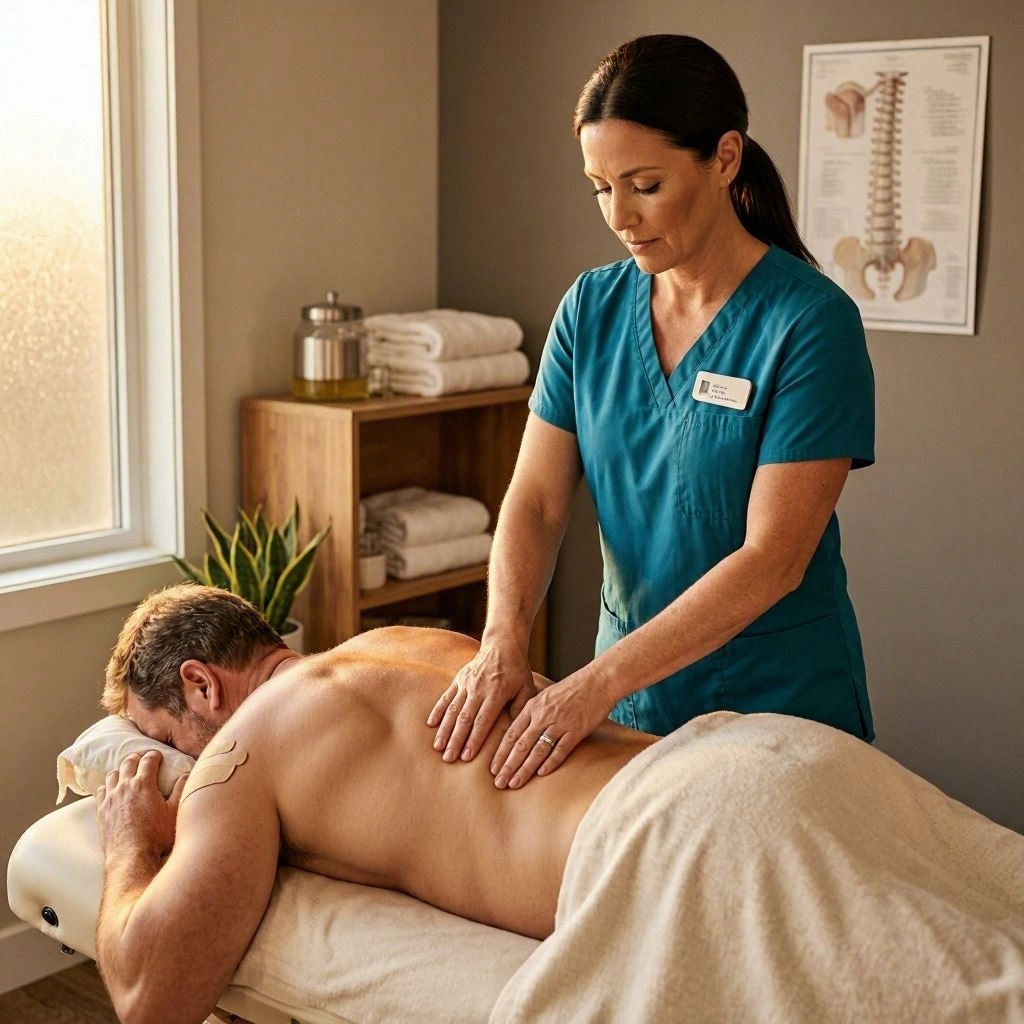
Manual therapy when appropriate: Hands-on techniques may be used alongside exercise when clinically suitable.
Activity modification: Guidance on adjusting walking distance, exercise intensity, and daily activities to avoid unnecessary irritation.
If knee stiffness is affecting your walking or everyday activities, you can learn more about Physiotherapy in Thornhill.
The goal is to improve knee mobility, strengthen the muscles supporting the joint, and help you return to your normal activities with greater confidence.
When Should You See a Healthcare Professional?
Occasional mild stiffness after a longer-than-usual walk may improve with appropriate rest and gentle movement.
However, persistent or worsening symptoms should not be ignored.
Arrange a professional assessment if:
- Your knees repeatedly feel stiff after walking.
- Stiffness lasts for an extended period.
- You experience recurring knee swelling.
- Your knee becomes difficult to bend or straighten.
- Walking or climbing stairs becomes increasingly uncomfortable.
- Your knee feels unstable or gives way.
- Pain begins affecting your sleep or everyday activities.
- You have a history of knee injury and your symptoms return.
Seek urgent medical attention if:
- Your knee becomes suddenly very painful or significantly swollen.
- You cannot put weight on your leg.
- You cannot move or straighten your knee.
- Your knee becomes hot and red, especially if you have a fever.
- You experience severe symptoms following an injury.
These symptoms may indicate an injury or condition that needs prompt medical evaluation. (Knees Feel Stiff After Walking)
How Long Does Knee Stiffness After Walking Last?
Recovery time depends on the underlying cause, the severity of symptoms, and whether the knee has an existing joint or soft tissue condition.
- Temporary stiffness after inactivity: May improve within a short period after gentle movement.
- Muscle fatigue or overuse: May settle over several days with appropriate activity adjustments.
- Tendon irritation: May require several weeks or longer of progressive rehabilitation.
- Meniscus injuries: Recovery varies depending on the type and severity of the injury.
- Knee osteoarthritis: Symptoms may fluctuate over time and often require ongoing management.
- Inflammatory joint conditions: Recovery depends on the underlying condition and appropriate medical treatment.
If stiffness continues, becomes more severe, or affects your ability to walk, a professional assessment can help determine the next steps.
How to Prevent Knee Stiffness After Walking
Although not every cause of knee stiffness can be prevented, certain habits may help maintain joint mobility and reduce unnecessary stress.
Build Leg Strength Gradually
Include appropriate exercises that strengthen your quadriceps, hamstrings, and gluteal muscles.
Strong surrounding muscles help support knee movement and improve lower-limb function.
Warm Up Before Longer Walks
Begin with a few minutes of comfortable walking and gentle movements.
Gradually increase your walking pace instead of starting with intense activity.
Avoid Sudden Increases in Walking Distance
If you have recently started walking for exercise, increase your distance and duration gradually.
Sudden increases in activity may overload tissues that are not accustomed to the additional demand.
Take Regular Movement Breaks
Avoid sitting in the same position for extended periods.
Stand up, change positions, and move gently throughout the day.
Maintain a Comfortable Body Weight
Excess body weight can increase the mechanical demands placed on weight-bearing joints, including the knees.
For people with knee osteoarthritis, appropriate weight management may help reduce symptoms and improve mobility.
Wear Supportive and Comfortable Shoes
Choose footwear that fits properly and feels comfortable during walking.
Replace excessively worn shoes when necessary.
Listen to Your Symptoms
If your knees become increasingly stiff or painful during activity, adjust your walking routine rather than repeatedly pushing through discomfort.
Early attention to symptoms can help prevent some problems from becoming more difficult to manage.
Frequently Asked Questions About Knee Stiffness After Walking
Why Do My Knees Feel Stiff After a Long Walk?
Long walks place repeated demands on the muscles, tendons, and joints around your knees. Muscle fatigue, overuse, osteoarthritis, and joint irritation may contribute to stiffness after prolonged walking.
Is Knee Stiffness After Walking a Sign of Arthritis?
It can be. Knee osteoarthritis commonly causes stiffness after physical activity or periods of inactivity. However, muscle weakness, tendon irritation, previous injuries, and other joint conditions can produce similar symptoms.
Why Are My Knees Stiff When I Stop Walking?
When you stop moving, stiffness may become more noticeable because an irritated joint or surrounding tissue is no longer moving through its usual range. Osteoarthritis and temporary muscle fatigue are possible explanations.
Should I Keep Walking If My Knees Feel Stiff?
Gentle walking may be appropriate when stiffness is mild and does not increase with movement. However, reduce your activity if walking causes increasing pain or swelling. Persistent symptoms should be assessed by a healthcare professional.
Can Weak Muscles Cause Knee Stiffness?
Yes. Reduced quadriceps, hamstring, and hip muscle strength may affect knee stability and movement control. Strengthening these muscles may improve function and help make walking more comfortable.
Does Knee Stiffness Mean I Have Osteoarthritis?
No. Although osteoarthritis is a common cause of knee stiffness, it is not the only possibility. A clinical assessment can help distinguish between joint degeneration, inflammation, muscle problems, and other conditions.
What Is the Best Exercise for Stiff Knees?
There is no single exercise that is best for everyone. Seated knee extensions, heel slides, straight leg raises, and gentle strengthening exercises may help some people. The appropriate choice depends on your symptoms and underlying condition.
When Is Knee Stiffness Serious?
Knee stiffness needs prompt assessment when it occurs with significant swelling, severe pain, redness, warmth, fever, inability to bear weight, or difficulty moving the joint. (Knees Feel Stiff After Walking)
Conclusion
Knee stiffness after walking can develop for several reasons, including osteoarthritis, muscle weakness, inflammation, tendon irritation, meniscus problems, and reduced joint mobility.
The timing of your symptoms, the location of discomfort, and any accompanying signs such as swelling or instability can provide useful clues about the possible cause.
Gentle movement, appropriate activity adjustments, comfortable footwear, and targeted strengthening exercises may help improve knee function in some cases.
However, persistent stiffness, recurring swelling, worsening pain, or difficulty walking should be professionally assessed.
Physiotherapy can help identify movement limitations, improve muscle strength, and develop a rehabilitation plan based on your individual needs.
With the right approach, many people can improve their knee mobility and return to walking more comfortably.
Summary Table
| Key Point | What You Should Know |
|---|---|
| Common causes | Osteoarthritis, muscle weakness, inflammation, and overuse |
| Other possible causes | Meniscus problems, tendon irritation, and bursitis |
| Stiffness after resting | May be associated with osteoarthritis or reduced mobility |
| Stiffness after long walks | May involve muscle fatigue or joint irritation |
| Helpful exercises | Heel slides, knee extensions, glute bridges, and mini squats |
| Physiotherapy | Can improve strength, mobility, and movement control |
| Warning signs | Severe pain, significant swelling, fever, or inability to bear weight |