Why Does My Neck Pain Spread Into My Shoulder? Causes, Treatment, and Relief
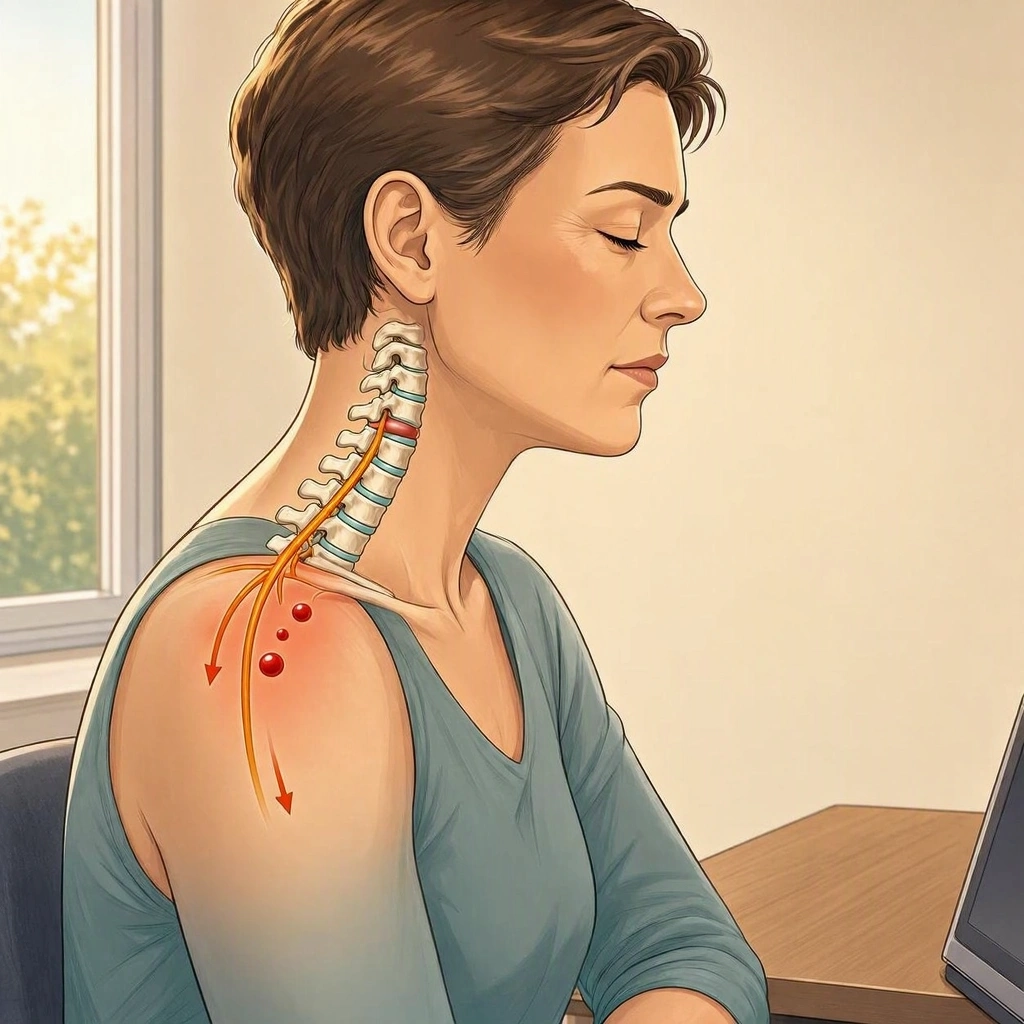
Neck pain that spreads into the shoulder can make everyday activities uncomfortable. You may notice a dull ache near the base of your neck, tightness across the top of your shoulder, or sharp pain when turning your head. In some cases, the discomfort may travel down your arm and cause tingling, numbness, or weakness.
So, why does neck pain spread into your shoulder? Common causes include muscle strain, prolonged sitting, irritated nerves, age-related changes in the cervical spine, and certain shoulder conditions. The source of the pain is not always obvious because the neck and shoulder share muscles, joints, and nerve pathways.
Understanding the possible causes can help you decide how to manage your symptoms and when to seek professional care. This article explains why neck pain may spread into the shoulder, what symptoms to look for, and how physiotherapy may help.
Why Does Neck Pain Spread Into the Shoulder?
The neck, also called the cervical spine, contains seven vertebrae, intervertebral discs, joints, muscles, ligaments, and nerves. These structures work together to support your head and allow you to move comfortably.
Several muscles connect the neck to the shoulders and upper back. As a result, irritation in the neck muscles or joints may cause pain that you feel across the shoulder area.
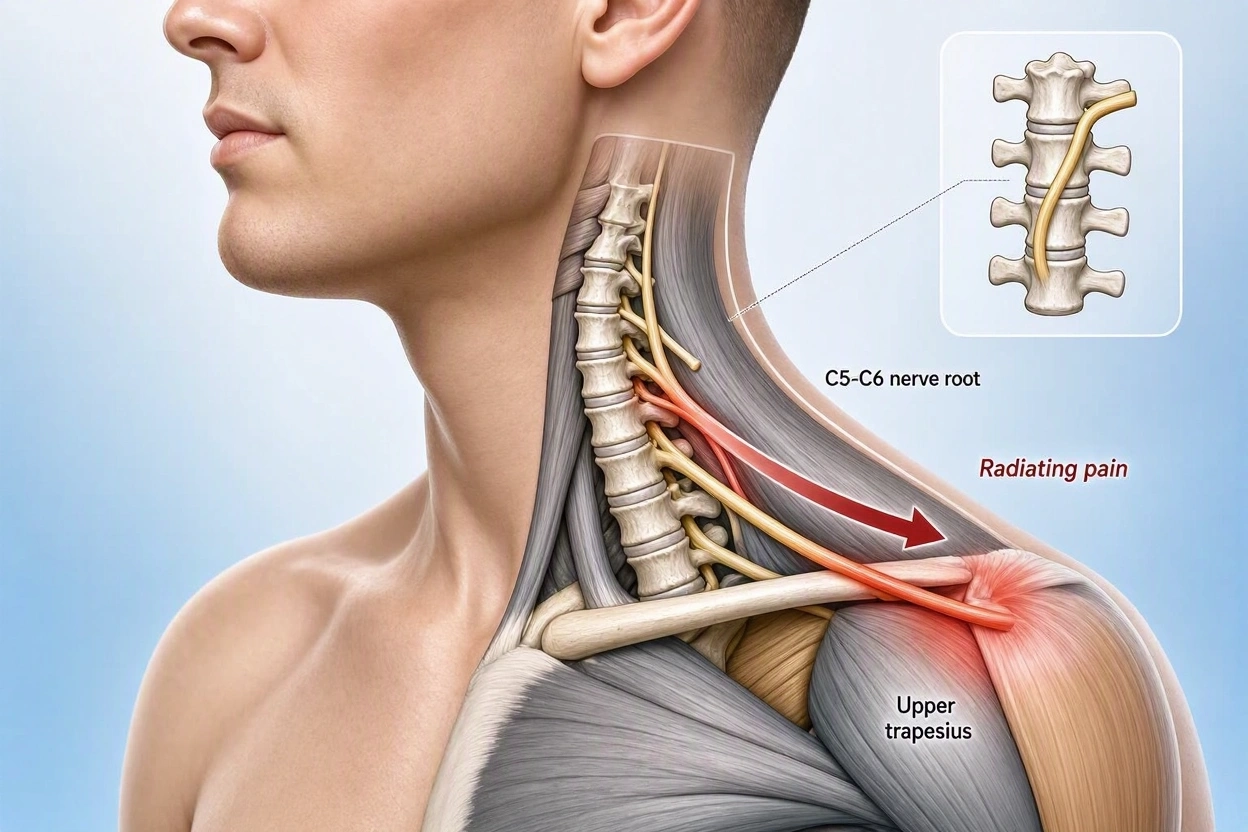
The nerves that leave the cervical spine also supply parts of the shoulders, arms, and hands. When one of these nerves becomes irritated or compressed, pain may travel from the neck into the shoulder or farther down the arm.
Common explanations include:
- Muscle strain or tension
- Poor posture and prolonged sitting
- Cervical radiculopathy, also known as a pinched nerve
- Cervical osteoarthritis
- A bulging or herniated disc
- Shoulder joint or tendon problems
- Previous injuries or sudden movements
The location of the pain, how it started, and whether you have other symptoms can help a healthcare professional identify the likely cause.
7 Common Causes of Neck Pain That Spreads Into the Shoulder
1. Muscle Strain and Tension
Muscle strain is one possible cause of neck pain that extends into the shoulder. The trapezius, levator scapulae, and other muscles help support your head, control shoulder movement, and stabilize the upper back.
These muscles may become irritated after prolonged computer use, heavy lifting, repetitive movements, exercise, or sleeping in an uncomfortable position.
You may experience:
- An aching sensation along the side or back of your neck
- Tightness across the top of your shoulder
- Tenderness when touching the affected muscles
- Pain when turning your head
- Stiffness after sitting for a long time
Stress may also contribute to muscle tension, particularly when you unconsciously raise your shoulders or clench your muscles during demanding tasks.
If the symptoms are mild and there are no warning signs, gentle movement and temporary modification of aggravating activities may help. However, severe or persistent pain should not automatically be attributed to muscle tension.
2. Poor Posture and Prolonged Sitting
Spending hours at a desk, looking down at a phone, or working with your screen positioned too low can contribute to neck and shoulder discomfort.
Holding the same position for long periods may increase the workload on certain muscles. Over time, these muscles can become fatigued, especially if you rarely change position or take movement breaks.
Common symptoms include:
- Neck stiffness after computer work
- Aching across one or both shoulders
- Discomfort when looking down
- Tightness that improves after moving around
- Symptoms that return during prolonged sitting
Posture is only one potential contributor, and there is no single perfect position that everyone must maintain throughout the day. Regular movement and a comfortable workstation are often more practical than trying to hold a rigid posture.
Consider keeping your screen near eye level, supporting your back, and positioning your keyboard and mouse within easy reach.
3. Cervical Radiculopathy (A Pinched Nerve)
Cervical radiculopathy occurs when a nerve root in the neck becomes irritated or compressed. This may happen because of a herniated disc, inflammation, or age-related changes in the cervical spine.
Unlike pain caused only by muscle tension, nerve-related pain may travel from the neck into the shoulder, arm, or hand.
Symptoms can include:
- Sharp, burning, or electric-shock-like pain
- Pain that travels down one arm
- Tingling or pins and needles
- Numbness in the shoulder, arm, or hand
- Weakness in certain arm or hand movements
Some people experience neck pain alongside these symptoms, while others notice that the arm pain is more prominent.
Cervical radiculopathy can improve with conservative treatment, but new or worsening weakness, significant numbness, or problems with coordination require prompt medical assessment.
Learn more from the American Academy of Orthopaedic Surgeons’ guide to cervical radiculopathy.
4. Cervical Osteoarthritis
Cervical osteoarthritis refers to age-related changes affecting the joints and other structures in the neck. These changes can develop gradually and may contribute to stiffness, reduced movement, and discomfort.
Some people experience pain that spreads into the shoulder or upper back. Others may have changes visible on imaging without experiencing significant symptoms.
Possible signs include:
- Neck stiffness, especially after resting
- Discomfort when turning or tilting the head
- Aching around the neck and shoulder
- Reduced range of motion
- In some cases, symptoms related to nerve irritation
The presence of age-related changes does not automatically mean they are responsible for your pain. A healthcare professional will consider your symptoms and physical examination before deciding whether further investigations are necessary.
Treatment may include appropriate movement, strengthening exercises, activity modification, and medication when recommended by a healthcare professional.
5. A Bulging or Herniated Cervical Disc
The discs between the cervical vertebrae help absorb forces and allow the neck to move. A disc may develop age-related changes or become herniated, meaning some of its material extends beyond its usual boundaries.
If a disc irritates a nearby nerve, pain may spread from the neck toward the shoulder or arm.
Symptoms vary according to the location and extent of the problem. You may notice:
- Neck pain that increases with certain movements
- Shoulder pain that travels down the arm
- Tingling or numbness
- Muscle weakness in more significant cases
- Difficulty finding a comfortable neck position
Not every bulging disc causes symptoms, and imaging findings must be interpreted alongside your clinical presentation.
If pain is accompanied by progressive weakness, difficulty walking, poor balance, or loss of hand coordination, seek urgent medical assessment.
6. Shoulder Joint or Rotator Cuff Problems
Sometimes, pain that appears to start in the neck actually comes from the shoulder. The shoulder joint, rotator cuff tendons, and surrounding muscles can become irritated or injured through repetitive activity, heavy lifting, or age-related changes.
Shoulder problems may also cause secondary tension in the neck because people adjust their movements to protect the painful area.
Signs that the shoulder itself may be contributing include:
- Pain when lifting your arm overhead
- Discomfort when reaching behind your back
- Pain when lying on the affected shoulder
- Tenderness around the shoulder joint
- Difficulty lifting or rotating the arm
Pain that remains mainly in the shoulder or outer upper arm and worsens with arm movement may suggest a shoulder problem. However, neck and shoulder conditions can overlap, so a physical assessment may be needed to distinguish them.
7. Whiplash or Another Neck Injury
A sudden movement that forces the neck forward and backward can strain the muscles, ligaments, and other soft tissues. This type of injury is commonly associated with rear-end vehicle collisions, but other accidents can cause similar symptoms.
Neck pain may develop immediately or become more noticeable over the following hours. Discomfort can extend into the shoulders and upper back.
Possible symptoms include:
- Neck stiffness
- Pain when turning the head
- Shoulder or upper-back discomfort
- Headaches
- Muscle tenderness
- Reduced neck movement
If your symptoms began after a significant accident, seek medical assessment rather than assuming that the injury is minor. Avoid forceful stretching or manipulation until serious injury has been ruled out.
How Can You Tell Whether the Pain Comes From Your Neck or Shoulder?
Neck and shoulder problems can produce similar symptoms. The following patterns may offer clues, but they cannot establish a diagnosis on their own.
| Symptom pattern | Possible explanation |
|---|---|
| Neck stiffness with pain across the top of the shoulder | Muscle tension or a neck-related problem |
| Pain spreading from the neck down the arm | Possible nerve irritation |
| Tingling or numbness in the arm or fingers | Possible nerve involvement |
| Pain mainly when lifting the arm overhead | Possible shoulder joint or tendon problem |
| Pain after prolonged computer use | Muscle fatigue or sustained positioning |
| Pain after a collision or sudden injury | Neck strain or another injury |
A healthcare professional may assess neck and shoulder movement, muscle strength, sensation, reflexes, and the activities that reproduce your symptoms.
How to Relieve Neck Pain That Spreads Into the Shoulder
Treatment depends on the underlying cause. If your symptoms are mild, there was no significant injury, and you have no warning signs, the following approaches may help.
1. Keep Moving Within Your Comfort Level
Avoid keeping your neck completely still for long periods unless a healthcare professional has advised you to do so.
Gentle activities, such as short walks and comfortable neck movements, may help reduce stiffness. Move slowly and avoid repeatedly testing painful positions.
Stop any movement that causes sharp pain, new tingling, or worsening symptoms.
2. Adjust Your Workstation
If you spend a large part of the day at a computer, consider these adjustments:
- Position the screen so you can look ahead comfortably.
- Keep your keyboard and mouse close to your body.
- Support your back with a comfortable chair.
- Allow your shoulders to relax instead of holding them raised.
- Take brief movement breaks throughout the day.
These changes may reduce discomfort associated with prolonged positioning, although they will not treat every possible neck or shoulder condition.
3. Try Heat or Cold
A warm pack may help some people with muscle tightness, while a cold pack may provide comfort after a recent minor strain.
Wrap the pack in a towel and apply it for around 15–20 minutes at a time. Avoid placing extreme heat or cold directly on your skin.
If you have reduced skin sensation or a significant injury, ask a healthcare professional before using these methods.
4. Temporarily Modify Painful Activities
If heavy lifting, overhead exercise, or repeated neck rotation aggravates your symptoms, reduce those activities temporarily.
You do not necessarily need to stop all physical activity. Instead, maintain comfortable movement and return to more demanding activities gradually as your symptoms improve.
Avoid forceful neck stretching, self-manipulation, or exercises that worsen pain radiating into your arm.
5. Ask About Appropriate Pain Relief
A pharmacist or healthcare professional can advise whether an over-the-counter pain reliever is suitable for you. Some medications are inappropriate for people with certain health conditions or those taking other medicines.
If your pain is severe, unexplained, persistent, or accompanied by neurological symptoms, seek medical assessment instead of relying on pain relief alone.
Exercises That May Help Neck and Shoulder Pain
Gentle exercises may help some people with muscle-related neck discomfort. However, the right exercises depend on the cause of your symptoms and whether nerves or other structures are involved.
Do not start a new exercise programme without professional advice if you have recently experienced significant trauma, severe pain, or new neurological symptoms.
1. Gentle Neck Rotation
- Sit comfortably with your shoulders relaxed.
- Slowly turn your head a small distance to one side.
- Return to the centre.
- Repeat on the other side if comfortable.
Stay within a comfortable range. Do not force your head to turn further when you feel pain or resistance.
2. Shoulder Rolls
- Sit or stand in a comfortable position.
- Slowly raise your shoulders.
- Roll them gently backward and lower them.
- Repeat several times without forcing the movement.
This can help you move your shoulders after prolonged sitting.
3. Shoulder Blade Squeezes
- Sit or stand with your arms relaxed.
- Gently draw your shoulder blades toward each other.
- Keep your shoulders down and your neck relaxed.
- Hold briefly, then release.
Use a light contraction rather than squeezing forcefully.
Stop the exercises if they increase pain, cause tingling, or produce new weakness. A physiotherapist can assess your symptoms and adapt the movements to your needs.
How Physiotherapy Can Help
Physiotherapy may help when neck pain spreading into the shoulder is related to muscle strain, movement limitations, certain cervical spine conditions, or problems with shoulder function.
A physiotherapist may review your medical history, ask when the pain started, assess your neck and shoulder movement, and check for signs of nerve involvement.
Depending on the findings, your treatment plan may include:
- Individualized neck and shoulder exercises
- Strengthening for the shoulder and upper-back muscles
- Gentle mobility exercises
- Advice on workstation setup and activity modification
- Gradual return to work, sport, and daily activities
- Strategies to manage recurring symptoms
The goal is to improve function and help you return to daily activities safely. Treatment should be tailored to the underlying cause rather than focusing only on temporary pain relief.
If neck or shoulder discomfort is affecting your daily life, you can learn more about Ritz Clinic’s physiotherapy services.
Physiotherapy is not a substitute for urgent medical assessment if you have progressive weakness, major neurological symptoms, or signs of another serious condition.

When Should You See a Doctor?
Many cases of neck pain improve with time and conservative care. However, certain symptoms require prompt medical attention.
Seek Emergency Care If You Have:
- Neck or shoulder pain with chest pressure, shortness of breath, cold sweating, or faintness
- Severe pain after a major accident
- Sudden weakness or loss of coordination
- New difficulty walking or maintaining balance
- New loss of bladder or bowel control
- A severe headache with fever and marked neck stiffness
These symptoms may indicate a serious medical problem and should not be managed with home exercises alone.
Arrange Prompt Medical Assessment If You Have:
- New or worsening numbness, tingling, or weakness
- Pain that spreads down the arm and continues to worsen
- Severe neck pain that starts suddenly
- Persistent symptoms that interfere with sleep or daily activities
- Pain accompanied by unexplained weight loss, fever, or feeling unwell
- Symptoms that do not improve with appropriate self-care
A clinician may recommend further investigations based on your symptoms and examination. Imaging is not necessary for every case of neck pain; it depends on the suspected cause and the presence of warning signs.
For further guidance, read the Mayo Clinic’s information about neck pain.
How Can You Prevent Neck Pain From Spreading Into Your Shoulder?
Although not every cause can be prevented, several habits may help reduce recurring discomfort.
Take Regular Movement Breaks
If you work at a desk or use a phone frequently, change positions regularly. Brief movement breaks can help reduce the time spent in one sustained posture.
Strengthen Your Neck and Shoulder Muscles Gradually
Appropriate strengthening can improve your ability to tolerate daily activities. Begin at a manageable level and increase the difficulty gradually.
Use a Comfortable Sleeping Position
Choose a pillow that keeps your neck reasonably comfortable and supported. There is no single pillow type that suits everyone, so consider your sleeping position and personal comfort.
Avoid Sudden Increases in Exercise
Increase training intensity and lifting loads gradually. If a movement repeatedly causes pain that spreads from your neck into your shoulder, modify the activity and seek advice if the problem persists.
Address Symptoms Early
Recurring neck and shoulder pain may indicate that your activity level, movement habits, or underlying condition needs attention. Early assessment can help identify the most appropriate management strategy.
Frequently Asked Questions
Why does my neck pain spread into one shoulder?
Pain may spread into one shoulder because of muscle strain, irritation in the cervical joints, or a nerve problem in the neck. Shoulder conditions can also produce overlapping symptoms. The exact cause depends on the pattern of pain and other findings.
Can a pinched nerve in the neck cause shoulder pain?
Yes. Cervical radiculopathy occurs when a nerve root in the neck becomes irritated or compressed. It can cause pain in the shoulder and arm, sometimes accompanied by tingling, numbness, or weakness.
Can poor posture cause neck and shoulder pain?
Prolonged or uncomfortable positions may contribute to muscle fatigue and discomfort. Regular movement, a comfortable workstation, and appropriate exercise may help, but posture is not the cause of every case of neck pain.
Should I stretch my neck if the pain spreads into my shoulder?
Gentle movement may be appropriate for some people, but forceful stretching can aggravate certain conditions. Avoid movements that increase radiating pain, tingling, numbness, or weakness. Seek professional advice if you are unsure which exercises are safe.
Can physiotherapy help neck pain that spreads into the shoulder?
Physiotherapy may help when symptoms are related to muscle strain, movement difficulties, or certain neck and shoulder conditions. An assessment can help determine which exercises and activity modifications are appropriate.
How long does neck pain spreading into the shoulder last?
Recovery varies with the underlying cause. Mild muscle-related discomfort may begin improving within days, while nerve irritation or other conditions can take longer. Seek medical advice if the pain worsens, persists, or is accompanied by neurological symptoms.
When is neck and shoulder pain serious?
Seek emergency care for symptoms such as chest pressure with shortness of breath, major trauma, sudden weakness, new walking difficulties, or loss of bladder or bowel control. New or worsening arm weakness and numbness also require prompt assessment.
Conclusion
Neck pain that spreads into the shoulder may be caused by muscle strain, prolonged sitting, cervical osteoarthritis, a herniated disc, nerve irritation, or a shoulder condition. Although many cases improve with conservative care, the pattern of symptoms can help determine whether further assessment is needed.
For mild discomfort without warning signs, gentle movement, workstation adjustments, and temporary activity modification may help. Physiotherapy may also support recovery when the problem involves muscle function or movement limitations.
However, pain accompanied by progressive weakness, significant numbness, difficulty walking, or chest symptoms should not be ignored. Seek appropriate medical care to identify the cause and choose the safest treatment.