Why Does the Back of My Knee Hurt When I Straighten My Leg?
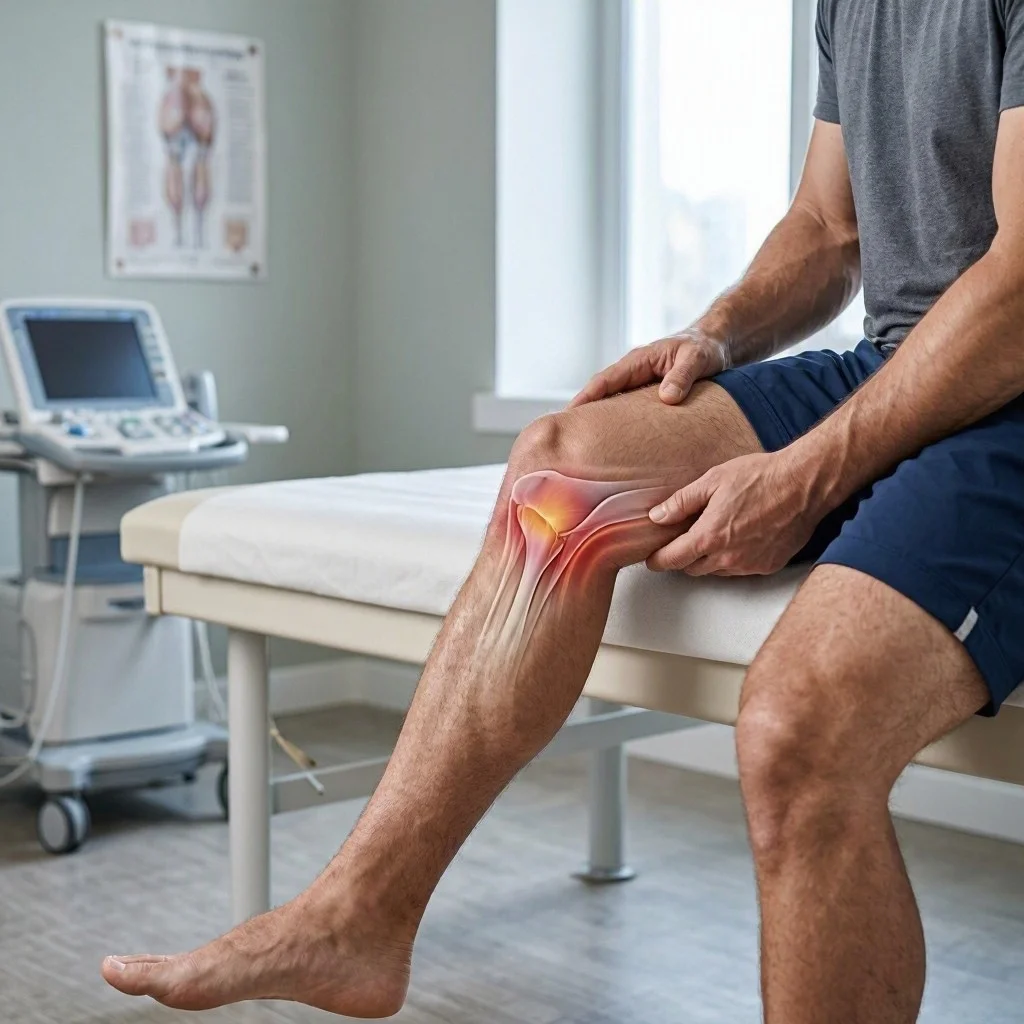
Pain behind the knee when straightening your leg can make everyday activities uncomfortable. You may notice it when getting out of bed, standing up from a chair, walking, climbing stairs, or stretching your leg after sitting for a long time. Sometimes, the discomfort feels like tightness or pressure. In other cases, it may feel sharp, pulling, or painful enough to prevent you from fully extending your knee.
There are several possible explanations for this problem. A tight hamstring muscle, a Baker’s cyst, a meniscus injury, or irritation inside the knee joint may contribute to pain at the back of the knee. The cause often depends on when the pain started, where you feel it, and whether you have swelling, stiffness, or difficulty moving.
Understanding why the back of your knee hurts when you straighten your leg is an important first step toward choosing the right treatment. This guide explains common causes, practical ways to manage discomfort, and when to seek professional medical advice.
Why Does the Back of My Knee Hurt When I Straighten My Leg?
The back of your knee contains several important structures, including muscles, tendons, ligaments, blood vessels, nerves, and joint tissues. When you straighten your leg, these structures move and become tensioned. If one of them is irritated, injured, or swollen, full knee extension may cause discomfort.
Some causes are relatively minor and improve with appropriate rest. Others require an assessment by a healthcare professional.
The most common possibilities include:
- Baker’s cyst behind the knee
- Hamstring muscle strain or tightness
- Meniscus injury
- Tendon irritation
- Knee osteoarthritis
- Posterior cruciate ligament injury
- Calf muscle strain
- Inflammation or swelling inside the knee joint
The location and pattern of your pain can provide useful clues, but symptoms alone cannot confirm a diagnosis.
8 Common Causes of Pain Behind the Knee When Straightening Your Leg
1. Baker’s Cyst
A Baker’s cyst is one of the conditions commonly associated with discomfort behind the knee. It develops when excess joint fluid collects in a fluid-filled sac at the back of the knee.
You may notice a soft lump, pressure, or a feeling of fullness behind your knee. Some people experience stiffness, especially when fully extending or bending the leg.
A Baker’s cyst can become more noticeable after physical activity or prolonged standing. It may also develop alongside another knee problem, such as osteoarthritis or a meniscus injury.
Common symptoms include:
- Swelling or a lump behind the knee
- Tightness when straightening the leg
- Discomfort during walking
- Reduced knee flexibility
- Pressure behind the knee
Treatment usually focuses on managing the underlying knee problem and reducing irritation. A healthcare professional may recommend activity modification, medication when appropriate, or physiotherapy.
If your calf suddenly becomes painful or swollen, seek urgent medical assessment because a ruptured cyst and a blood clot can produce similar symptoms. Source: AAOS.
2. Hamstring Tightness or Injury
The hamstrings are a group of muscles located along the back of your thigh. They help bend your knee and extend your hip.
When these muscles become tight or injured, you may feel pulling or discomfort that travels toward the back of your knee. Straightening your leg stretches the hamstrings, which can make the symptoms more noticeable.
Hamstring problems may develop after:
- Running or sprinting
- Sudden changes in direction
- Intense exercise without proper preparation
- Prolonged sitting
- Increasing workout intensity too quickly
A mild strain may cause tenderness and stiffness. A more significant injury can produce bruising, swelling, weakness, or difficulty walking.
Treatment depends on the severity of the injury. Early management may involve temporarily reducing painful activities and gradually returning to movement as symptoms improve.
Avoid aggressive stretching when the muscle is acutely painful. Forcing the leg straight may increase irritation rather than improve flexibility.
3. Meniscus Tear
The meniscus is a piece of cartilage that helps cushion and stabilise the knee joint. Each knee contains two menisci, and either one can become damaged.
A tear may occur during sports, sudden twisting, or even a relatively minor movement. Degenerative changes can also make the meniscus more vulnerable over time.
Some meniscus injuries affect the back portion of the cartilage. As a result, discomfort may be felt around or behind the knee.
Possible symptoms include:
- Pain when straightening or bending the knee
- Swelling that develops gradually
- Clicking or catching sensations
- Difficulty fully extending the leg
- A feeling that the knee may give way
- Pain after twisting or squatting
A healthcare professional may examine your knee and recommend imaging if necessary. Treatment can include activity modification, physiotherapy, and, in selected cases, surgery.
Do not repeatedly force a knee that feels physically blocked or locked. A knee that cannot fully bend or straighten needs prompt medical assessment. Source: NHS.
4. Tendon Irritation
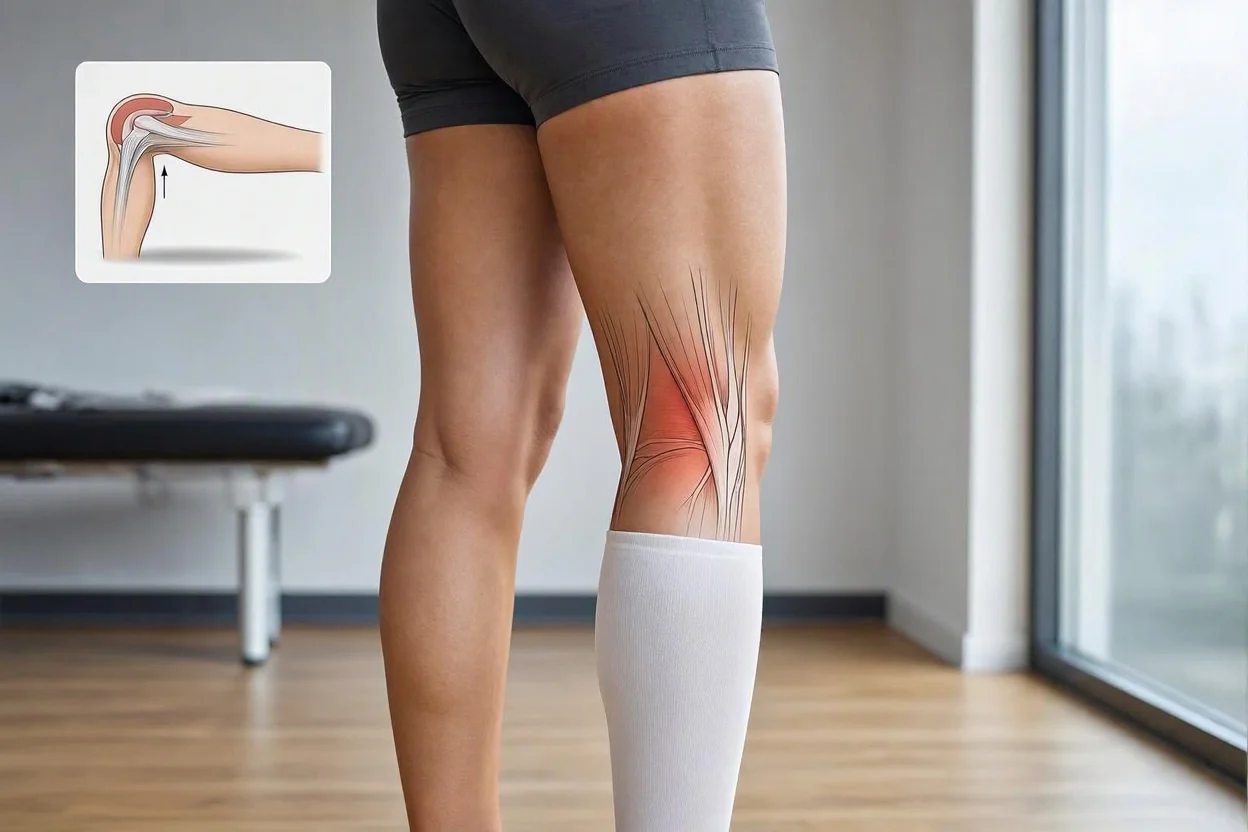
Tendons connect muscles to bones and help transfer force during movement. Several tendons around the back of the knee can become irritated due to repetitive activity or excessive loading.
For example, the hamstring tendons attach near the back of the knee. Repeated running, jumping, or cycling may irritate these structures.
You may experience:
- Localised tenderness behind the knee
- Pain during leg extension
- Discomfort after exercise
- Stiffness following periods of rest
- Increased pain when using the affected leg
Tendon irritation often develops gradually. However, sudden increases in training intensity can also trigger symptoms.
Reducing activities that aggravate the pain and gradually rebuilding strength may help. A physiotherapist can assess movement patterns and recommend an appropriate rehabilitation programme.
5. Knee Osteoarthritis
Osteoarthritis is a condition in which the tissues within a joint gradually change over time. In the knee, these changes can affect cartilage, bone, and surrounding structures.
Although osteoarthritis commonly causes pain around the front or sides of the knee, some people also experience discomfort at the back.
Symptoms may include:
- Stiffness after sitting
- Pain when standing up
- Reduced knee movement
- Swelling around the joint
- Discomfort when walking or climbing stairs
- Difficulty fully straightening the leg
Knee osteoarthritis can also contribute to the development of a Baker’s cyst because joint irritation may increase fluid production.
Management usually focuses on maintaining appropriate movement, strengthening the muscles around the knee, managing activity levels, and controlling symptoms. A healthcare professional can help determine which exercises and treatments are suitable.
6. Posterior Cruciate Ligament (PCL) Injury
The posterior cruciate ligament, or PCL, is located inside the knee. It helps control the movement of the shinbone in relation to the thighbone.
A PCL injury may occur after a direct impact to the front of the shin or a significant knee injury.
Depending on the severity, symptoms may include:
- Pain around the back of the knee
- Swelling
- Stiffness
- Difficulty walking
- A feeling of instability
- Discomfort during certain knee movements
A PCL injury is not the most common explanation for everyday pain behind the knee, but it should be considered when symptoms begin after trauma.
A medical assessment is important if you have experienced a significant impact or your knee feels unstable. Treatment may involve bracing, rehabilitation, or specialist care depending on the injury.
7. Calf Muscle Strain
The calf muscles help you walk, run, jump, and push your body forward. Some of their tendons and attachments are located close to the back of the knee.
If a calf muscle becomes strained, discomfort may extend upward toward the knee.
You may notice:
- Pain when straightening the leg
- Tightness behind the knee or upper calf
- Discomfort when walking
- Pain when pushing off the foot
- Tenderness after exercise
Calf strains can develop during running, jumping, or sudden acceleration. Mild injuries may improve with appropriate activity modification, while more significant injuries need professional assessment.
However, sudden calf pain accompanied by swelling, warmth, or redness should not automatically be treated as a muscle strain. These symptoms can indicate deep vein thrombosis (DVT), which requires urgent medical assessment.
8. Inflammation or Fluid Inside the Knee Joint
The knee naturally contains a small amount of synovial fluid that lubricates the joint. However, injury, arthritis, or inflammation can cause excess fluid to accumulate.
This condition is sometimes called knee effusion.
When swelling develops inside the joint, the pressure can make it difficult or uncomfortable to fully straighten the leg. The discomfort may also extend toward the back of the knee.
Possible symptoms include:
- Visible swelling
- A feeling of pressure
- Reduced range of motion
- Stiffness after sitting
- Discomfort during walking
- Difficulty fully bending or straightening the knee
Treatment depends on the underlying cause. A clinician may recommend an examination, imaging, medication, or other interventions when appropriate.
What Does the Location of Your Pain Mean?
The exact location of discomfort can help a healthcare professional understand which structures may be involved.
However, pain patterns overlap, so the following table should be used as general guidance rather than a diagnosis.
| Pain location or pattern | Possible explanation |
|---|---|
| A lump or pressure directly behind the knee | Baker’s cyst |
| Pulling from the back of the thigh toward the knee | Hamstring tightness or strain |
| Pain with clicking or locking | Possible meniscus injury |
| Tenderness around the back of the knee after exercise | Tendon irritation |
| Stiffness and reduced movement | Osteoarthritis or joint swelling |
| Pain after a direct impact or sports injury | Possible ligament injury |
| Pain extending into the upper calf | Calf strain or another condition requiring assessment |
If you experience persistent pain or notice a new lump behind your knee, arrange an assessment rather than relying on the location of the pain alone.
Why Does My Knee Hurt More When I Fully Straighten It?
Full knee extension changes the position and tension of several structures around the joint.
For example, straightening your leg can:
- Increase tension in the hamstring muscles.
- Change pressure around a Baker’s cyst.
- Place stress on irritated tendons.
- Increase discomfort when the knee joint is swollen.
- Expose movement restrictions caused by certain meniscus injuries.
A Baker’s cyst can become particularly noticeable when the knee is fully extended because the fluid-filled swelling may feel tighter in this position.
If you experience pain only at the final part of the movement, avoid repeatedly pushing through it. A professional assessment can help identify whether the problem relates to muscle flexibility, joint swelling, cartilage, or another structure.
How Can You Relieve Pain Behind the Knee?
The best approach depends on the cause and severity of your symptoms. If the discomfort is mild and there are no warning signs, some basic measures may help.
1. Reduce Activities That Trigger Pain
Temporarily reduce movements that make your symptoms worse.
These may include:
- Running and jumping
- Deep squats
- Heavy leg exercises
- Repeated stair climbing
- Long periods of standing
- Forceful knee stretching
You do not necessarily need complete bed rest. Gentle movement within a comfortable range may help maintain mobility.
2. Apply a Cold Pack
If your knee is swollen or painful after activity, applying a cold pack may help relieve discomfort.
Wrap an ice pack in a towel and apply it for approximately 15 to 20 minutes. Do not place ice directly against your skin.
Stop if your skin becomes uncomfortable or unusually numb.
3. Elevate Your Leg
If swelling is present, resting your leg in an elevated position may help reduce discomfort.
Support the leg with pillows while sitting or lying down. Avoid positions that increase pressure behind your knee.
4. Avoid Forcing Your Knee Straight
If extending your leg causes sharp pain, do not force it into a fully straight position.
Repeatedly pushing through painful movement may aggravate an irritated muscle, tendon, or joint structure.
Instead, use comfortable movements and seek an assessment if your range of motion remains limited.
5. Return to Activity Gradually
Once symptoms begin to improve, gradually return to your normal activities.
Start with comfortable walking and simple movements. Increase duration and intensity only when your knee tolerates the activity without a significant increase in pain.
Exercises That May Help With Pain Behind the Knee
Exercise can be useful for improving knee strength, mobility, and movement control. However, not every exercise is appropriate for every cause of posterior knee pain.
If you have significant swelling, a recent injury, a locked knee, or unexplained calf pain, seek medical advice before starting an exercise programme.
The following gentle movements may be suitable for some people with mild symptoms.
1. Ankle Pumps
Ankle pumps encourage gentle movement through the ankle and lower leg.
How to perform:
- Sit or lie down with your leg supported.
- Slowly point your toes away from your body.
- Bring your toes back toward your shin.
- Repeat the movement 10 to 15 times.
Keep the movement comfortable and controlled.
2. Gentle Heel Slides
Heel slides help maintain comfortable knee movement.
How to perform:
- Lie on your back with both legs extended.
- Slowly slide the heel of the affected leg toward your body.
- Bend your knee only as far as feels comfortable.
- Slowly slide your heel back to the starting position.
Repeat 8 to 10 times if the movement does not increase your pain.
Do not force the knee into a painful position.
3. Quadriceps Isometric Contractions
The quadriceps muscles at the front of your thigh help stabilise the knee.
How to perform:
- Sit or lie down with your leg comfortably supported.
- Gently tighten the muscles at the front of your thigh.
- Hold the contraction for approximately five seconds.
- Relax and repeat 8 to 10 times.
Avoid pushing the knee forcefully into full extension.
4. Gentle Hamstring Stretching
A hamstring stretch may help when muscle tightness contributes to discomfort. However, it may not be appropriate during an acute strain or when stretching reproduces pain behind the knee.
How to perform:
- Sit near the edge of a stable chair.
- Extend one leg forward with the heel resting on the floor.
- Keep your back relatively straight.
- Lean forward slightly from your hips.
- Stop when you feel a gentle stretch in the back of your thigh.
Hold briefly without bouncing or forcing the movement.
Stop if you feel sharp pain behind your knee.
5. Short, Comfortable Walks
If walking does not increase your symptoms, short walks may help maintain general mobility.
Start with a short distance on a flat surface. Increase the duration gradually as your knee improves.
If walking causes increasing pain or swelling, reduce the activity and seek professional advice.
Can Physiotherapy Help With Pain Behind the Knee?
Yes. Physiotherapy can help identify movement problems, improve strength, and support recovery when the underlying condition is suitable for conservative treatment.
However, the first step is understanding why the pain occurs. A physiotherapist may assess your knee movement, muscle strength, flexibility, walking pattern, and symptoms during different activities.
Depending on the findings, treatment may include:
Movement assessment: Identifying which movements increase discomfort and whether your knee has restricted mobility.
Strengthening exercises: Improving the strength of the quadriceps, hamstrings, calf muscles, and surrounding hip muscles.
Mobility exercises: Restoring comfortable movement without placing unnecessary stress on irritated tissues.
Activity modification: Helping you adjust exercise intensity, walking distance, and daily activities while recovering.
Progressive rehabilitation: Gradually increasing the difficulty of exercises as your strength and movement improve.
Education: Explaining how to manage symptoms and reduce the likelihood of recurring problems.
If you want to understand how physiotherapy may support knee pain management, visit the Ritz Clinic Physiotherapy page.
The appropriate treatment plan depends on the clinical assessment. Physiotherapy should not replace urgent medical evaluation when symptoms suggest a serious injury, infection, or blood clot.
When Should You See a Doctor?
Some cases of pain behind the knee improve with appropriate activity modification. However, persistent or severe symptoms should not be ignored.
Arrange a medical assessment if:
- Pain continues for more than a few days without improvement.
- You notice a lump behind your knee.
- Your knee repeatedly swells.
- You cannot fully straighten or bend your leg.
- Your knee clicks painfully, locks, or gives way.
- Pain interferes with walking or daily activities.
- Symptoms started after a fall, twisting injury, or direct impact.
Warning Signs That Need Urgent Medical Attention
Seek urgent medical care if you experience:
- Sudden pain and swelling in one calf or leg, particularly with warmth or redness, because these may indicate DVT.
- Severe knee pain with a hot, red, swollen joint or fever, which may indicate infection.
- Inability to bear weight after an injury.
- A knee that becomes deformed or changes position.
- New numbness, tingling, or loss of sensation in the leg or foot.
If leg pain or swelling occurs alongside chest pain, sudden breathlessness, or coughing up blood, seek emergency medical help immediately. These symptoms may indicate a pulmonary embolism.
How Can You Prevent Pain Behind the Knee?
Although not every knee problem can be prevented, several habits may reduce unnecessary stress on the joint and surrounding muscles.
Warm Up Before Exercise
Prepare your muscles before running, cycling, or strength training. Begin with gentle movements and gradually increase your activity intensity.
Strengthen the Muscles Around Your Knee
Strong quadriceps, hamstrings, calf muscles, and hip muscles help support lower-limb movement.
A suitable strengthening programme can improve movement control and physical capacity.
Increase Exercise Intensity Gradually
Avoid suddenly increasing your running distance, workout duration, or resistance training load.
Gradual progression gives your muscles and joints time to adapt.
Take Breaks From Prolonged Sitting
Sitting for long periods may contribute to stiffness. Stand up regularly and move gently throughout the day.
Wear Appropriate Footwear
Choose comfortable footwear that suits your activity and provides appropriate support.
Replace heavily worn shoes when necessary, particularly if you use them regularly for walking or exercise.
Pay Attention to Early Symptoms
Do not ignore repeated pain behind your knee. If discomfort continues or becomes more noticeable, seek an assessment before returning to intense activity.
Frequently Asked Questions
1. Why does the back of my knee hurt when I straighten my leg?
Pain behind the knee during extension may result from a Baker’s cyst, hamstring tightness, meniscus injury, tendon irritation, or swelling inside the joint. A clinical assessment can help identify the cause.
2. Can a Baker’s cyst cause pain when straightening the knee?
Yes. A Baker’s cyst can create pressure and tightness behind the knee. Symptoms may become more noticeable when the leg is fully straightened or bent.
3. Is pain behind the knee a sign of a meniscus tear?
It can be. A tear involving the back portion of the meniscus may cause posterior knee discomfort, particularly with twisting, squatting, or certain movements. However, other conditions can produce similar symptoms.
4. Why does my knee hurt when I straighten it after sitting?
Prolonged sitting can contribute to stiffness around the knee. Osteoarthritis, joint irritation, swelling, and muscle tightness may also make the first few movements uncomfortable.
5. Can tight hamstrings cause pain behind the knee?
Yes. Tight or strained hamstrings can create pulling sensations near the back of the knee, particularly when you straighten your leg and stretch the muscles.
6. Should I stretch if the back of my knee hurts?
Not always. Gentle stretching may help when muscle tightness is responsible, but aggressive stretching can aggravate an injury. Avoid movements that cause sharp or increasing pain.
7. Can walking make pain behind the knee worse?
Yes. Walking may increase discomfort when the knee is swollen or when muscles, tendons, or joint structures are irritated. Reduce your walking distance if symptoms worsen and seek assessment if the pain persists.
8. How long does pain behind the knee take to improve?
Recovery time depends on the cause. Mild muscle irritation may improve relatively quickly, while meniscus injuries, significant strains, and underlying joint conditions may take longer. Persistent symptoms deserve professional assessment.
9. Is pain behind the knee dangerous?
Not always. Many causes are manageable, but sudden calf swelling, warmth, redness, severe pain, fever, or difficulty bearing weight can indicate a more serious problem. These symptoms require prompt medical attention.
10. Can physiotherapy help me straighten my knee without pain?
Physiotherapy may help improve knee mobility, strength, and movement control when appropriate. The treatment programme should be based on the underlying cause rather than simply forcing the knee into full extension.
Conclusion
Pain behind the knee when straightening your leg can develop for several reasons. A Baker’s cyst, hamstring strain, meniscus injury, tendon irritation, osteoarthritis, and joint swelling are among the possible causes.
The symptoms may feel similar, but the right treatment depends on the structure involved and the severity of the problem.
Start by avoiding activities that clearly aggravate your pain. Gentle movement may be helpful when symptoms are mild, but do not force your knee straight or continue exercising through sharp pain. If discomfort persists, affects your walking, or comes with swelling, arrange a professional assessment.
Most importantly, sudden calf swelling, warmth, or redness needs urgent medical evaluation to rule out a blood clot. Early assessment can help identify the cause and guide a safer recovery plan.
Key Takeaways
| Key point | What you should know |
|---|---|
| Common causes | Baker’s cyst, hamstring strain, meniscus injury, tendon irritation, and arthritis |
| Typical symptoms | Tightness, swelling, stiffness, pulling, or pain during knee extension |
| Initial management | Modify painful activities and use comfortable, gentle movement |
| Helpful exercises | Ankle pumps, heel slides, and appropriate strengthening exercises |
| Physiotherapy | May improve strength, mobility, and movement control |
| When to seek help | Persistent pain, restricted movement, swelling, or symptoms after an injury |
| Emergency warning signs | Sudden calf swelling, warmth, redness, chest pain, or breathlessness |