Why Does My Groin Hurt When I Lift My Knee? Causes, Treatment, and Exercises
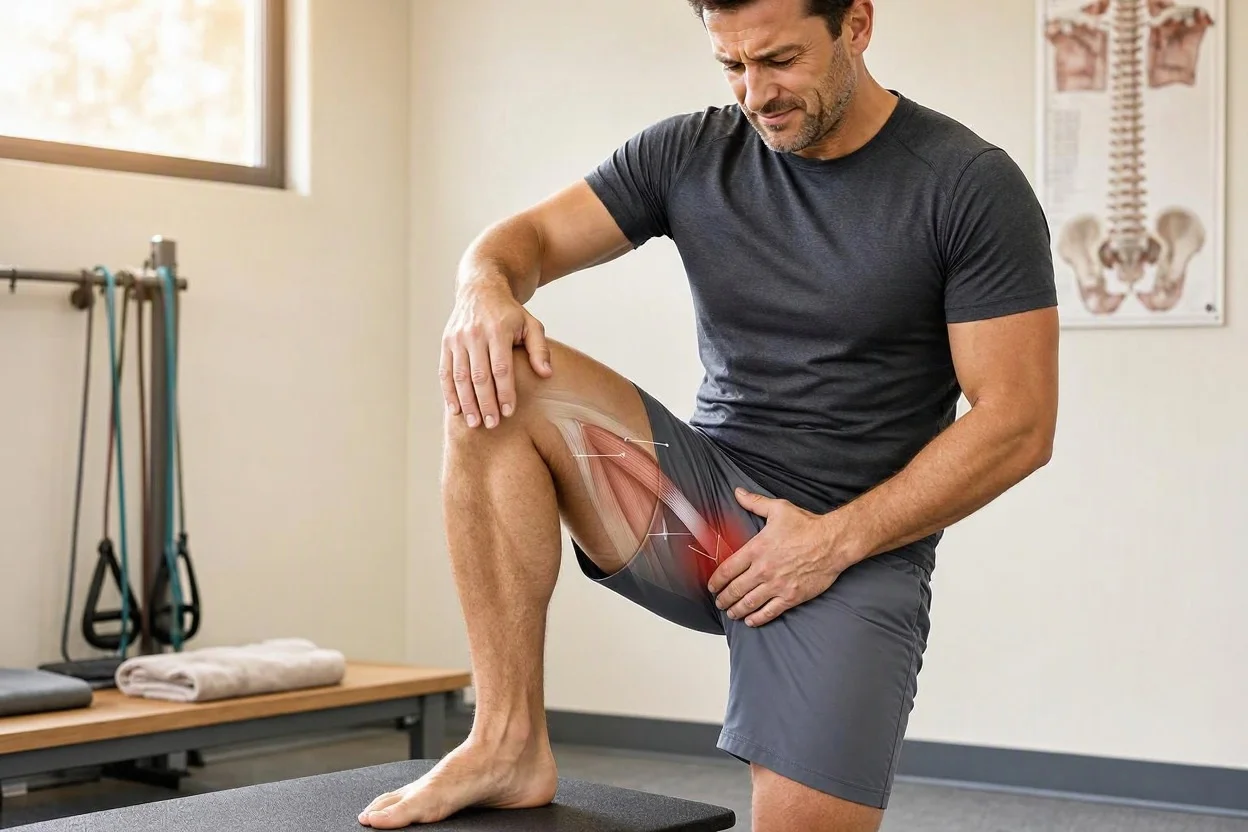
Groin pain when lifting your knee can make everyday activities surprisingly uncomfortable. You may notice it when climbing stairs, getting into a car, walking uphill, putting on shoes, or bringing your knee toward your chest. Sometimes the discomfort feels like a pulling sensation in the front of the hip. In other cases, it feels sharp, deep, or concentrated where the upper thigh meets the pelvis.
This movement depends on several muscles, tendons, joints, and supporting structures working together. Therefore, pain when raising your knee does not always indicate the same injury. A hip flexor strain is one possible explanation, but adductor injuries, hip joint problems, tendon irritation, and even an inguinal hernia can produce similar symptoms.
Understanding where the pain occurs, what triggers it, and whether other symptoms are present can help identify the next appropriate step. This guide explains the most common causes of groin pain when lifting your knee, how the problem is assessed, and which treatment approaches may help.
Why Does Lifting Your Knee Cause Groin Pain?
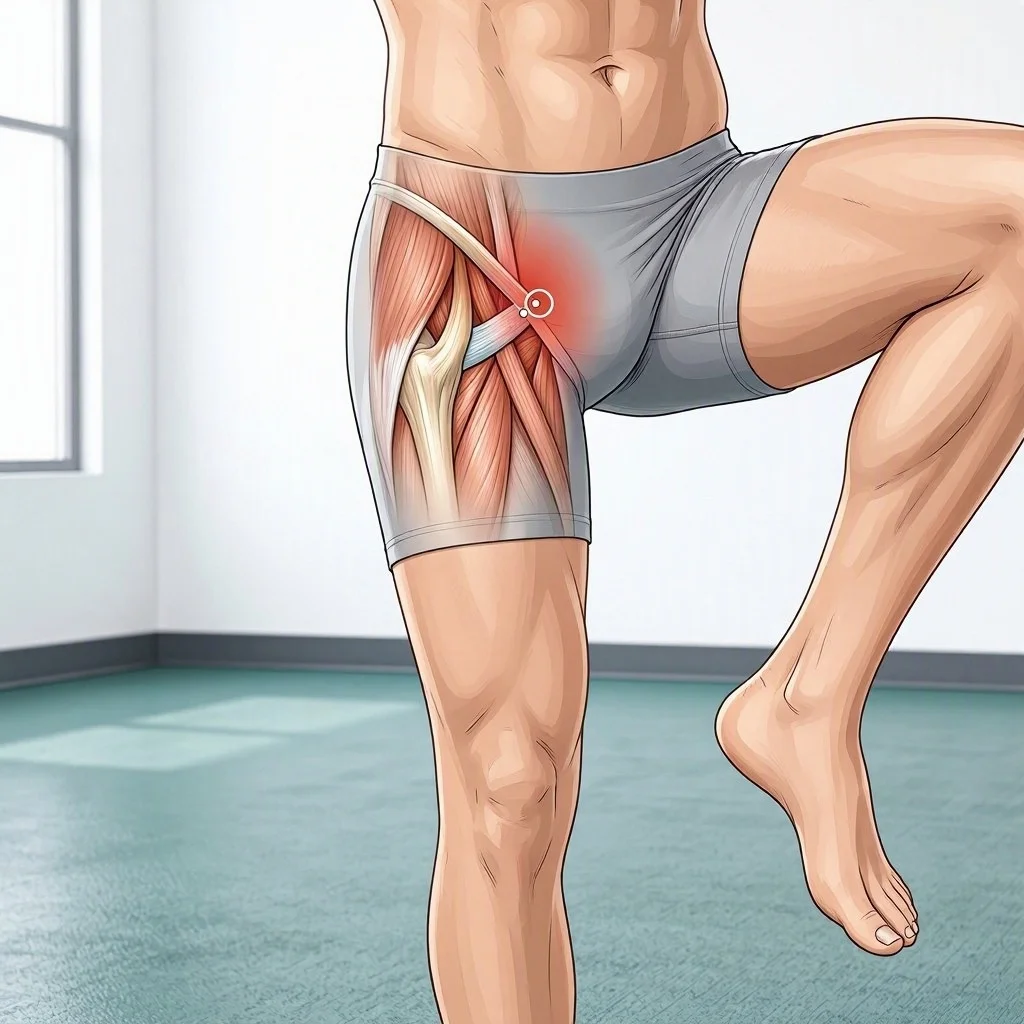
Lifting your knee toward your chest is called hip flexion. Several muscles contribute to this movement, particularly the iliopsoas, rectus femoris, and other hip flexors.
At the same time, the muscles around your inner thigh, pelvis, and abdomen help stabilize your hip and control the movement. If one of these structures becomes irritated, strained, weak, or injured, raising your knee may reproduce pain.
For example, an irritated hip flexor may hurt when you lift your leg against gravity. An adductor injury may become noticeable when you move your thigh inward or stabilize your pelvis. A problem inside the hip joint may cause deeper discomfort, stiffness, or clicking.
The location of the pain provides useful clues, but it cannot confirm a diagnosis by itself.
8 Common Causes of Groin Pain When Lifting Your Knee
1. Hip Flexor Strain
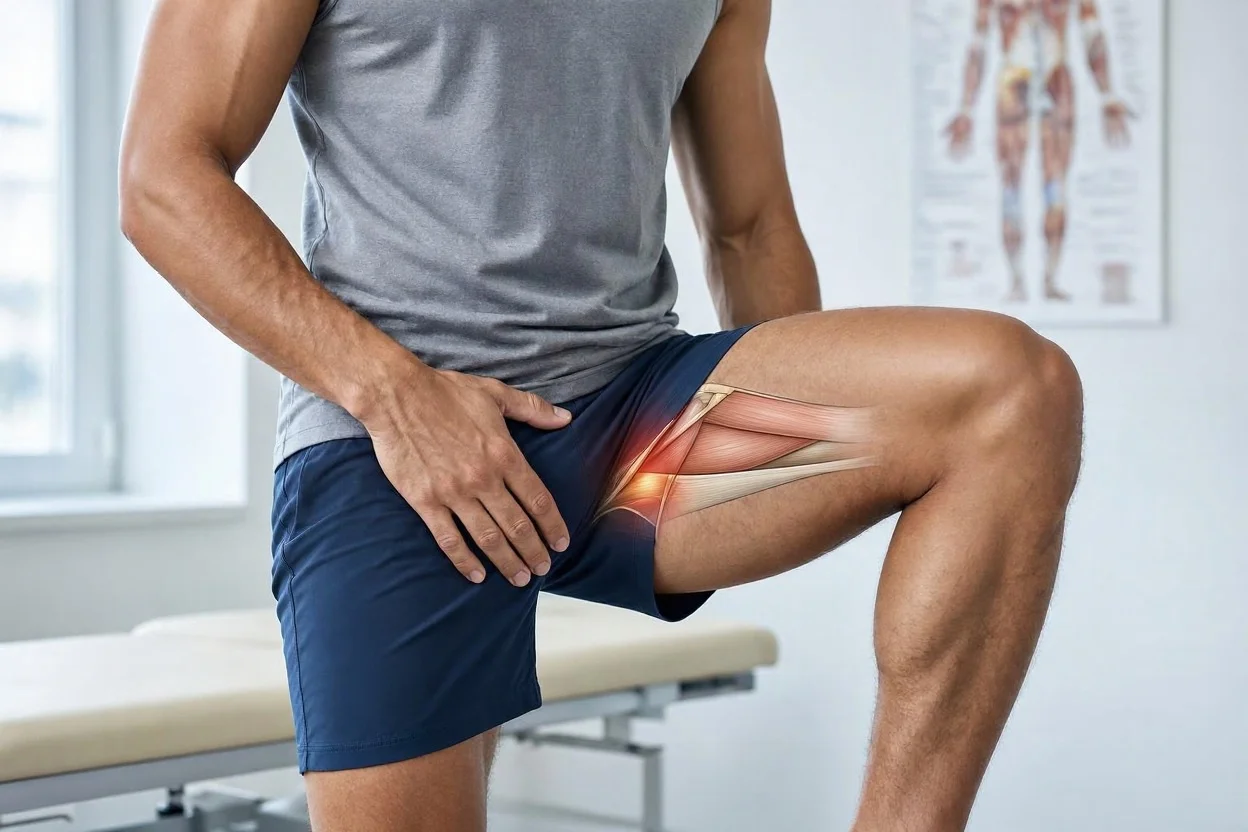
A hip flexor strain is one of the most common reasons for pain when lifting the knee. The hip flexors are a group of muscles at the front of your hip that help bring your thigh toward your abdomen.
The iliopsoas is particularly important because it connects the lower spine and pelvis to the upper thigh bone. When this muscle or its tendon becomes overstretched or develops small tears, lifting your knee can become painful.
Hip flexor injuries may develop after:
- Sprinting or running without adequate preparation.
- Performing repeated high-knee exercises.
- Kicking a ball forcefully.
- Increasing workout intensity too quickly.
- Sudden changes in direction.
- Repeatedly climbing stairs or walking uphill.
Common symptoms include:
- Pain at the front of the hip or upper groin.
- Discomfort when raising the knee.
- Tenderness around the hip crease.
- Pain when getting out of a chair or car.
- Weakness when lifting the affected leg.
- Discomfort when stretching the front of the hip.
Some people experience a sudden pulling sensation during exercise. Others develop symptoms gradually after repeated activity.
2. Adductor Muscle Strain
The adductor muscles run along the inner thigh and help bring your legs toward each other. They also support pelvic stability during walking, running, and other movements.
An adductor strain occurs when these muscles or their tendons become overstretched or damaged. Although adductor injuries are often associated with sports, they can also happen during everyday activities.
You may develop this injury after:
- Playing soccer or hockey.
- Performing side lunges.
- Changing direction suddenly.
- Slipping or stretching your legs too far apart.
- Returning to exercise after a long break.
Typical symptoms include:
- Pain along the inner thigh.
- Tenderness close to the groin.
- Discomfort when squeezing your knees together.
- Pain during running or sudden movements.
- Weakness when moving your leg inward.
Adductor injuries may also cause discomfort when lifting your knee because these muscles help stabilize the hip during movement. However, pain with knee lifting alone does not establish that an adductor strain is present.
3. Iliopsoas Tendinopathy or Irritation
The iliopsoas muscle and tendon play a major role in hip flexion. Repeatedly lifting the leg, especially against resistance, can irritate the tendon.
Unlike an acute muscle strain, tendinopathy often develops gradually. It may become noticeable when you repeatedly perform activities that load the hip flexors.
Common contributing activities include:
- Long-distance running.
- Cycling with high resistance.
- Repeated leg raises.
- Intensive abdominal workouts.
- Frequent stair climbing.
- Prolonged training without adequate recovery.
You might notice pain in the front of the hip, particularly when lifting your knee while sitting or standing.
Some people also experience a snapping sensation around the front of the hip. This can sometimes occur when a tendon moves across nearby structures, although snapping does not always indicate an injury.
4. Hip Labral Tear
The hip labrum is a ring of cartilage surrounding the edge of the hip socket. It helps deepen the socket and support hip joint stability.
A labral tear may develop after an injury, repetitive hip movements, or structural problems affecting the hip joint.
People with this condition may experience:
- Deep pain in the groin.
- Clicking or catching inside the hip.
- Discomfort when bending the hip.
- Pain during prolonged sitting.
- Reduced hip movement.
- A sensation that the hip is stiff or restricted.
Lifting your knee brings the hip into a flexed position. If this movement places pressure on an irritated area inside the joint, it may reproduce symptoms.
However, a clicking hip does not automatically mean you have a labral tear. A clinical assessment is necessary to determine whether the joint itself is involved.
5. Femoroacetabular Impingement (FAI)
Femoroacetabular impingement occurs when the shape of the hip bones causes abnormal contact during certain movements.
This contact can irritate the joint structures, including the labrum and cartilage. Deep hip flexion may be particularly uncomfortable for some people.
You may notice symptoms when:
- Bringing your knee toward your chest.
- Squatting deeply.
- Sitting for extended periods.
- Getting into a low car.
- Performing exercises involving deep hip bending.
The pain is often felt deep in the groin rather than directly on the surface of the thigh.
Some people also experience stiffness or limited hip movement. A healthcare professional may assess hip mobility and recommend imaging when appropriate.
6. Inguinal Hernia
An inguinal hernia develops when tissue pushes through a weakened area in the lower abdominal wall near the groin.
Although a hernia is not a muscle injury, it can cause discomfort during activities that increase pressure inside the abdomen.
Possible symptoms include:
- A visible or noticeable bulge in the groin.
- Aching or pressure near the lower abdomen.
- Discomfort when coughing or sneezing.
- Pain during lifting or straining.
- Symptoms that become more noticeable after prolonged standing.
Some people experience groin discomfort without an obvious bulge.
If your pain increases when you cough, lift heavy objects, or tighten your abdominal muscles, a healthcare professional should assess whether a hernia is involved.
7. Hip Osteoarthritis
Hip osteoarthritis develops when the cartilage that supports smooth movement inside the hip joint gradually deteriorates.
It can cause pain and stiffness, especially during activities that require bending or rotating the hip.
Common symptoms include:
- Deep groin pain.
- Morning stiffness.
- Discomfort when lifting the knee.
- Difficulty putting on socks or shoes.
- Pain after prolonged walking.
- Reduced hip flexibility.
Hip osteoarthritis becomes more common with age, although it can also occur earlier in people with previous joint injuries or certain structural conditions.
Unlike a sudden muscle strain, osteoarthritis symptoms often develop gradually and may fluctuate depending on activity levels.
8. Core Muscle Injury or Athletic Pubalgia
The abdominal muscles, pelvic structures, and groin muscles work together to stabilize the body.
A core muscle injury can develop when these structures are repeatedly exposed to high loads, twisting, or sudden changes in direction. It is sometimes referred to as athletic pubalgia or sports hernia, although this condition is not the same as a true inguinal hernia.
Possible symptoms include:
- Pain in the lower abdomen or groin.
- Discomfort during sprinting.
- Pain when twisting your body.
- Symptoms during sit-ups or resisted abdominal movements.
- Pain that returns when sports activity resumes.
People who participate in sports involving rapid acceleration, kicking, and directional changes may be more likely to develop this type of injury.
What Does the Location of Your Groin Pain Mean?
The exact location of your discomfort may help a healthcare professional narrow down the possible causes.
| Pain location | Possible explanation | Common symptom pattern |
|---|---|---|
| Front of the hip | Hip flexor strain or iliopsoas irritation | Pain when lifting the knee |
| Inner thigh | Adductor strain | Pain when bringing the legs together |
| Deep inside the groin | Hip joint irritation or labral injury | Pain with bending, stiffness, or clicking |
| Lower abdomen and groin | Inguinal hernia or core muscle injury | Discomfort with coughing or straining |
| Front of the hip with stiffness | Hip osteoarthritis or impingement | Restricted movement and pain during bending |
These patterns are clues rather than diagnostic rules. Several conditions can cause pain in the same area.
Why Does My Groin Hurt When I Lift My Knee While Sitting?
If you experience groin pain mainly when lifting your knee while sitting, the hip flexor muscles and tendons may be involved.
When you sit, your hip is already bent. Raising your knee further requires additional hip flexor activity, which may increase discomfort if these structures are irritated.
Possible explanations include:
- Hip flexor strain.
- Iliopsoas tendinopathy.
- Hip joint irritation.
- Reduced hip mobility.
- Muscle weakness or poor movement control.
Pay attention to whether the pain also occurs when you stand, climb stairs, or lift your leg while lying down.
If the discomfort is persistent, worsening, or associated with weakness, arrange an assessment rather than repeatedly testing the painful movement.
Why Does My Groin Hurt When I Lift My Knee While Walking?
Walking requires your hip to move through a repeated cycle of flexion and extension.
During the swing phase, your hip flexors help bring your leg forward. If these muscles are irritated, you may feel pain every time your foot leaves the ground.
Other possible causes include adductor injuries, hip joint conditions, and problems involving the pelvis.
If you begin limping, avoid forcing yourself to continue long walks. A change in walking pattern can increase stress on other muscles and joints.
How Is the Cause of Groin Pain Diagnosed?
A proper assessment is important because different conditions can produce similar symptoms.
A healthcare professional may begin by asking:
- When did the pain first appear?
- Did it begin suddenly or gradually?
- Does lifting your knee reproduce the discomfort?
- Is the pain located in the front, inner, or deep part of the groin?
- Does coughing or sneezing make it worse?
- Have you recently changed your exercise routine?
- Do you experience clicking, stiffness, swelling, or weakness?
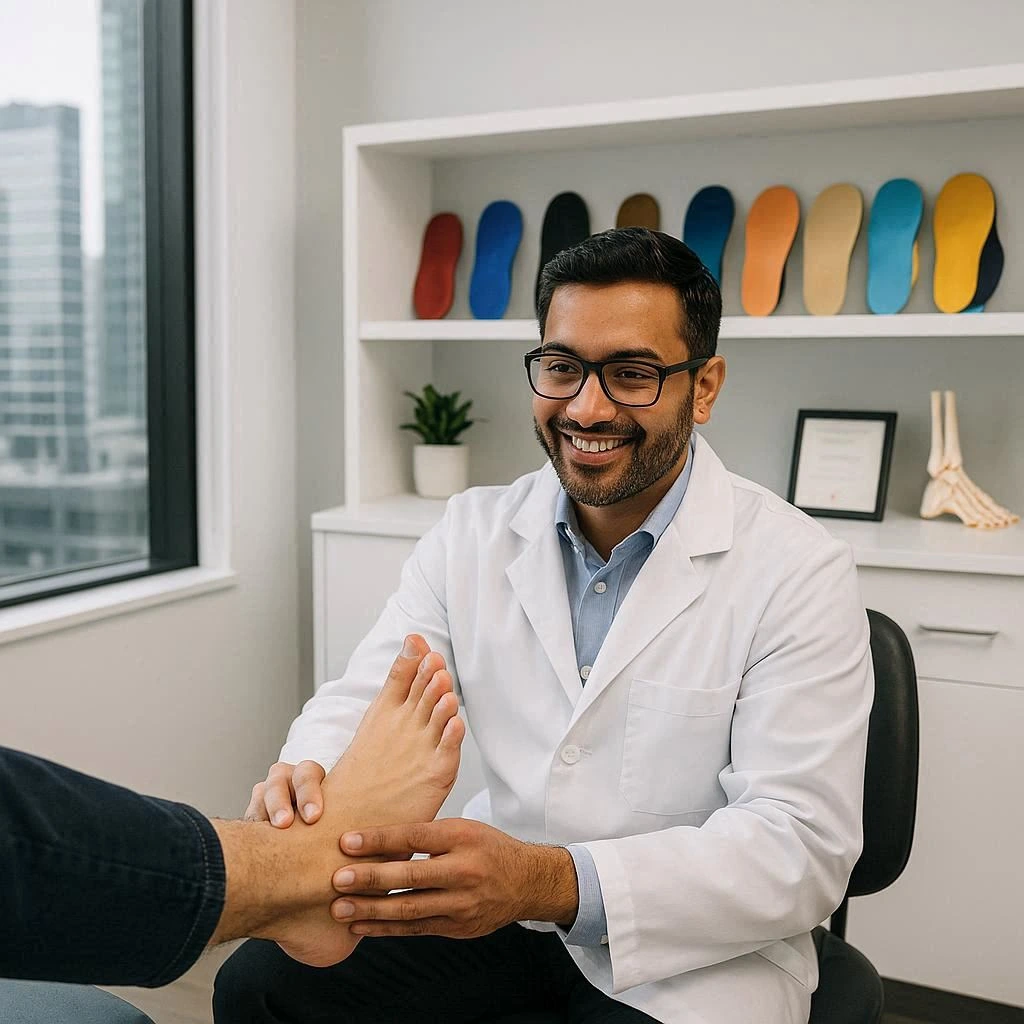
A physical examination may include:
Hip range-of-motion assessment: The clinician checks how comfortably your hip bends, rotates, and moves in different directions.
Hip flexor testing: You may be asked to lift your knee against gentle resistance to assess the muscles responsible for hip flexion.
Adductor testing: The clinician may assess whether bringing your legs together against resistance reproduces the pain.
Gait assessment: Walking patterns can reveal limping, reduced hip movement, or other functional changes.
Abdominal and groin assessment: If a hernia or abdominal wall injury is suspected, the clinician may examine the area and assess symptoms during coughing or straining.
Imaging is not necessary for every patient. Depending on the findings, a clinician may recommend an X-ray, ultrasound, or MRI to investigate a suspected joint, tendon, muscle, or hernia-related problem.
How Can You Relieve Groin Pain When Lifting Your Knee?
Treatment depends on the underlying cause and severity of the problem. However, several general strategies may help manage mild muscle-related discomfort.
1. Reduce Activities That Trigger Pain
Temporarily reduce activities that reproduce your symptoms.
You may need to modify:
- Running and sprinting.
- High-knee exercises.
- Deep squats.
- Heavy resistance training.
- Repeated stair climbing.
- Sports involving sudden changes in direction.
Relative rest does not necessarily mean avoiding all movement. Comfortable daily activities can usually continue if they do not increase your symptoms.
2. Apply a Cold Pack After a Recent Injury
If your pain began after a recent strain, a cold pack may help reduce discomfort.
Apply it for approximately 15–20 minutes at a time. Wrap the cold pack in a towel and avoid placing ice directly against your skin.
Stop if your skin becomes excessively numb or uncomfortable.
3. Return to Movement Gradually
Once the initial discomfort settles, gentle movement may help maintain hip mobility.
Start with activities that do not reproduce sharp pain. Increase the duration and intensity gradually instead of immediately returning to your previous workout routine.
4. Avoid Aggressive Stretching
Stretching an injured muscle too forcefully can make symptoms worse.
If lifting your knee already causes significant pain, avoid deep hip stretches or exercises that pull strongly on the groin.
A physiotherapist can help determine which movements are appropriate for your condition.
5. Improve Hip and Core Strength
Once your symptoms allow it, a progressive strengthening program may help improve hip control and reduce the risk of repeated problems.
The program should address the muscles around your hip, pelvis, and trunk rather than focusing on one muscle alone.
5 Gentle Exercises That May Help
The following exercises may be appropriate for some people with mild, improving muscle-related symptoms. They are not suitable for every cause of groin pain.
Do not perform them if you have severe pain, a suspected hernia, a recent significant injury, or difficulty bearing weight. Stop if an exercise causes sharp pain or makes your symptoms worse.
1. Gentle Pelvic Tilts
Pelvic tilts encourage controlled movement around the pelvis and lower back.
How to perform them:
- Lie on your back with your knees bent.
- Keep both feet comfortably on the floor.
- Gently tighten your abdominal muscles.
- Tilt your pelvis slightly so your lower back moves toward the floor.
- Relax and return to the starting position.
Perform 8–10 slow repetitions if comfortable.
2. Glute Bridges
Glute bridges strengthen the muscles around the hips and pelvis.
How to perform them:
- Lie on your back with your knees bent.
- Keep your feet flat and approximately hip-width apart.
- Gently tighten your abdominal and gluteal muscles.
- Raise your hips slightly.
- Lower your hips slowly.
Start with 6–10 repetitions, provided the movement does not cause groin pain.
3. Gentle Hip Flexion Isometric
This exercise introduces light muscle activation without requiring repeated knee lifting.
How to perform it:
- Sit comfortably in a chair.
- Place your hand on the front of your thigh.
- Gently attempt to lift your knee while applying light resistance with your hand.
- Keep the movement very small or hold the position without moving.
- Relax after a few seconds.
Only try this if it is comfortable and a healthcare professional has confirmed that gentle resisted hip flexion is appropriate.
4. Comfortable Walking
Walking can help maintain general movement when symptoms are mild.
Start with a short, flat route at a comfortable pace. Avoid hills, fast walking, or long distances until your symptoms improve.
If you begin limping or notice increasing groin pain, stop and reassess.
5. Supported Standing Weight Shifts
This exercise helps practise controlled weight transfer.
How to perform it:
- Stand near a stable surface for support.
- Keep both feet on the floor.
- Slowly shift your weight toward one leg.
- Return to the centre.
- Repeat toward the opposite leg.
Perform 8–10 gentle repetitions if the movement is comfortable.
When Should You See a Doctor or Physiotherapist?
Mild muscle discomfort may improve with appropriate activity modification. However, persistent or recurring groin pain deserves professional assessment.
Consider arranging an appointment if:
- Your pain does not improve with reasonable activity modification.
- You repeatedly experience pain when lifting your knee.
- Walking or climbing stairs becomes difficult.
- Your hip movement becomes restricted.
- You notice ongoing weakness.
- You experience repeated clicking with deep hip pain.
- Symptoms return whenever you resume exercise.
Seek urgent medical assessment if you experience sudden severe pain, inability to bear weight after an injury, significant swelling, fever with a hot or painful joint, or a painful groin bulge.
A groin bulge accompanied by severe pain, vomiting, or abdominal swelling may indicate a trapped hernia and requires emergency care.
Sudden severe testicular pain also requires emergency assessment.
How Can Physiotherapy Help With Groin Pain?
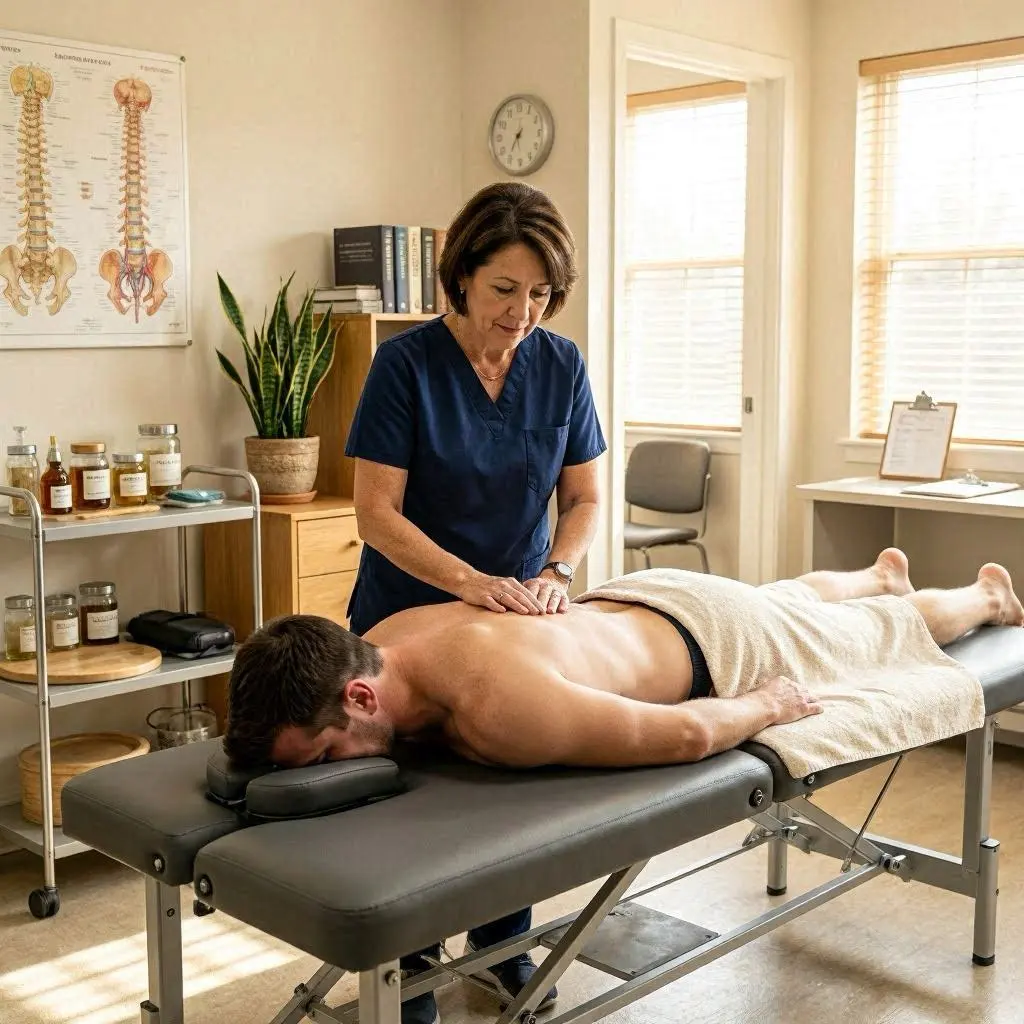
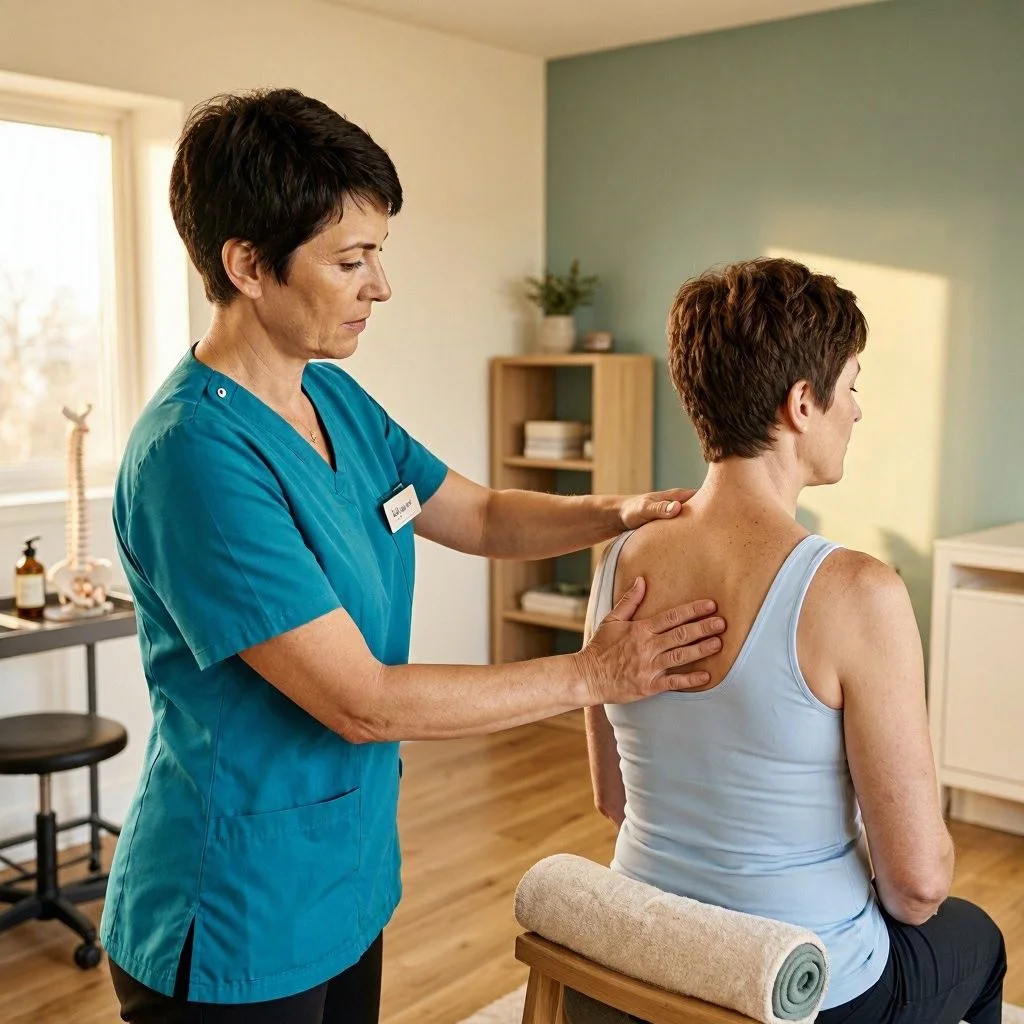
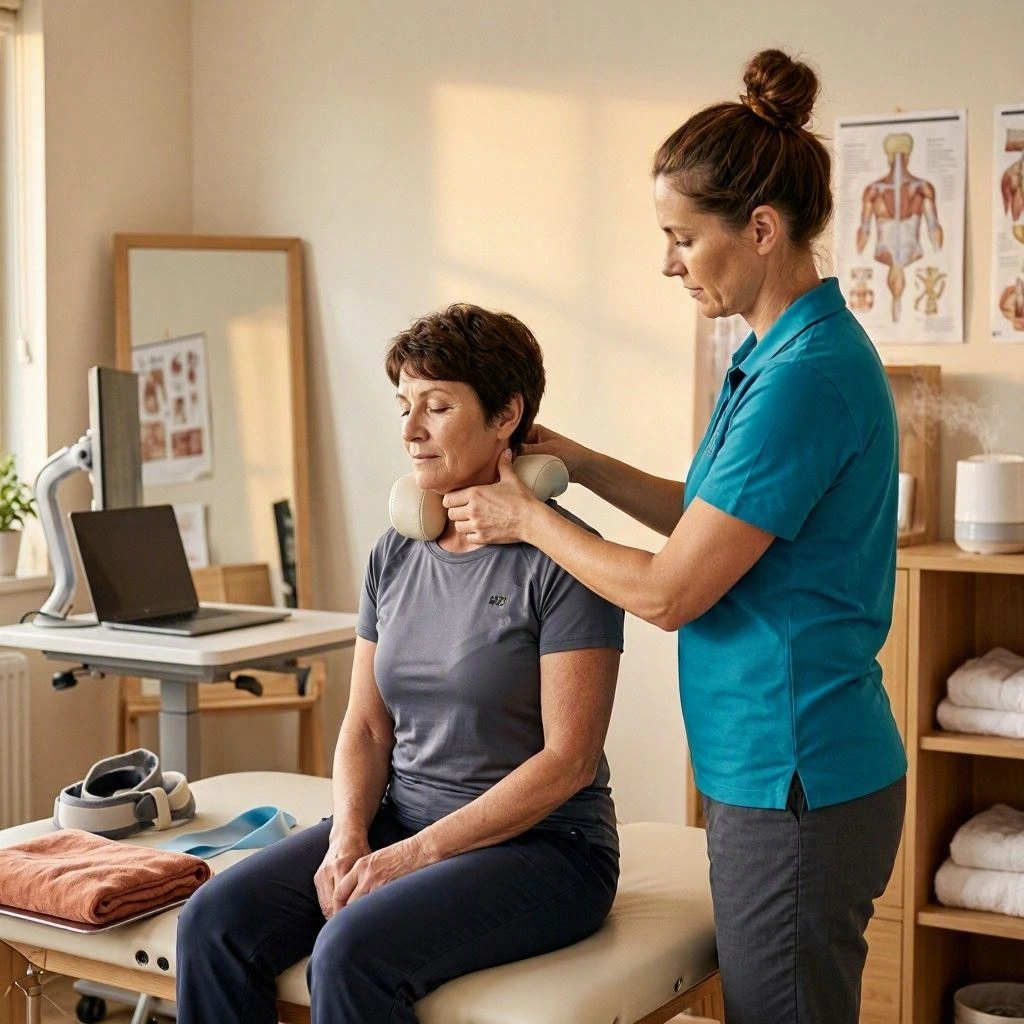
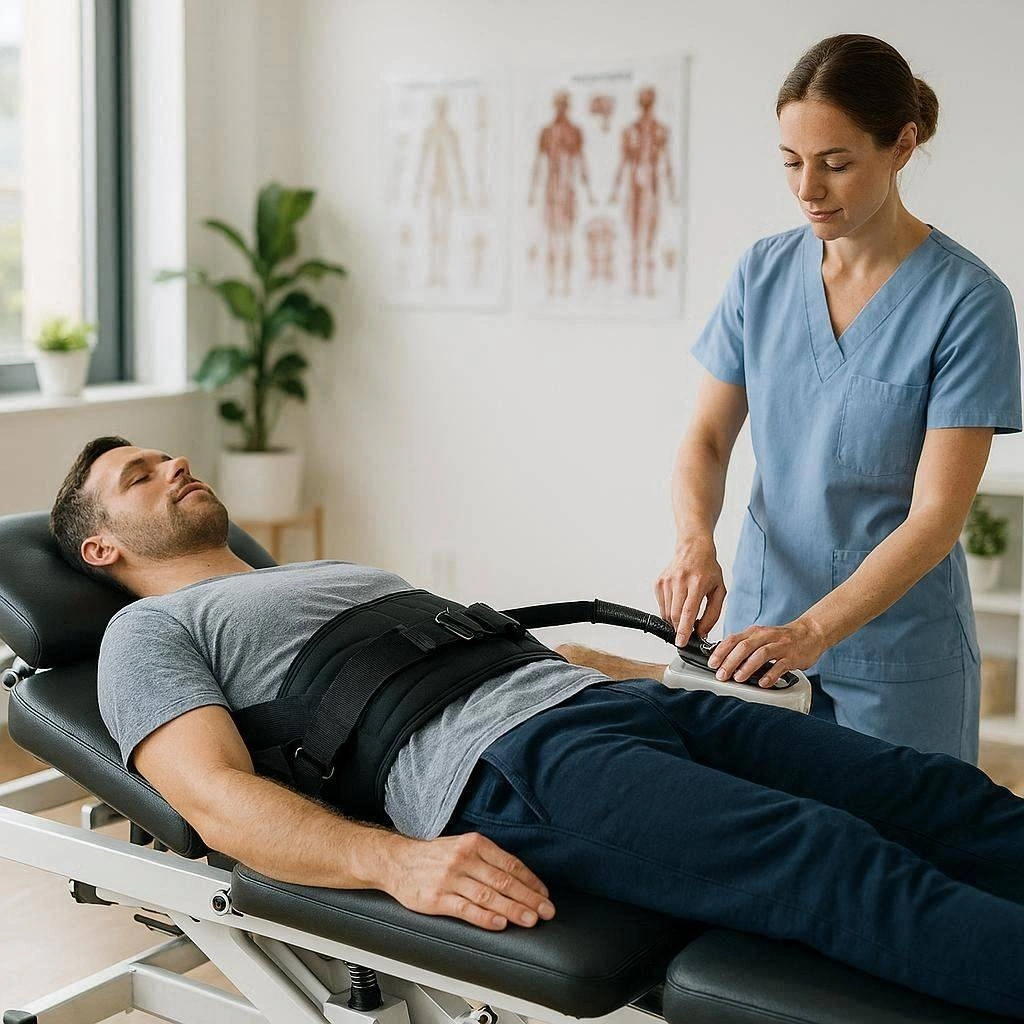
Physiotherapy can help identify movement limitations, muscle weakness, and loading problems that may contribute to groin discomfort.
Rather than treating every case as a simple muscle strain, a physiotherapist can assess the hip, pelvis, inner thigh, abdominal wall, and surrounding structures.
A rehabilitation program may include:
Pain and activity management: Identifying activities that aggravate symptoms and modifying them while recovery progresses.
Mobility exercises: Improving comfortable hip movement without placing excessive stress on irritated tissues.
Progressive strengthening: Building strength in the hip flexors, adductors, gluteal muscles, and core.
Movement retraining: Improving control during walking, lifting, squatting, and other everyday activities.
Return-to-sport planning: Gradually preparing the body for running, jumping, kicking, and changes of direction.
The appropriate approach depends on the diagnosis. For example, a hip flexor injury may require a different rehabilitation plan from an adductor injury or a problem inside the hip joint.
If you are experiencing ongoing hip or groin discomfort, you can learn more about the services offered through Ritz Clinic Physiotherapy.
How Long Does Groin Pain Take to Heal?
Recovery time depends on the injured structure, severity, overall health, and whether the cause is being addressed appropriately.
A mild muscle strain may improve over a few weeks. More significant muscle or tendon injuries can take several weeks or longer. Persistent tendon problems and hip joint conditions may require a longer rehabilitation period.
A general overview is provided below:
| Possible condition | General recovery considerations |
|---|---|
| Mild hip flexor strain | May improve over several weeks |
| Mild adductor strain | Recovery varies with injury severity |
| Iliopsoas tendinopathy | May require a gradual rehabilitation program |
| Hip labral tear | Depends on the extent of injury and treatment |
| Hip osteoarthritis | Often requires ongoing symptom management |
| Inguinal hernia | Requires medical assessment; some cases need surgery |
These are not guaranteed recovery timelines. A healthcare professional can provide a more useful estimate after assessing your symptoms.
How Can You Prevent Groin Pain When Lifting Your Knee?
Although not every hip or groin injury can be prevented, a few habits may reduce the risk of muscle-related problems.
Warm Up Before Exercise
Begin with a few minutes of light movement before running, lifting weights, or playing sports.
A warm-up can include comfortable walking, gentle leg movements, and activity-specific preparation.
Increase Training Intensity Gradually
Avoid sudden increases in running distance, resistance, repetitions, or workout frequency.
Give your body enough time to adapt to new physical demands.
Strengthen Your Hip Muscles
A balanced training routine should include the hip flexors, adductors, gluteal muscles, and core.
Strengthening these areas can improve movement control and support everyday activities.
Avoid Training Through Sharp Pain
Muscle fatigue and mild exercise discomfort are not the same as sharp or worsening pain.
If a particular movement consistently produces groin pain, modify the activity and seek an assessment when needed.
Allow Enough Recovery Time
Rest and recovery are important parts of training. Repeatedly loading irritated muscles without adequate recovery may prolong symptoms.
Frequently Asked Questions
1. Why does my groin hurt when I lift my knee toward my chest?
A hip flexor strain or iliopsoas irritation is one possible cause because these muscles help lift your thigh toward your abdomen. However, hip joint problems and other groin injuries can produce similar symptoms.
2. Can a tight hip flexor cause groin pain?
Yes. Hip flexor tightness or irritation may contribute to discomfort at the front of the hip, particularly during repeated knee lifting. However, persistent pain should be assessed to rule out an actual muscle or tendon injury.
3. Why does my groin hurt when I raise my leg while lying down?
Raising your leg activates the hip flexor muscles. If these muscles or their tendons are irritated, the movement may reproduce pain. Other hip-related conditions can also cause discomfort.
4. Can sitting too long cause groin pain when lifting my knee?
Prolonged sitting may contribute to stiffness or discomfort around the hip. However, pain during knee lifting can have several causes, including muscle irritation and joint problems. Sitting alone does not establish the diagnosis.
5. Is groin pain when lifting the knee a sign of a pulled muscle?
It can be. Hip flexor and adductor strains are common causes of groin pain. A sudden pulling sensation, tenderness, and pain during muscle contraction may support this possibility, but an examination is needed for confirmation.
6. Should I stretch if my groin hurts when lifting my knee?
Not necessarily. Aggressive stretching may aggravate an acute muscle or tendon injury. Gentle movement may be appropriate, but the best exercises depend on the underlying cause and symptom severity.
7. Can hip arthritis cause pain in the groin?
Yes. Hip osteoarthritis commonly causes deep groin discomfort, stiffness, and difficulty with movements that require bending the hip, including lifting the knee.
8. When should I worry about groin pain?
Seek medical assessment if pain is persistent, worsening, or affecting your ability to walk. Sudden severe pain, a painful groin bulge with vomiting, fever with a painful joint, or sudden severe testicular pain requires urgent medical attention.
9. Can physiotherapy help with pain when lifting the knee?
Yes, when the cause is appropriate for conservative rehabilitation. Physiotherapy may help improve hip mobility, muscle strength, movement control, and the ability to return safely to everyday activities.
10. Can I continue exercising with groin pain?
It depends on the cause and severity. Avoid activities that produce sharp or increasing pain. Gentle, comfortable movement may be possible, but significant or recurring symptoms should be assessed before returning to demanding exercise.
Conclusion
Groin pain when lifting your knee can develop for several reasons, including hip flexor strains, adductor injuries, iliopsoas irritation, hip joint conditions, and inguinal hernias.
The location and timing of your symptoms can provide useful clues, but they cannot replace a proper clinical assessment. Pay attention to whether the pain occurs during sitting, walking, climbing stairs, or lifting your leg against resistance.
For mild muscle-related discomfort, modifying aggravating activities and gradually returning to movement may help. However, persistent pain, restricted movement, weakness, or warning signs should not be ignored.
A suitable assessment and individualized rehabilitation plan can help address the underlying problem and support a safer return to normal activity.
American Family Physician – Groin Pain and Injuries: Evaluation and Management
Key Takeaways
| Key point | What to remember |
|---|---|
| Most common muscular causes | Hip flexor and adductor injuries |
| Other possible causes | Tendon irritation, labral injury, hip impingement, arthritis, and hernia |
| Common trigger | Raising the thigh toward the abdomen |
| Initial approach | Modify painful activities and avoid aggressive stretching |
| Rehabilitation | Individualized mobility and progressive strengthening |
| When to seek help | Persistent pain, weakness, limping, or restricted movement |
| Emergency warning signs | Severe pain, painful hernia bulge with vomiting, or sudden testicular pain |