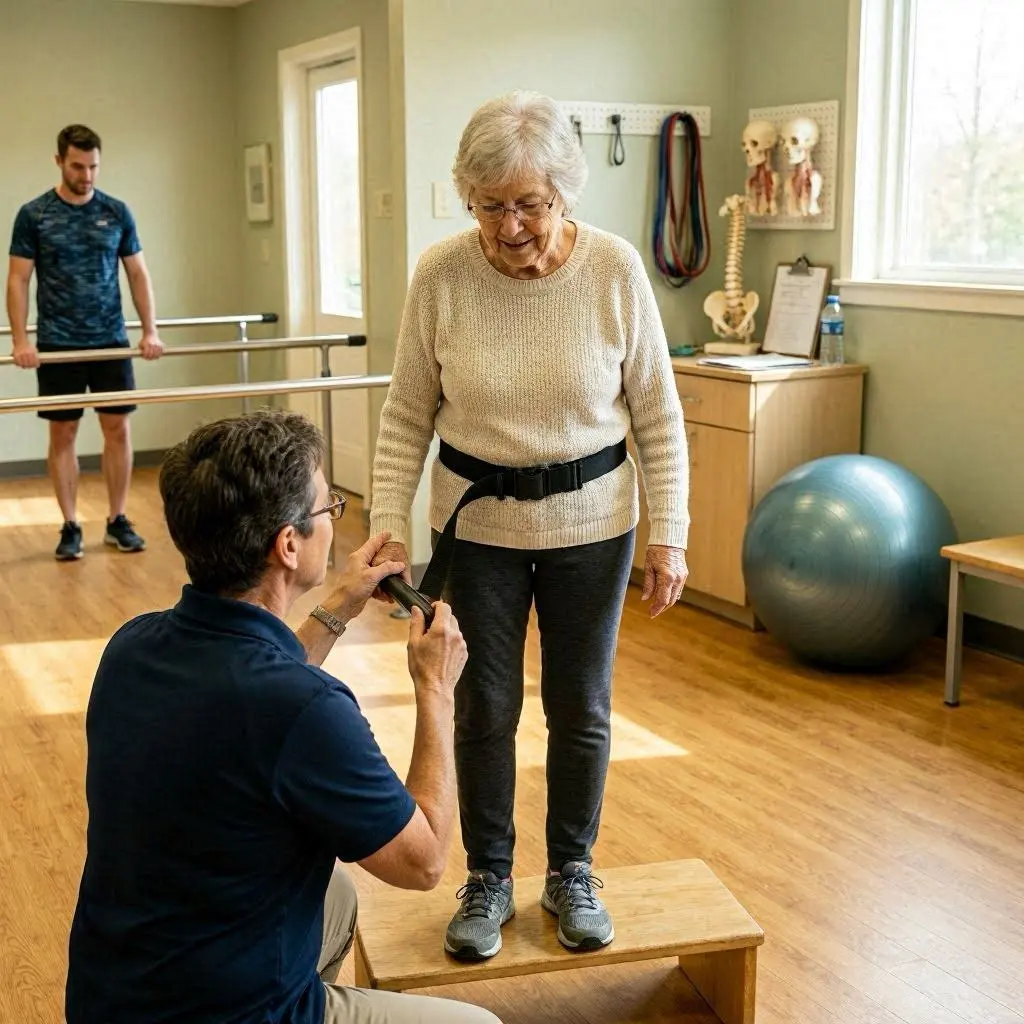
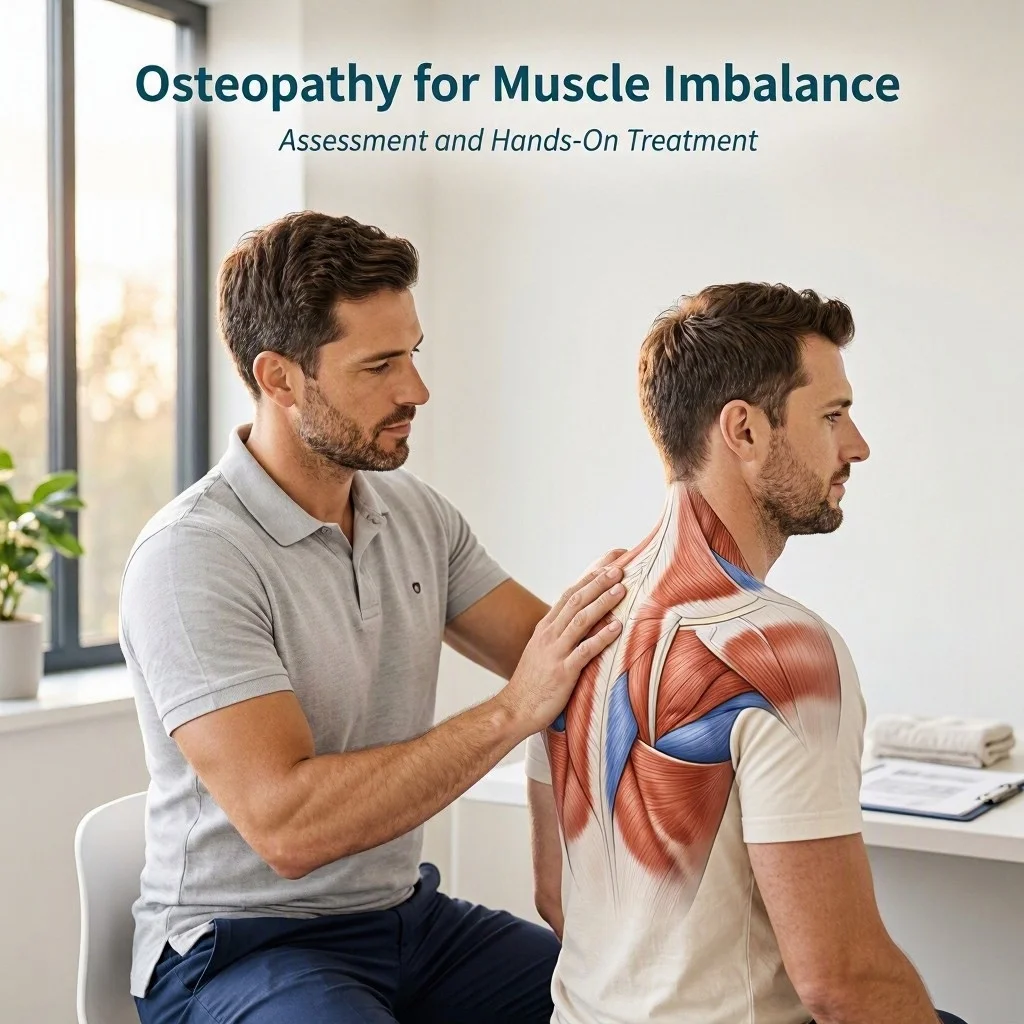
Osteopathy for Muscle Imbalance: Causes, Treatment, and Improving Movement
Muscle imbalance can affect the way the body moves, performs everyday tasks, and responds to physical activity. Some people notice that one side of their body feels stronger than the other, while others experience tightness, reduced mobility, recurring discomfort, or difficulty maintaining good movement control during exercise.
Searching for osteopathy for muscle imbalance may be a starting point for people looking for a conservative approach to musculoskeletal discomfort. Osteopathic care may include a physical assessment, hands-on techniques, movement advice, and exercises intended to support comfortable movement and function.
However, muscle imbalance is a broad term rather than a single medical diagnosis. Differences in strength, flexibility, or coordination can be normal, and not every imbalance requires treatment. When an imbalance is associated with pain, reduced function, or a recurring injury, an assessment can help determine which factors may be contributing to the problem.
This article explains what muscle imbalance means, why it develops, how osteopathy may fit into a treatment plan, and which strategies can help support strength, mobility, and long-term movement.
What Is Muscle Imbalance?
Muscle imbalance generally describes a difference in the strength, endurance, flexibility, or coordination of muscles that work together during movement.
Muscles rarely operate independently. They work in groups to stabilise joints, control movement, and help the body respond to physical demands. For example, walking requires coordinated activity around the hips, knees, ankles, and trunk.
When the strength or control of certain muscles differs from what a particular activity requires, movement may become less efficient or more difficult. In some circumstances, this may contribute to discomfort or reduced performance.
Muscle imbalance can involve:
- Differences in strength between the left and right sides of the body
- Differences in strength between opposing muscle groups
- Reduced endurance in muscles responsible for stabilising a joint
- Restricted movement in a particular direction
- Differences in coordination or movement control
- Changes in muscle function following an injury or period of inactivity
Importantly, not every difference is abnormal. Most people have some natural asymmetry. One arm may be stronger than the other, and the dominant leg may perform certain tasks differently from the non-dominant leg.
A difference becomes more relevant when it affects function, is associated with symptoms, or limits a person’s ability to complete an activity safely and comfortably.
Common Signs and Symptoms of Muscle Imbalance
Muscle imbalance does not always cause noticeable symptoms. Some people identify differences during strength training or sports, while others notice discomfort during daily activities.
1. Uneven strength
You may find that one arm can lift more weight than the other or that one leg feels less stable during a single-leg exercise.
These differences can develop through normal activity patterns, previous injuries, training habits, or periods of reduced movement.
A strength difference does not automatically mean that one muscle is damaged. The significance depends on the size of the difference, the activity involved, and whether symptoms are present.
2. Persistent muscle tightness
Some people experience tightness in the hips, shoulders, neck, or back when certain movements are repeated.
Tightness can be associated with exercise load, discomfort, reduced movement, or protective muscle activity. It does not necessarily mean that a muscle is physically shorter or that another muscle is too weak.
A thorough assessment can help distinguish a mobility limitation from pain-related tension or other contributing factors.
3. Reduced range of motion
An individual may find it more difficult to rotate the neck in one direction, raise an arm overhead, squat comfortably, or move a hip through its usual range.
Differences in range of motion can be influenced by joint structure, flexibility, previous injury, pain, and movement habits. The cause should be considered before deciding which treatment or exercise is appropriate.
4. Changes in movement technique
Muscle imbalance may be suspected when someone consistently shifts their weight to one side during a squat, struggles to maintain balance, or uses a different movement strategy on each side.
However, movement differences are not automatically evidence of dysfunction. People naturally use different strategies depending on their anatomy, experience, and task demands.
A clinician should evaluate whether the movement pattern is associated with symptoms or functional limitations rather than assuming that every deviation needs correction.
5. Recurring discomfort
Some people with movement-related strength or endurance differences also experience recurring discomfort during exercise or everyday activities.
Pain may occur around the shoulders, lower back, hips, knees, or other areas. Nevertheless, pain has many possible causes, and muscle imbalance should not be assumed to be the explanation without appropriate assessment.
Persistent or worsening pain deserves professional evaluation.
What Causes Muscle Imbalance?
Muscle imbalance can develop through a combination of physical activity, injury history, movement habits, and individual characteristics.
1. Repetitive activities
Daily activities often involve repeated movements. Desk work, driving, lifting, carrying a bag, or performing a sport-specific task may place greater demands on certain muscle groups.
Over time, the muscles used most frequently may develop different strength or endurance characteristics from those used less often.
This does not mean that a repetitive activity will inevitably cause an injury. The effect depends on factors such as workload, recovery, individual capacity, and variation in movement.
2. Previous injuries
After a muscle strain, joint injury, or operation, a person may reduce movement because of pain or medical restrictions.
The affected area can lose strength and endurance during this period. People may also change how they move to protect the injured area.
Once the injury has healed sufficiently, gradual strengthening and functional rehabilitation can help restore capacity. The appropriate timing depends on the injury and any clinical restrictions.
3. Uneven training programmes
Exercise programmes sometimes focus heavily on particular movements while neglecting other important physical qualities.
For example, a person may perform many pressing exercises but relatively little pulling work, or may train both legs together without checking whether one leg consistently contributes less.
A balanced programme should reflect the person’s goals, experience, current ability, and recovery needs. It does not need to produce identical strength on both sides to be effective.
4. Prolonged inactivity
Reduced activity can affect strength, endurance, mobility, and coordination.
This may occur after illness, surgery, an injury, or a period of sedentary behaviour. Some muscles may become less conditioned because they are used less frequently.
A gradual return to movement, with suitable strengthening exercises, can help rebuild physical capacity when medically appropriate.
5. Natural anatomical differences
People have natural differences in limb length, joint structure, flexibility, and body proportions. These differences can influence how they perform particular movements.
Anatomical asymmetry does not automatically require correction. Treatment decisions should be based on symptoms, function, and clinical findings rather than the goal of making the body perfectly symmetrical.
6. Pain and protective movement
Pain can change how the nervous system controls movement. A person may avoid loading a painful shoulder or shift weight away from an uncomfortable leg.
Over time, this can contribute to differences in strength or movement habits. In these cases, addressing the source of pain and gradually rebuilding function may be more useful than focusing only on the apparent imbalance.
Can Osteopathy Help With Muscle Imbalance?
Osteopathy is a form of healthcare that commonly focuses on the musculoskeletal system. Depending on the practitioner’s training, the clinical setting, and the person’s condition, osteopathic care may include a physical assessment, hands-on treatment, movement advice, and exercise recommendations.
For people experiencing muscle imbalance alongside musculoskeletal pain or restricted movement, osteopathy may be considered as one part of a broader management plan.
The evidence requires careful interpretation. A 2026 systematic and umbrella review found that osteopathic interventions may improve pain in some conditions, particularly neck and low-back pain, while evidence for other body regions was less conclusive. The review also highlighted limitations in study quality and differences between treatment approaches. <Cite refs={[“turn682627search0″,”turn682627search1”]} />
These findings relate to musculoskeletal pain, not proof that osteopathy can correct every type of muscle imbalance. Treatment should therefore focus on measurable functional goals and the individual’s symptoms.
Improving movement comfort
When muscle imbalance is associated with pain or stiffness, hands-on treatment may help some people feel more comfortable moving.
An osteopath may use selected manual techniques according to the assessment. Any improvement in comfort should be followed by appropriate movement and strengthening when indicated.
Temporary symptom relief does not necessarily mean that strength or coordination differences have been corrected.
Supporting joint mobility
Some people have restricted movement that makes exercise or everyday activities difficult.
Depending on the cause, an osteopath may use gentle mobilisation or other manual techniques as part of care. The aim is to support comfortable movement where appropriate, not to force a joint into a position it cannot safely tolerate.
Joint restriction can have several causes, so treatment should be adapted to the individual.
Identifying functional limitations
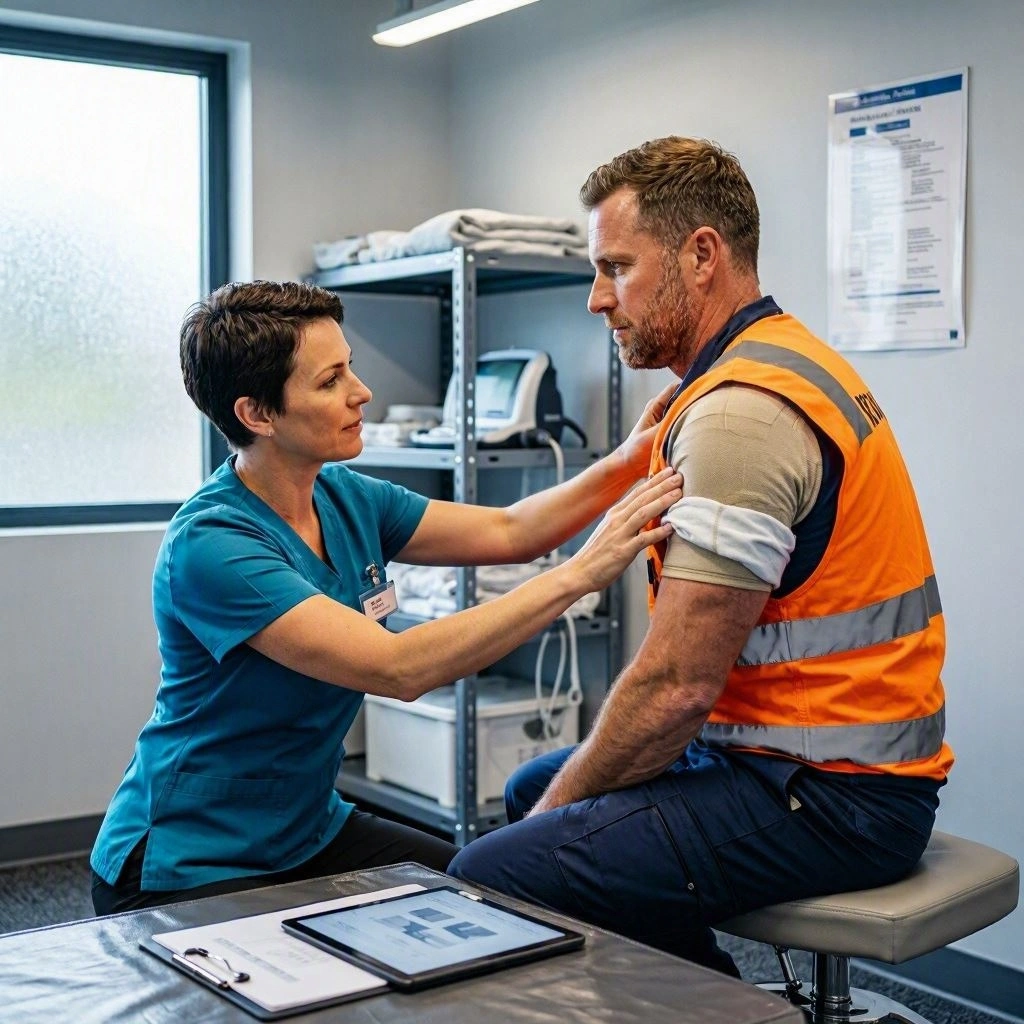
An assessment may examine how a person moves, which activities provoke symptoms, and whether differences in strength, endurance, or mobility appear relevant.
This can help guide a rehabilitation plan. However, a visual assessment alone cannot identify every underlying cause, and additional medical evaluation may be needed when symptoms are unusual or persistent.
Complementing exercise-based rehabilitation
Exercise is often an important part of addressing meaningful differences in strength or endurance.
An osteopath may recommend exercises or coordinate with a physiotherapist when progressive strengthening, balance work, or functional retraining is required.
For many people, combining appropriate movement with education and a gradual increase in activity is more useful than relying on hands-on treatment alone.
What Happens During an Osteopathic Assessment?
A suitable assessment should identify the person’s concerns, establish realistic goals, and determine whether osteopathic care is appropriate.
Medical and activity history
The practitioner may ask about:
- When the imbalance or discomfort was first noticed
- Whether symptoms occur during exercise, work, or rest
- Previous injuries or operations
- Changes in strength, balance, or mobility
- Activities that increase or reduce symptoms
- Exercise routines and recent changes in training
- Relevant medical conditions and medications
This information helps establish whether the issue appears related to movement and function or whether further investigation may be necessary.
Movement and functional assessment
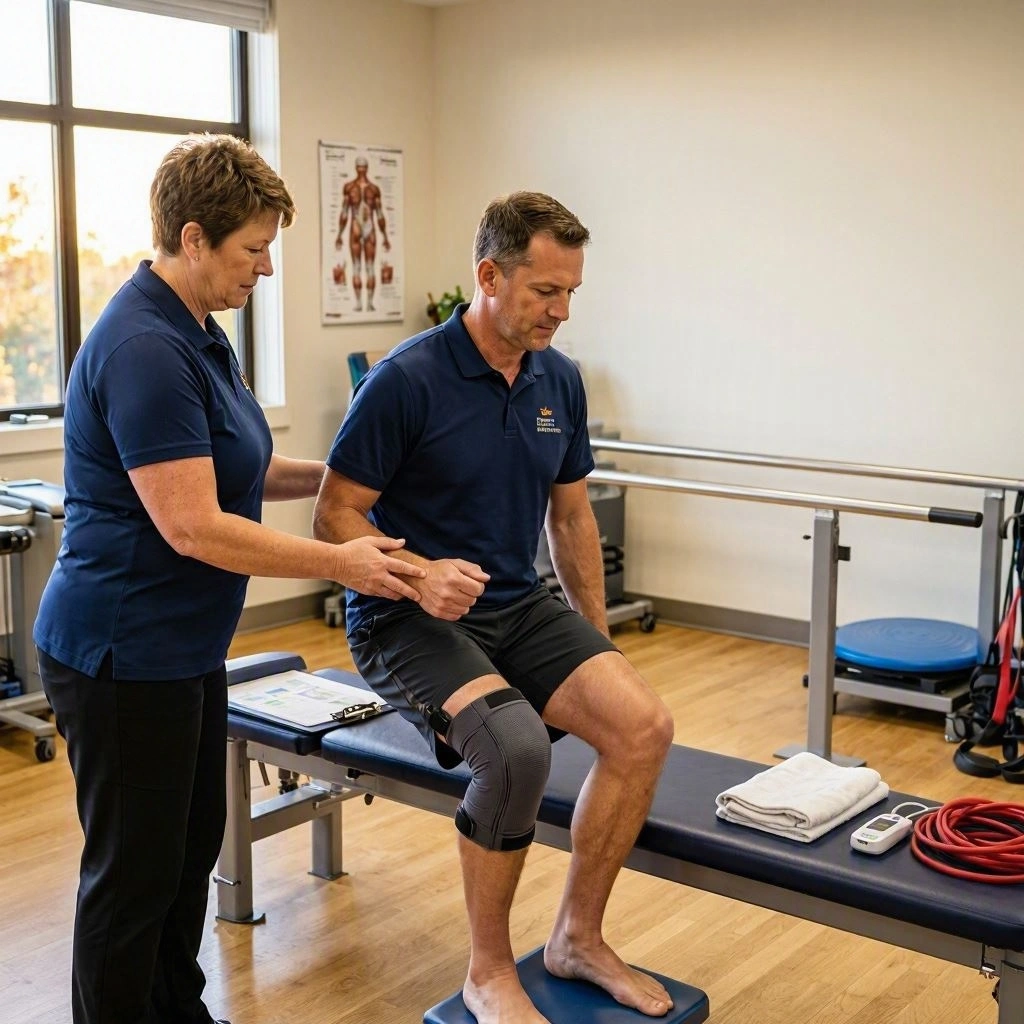
Depending on the symptoms, an assessment may include range of motion, functional movements, balance, muscle strength, and the person’s ability to perform relevant tasks.
For example, someone reporting a difference between the legs may be assessed during walking, step-ups, or other suitable movements.
The assessment should be appropriate to the person’s ability and symptoms. A person with severe pain or a recent significant injury may require medical evaluation before completing strenuous tests.
Discussing the findings
A practitioner should explain which findings appear relevant and which are simply normal variations.
The treatment plan should not be based on the assumption that every asymmetry is harmful. Instead, it should address problems that affect the person’s function or contribute to their symptoms.
Where appropriate, the practitioner may recommend medical review, physiotherapy, or additional investigation.
Osteopathic Treatment Techniques for Muscle Imbalance
Osteopathic treatment varies according to the practitioner’s training and the person’s condition. The following techniques may be considered in selected circumstances.
1. Soft tissue techniques
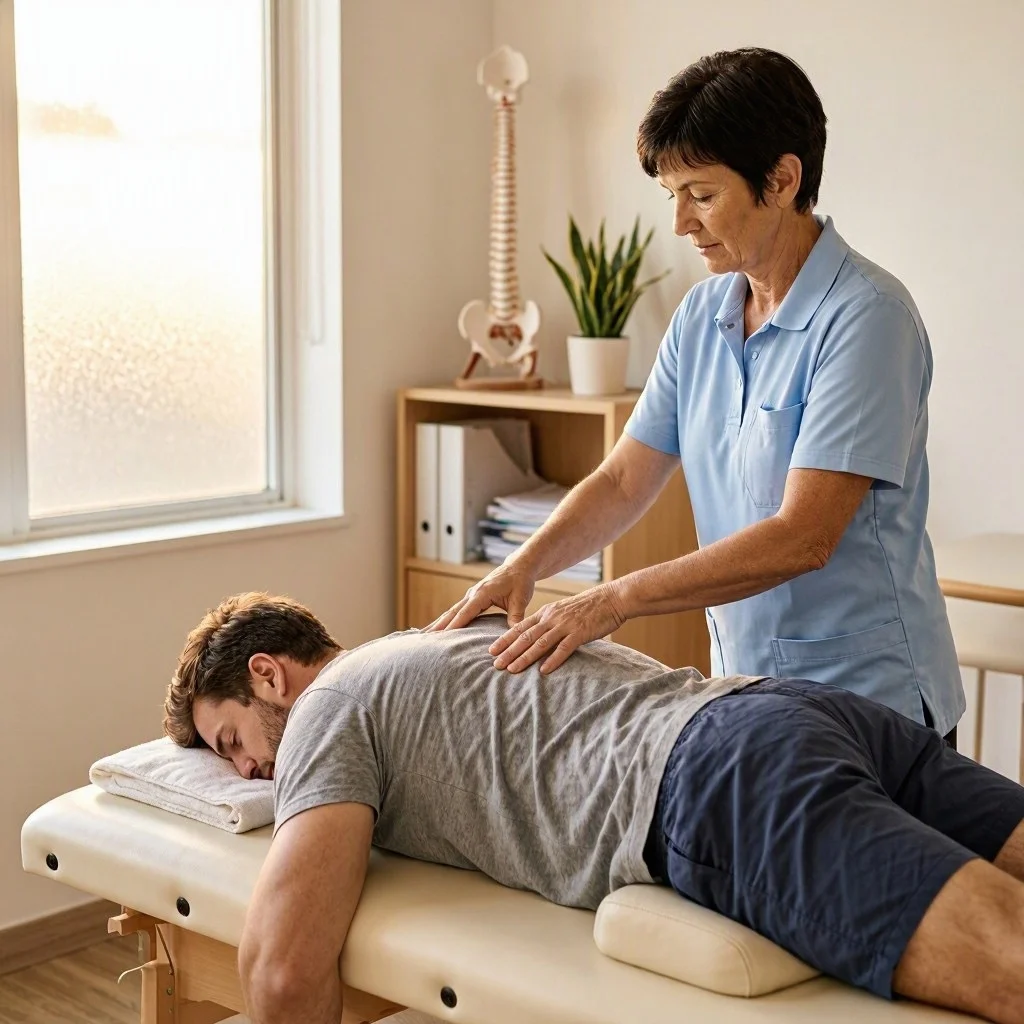
Soft tissue techniques involve applying manual pressure or movement to muscles and surrounding tissues.
They may be used to help manage discomfort or improve tolerance for movement. However, muscle tightness does not always mean that a muscle requires massage or pressure.
The practitioner should consider the person’s symptoms, injury history, and response to treatment. Vigorous techniques may be unsuitable for some acute injuries or medical conditions.
2. Joint mobilisation
Joint mobilisation involves controlled movement of a joint through a selected range.
It may be considered when a person has musculoskeletal discomfort or restricted mobility and the technique is appropriate for their condition.
Improved joint movement can sometimes make exercise more comfortable, but mobilisation alone does not necessarily address underlying strength or endurance differences.
3. Muscle energy techniques
Muscle energy techniques involve a practitioner positioning a body part and asking the patient to perform a controlled muscle contraction against resistance.
These techniques may be used as part of an individualised manual therapy approach. Their suitability depends on the clinical assessment, and they should not be presented as a guaranteed way to correct muscle imbalance.
4. Myofascial techniques
Myofascial techniques are intended to address discomfort or movement restrictions involving muscles and surrounding connective tissues.
Some people report short-term improvement in comfort following manual therapy. However, the evidence varies by condition, and these techniques should not be assumed to permanently change tissue structure or correct every movement problem.
5. Exercise guidance
Exercise may be recommended to address measurable limitations in strength, endurance, mobility, or coordination.
A suitable programme may include progressive resistance training, balance exercises, mobility work, or movement practice tailored to the person’s goals.
Exercise selection should follow the assessment rather than a standard routine applied to everyone.
The Role of Exercise in Correcting Muscle Imbalance
If a meaningful difference in strength or endurance is contributing to functional limitations, exercise is often central to improving physical capacity.
The best programme depends on the person’s current ability, symptoms, injury history, and goals.
Unilateral strength exercises
Unilateral exercises train one arm or leg at a time. Examples include supported single-leg movements, step-ups, split squats, and single-arm rows.
These exercises can make it easier to observe how each side performs. They may be useful when a person has a specific, measurable strength difference.
However, unilateral training is not automatically necessary for every person. Exercise selection should reflect the actual limitation rather than a desire to eliminate all asymmetry.
Progressive resistance training
Resistance training can improve strength and endurance when the load and volume are appropriate.
A programme may begin with manageable resistance and gradually progress as the person adapts. Good technique, suitable recovery, and consistency are important.
If an exercise causes sharp pain, significant symptom worsening, or unusual weakness, stop and seek guidance rather than forcing the movement.
Mobility exercises
Mobility exercises may help people who have a specific restriction affecting daily activities or training.
Examples include comfortable hip movements, shoulder range-of-motion exercises, or gentle thoracic rotation. The appropriate exercises depend on the body area and the cause of the restriction.
Stretching should not be prescribed simply because a muscle feels tight. Tightness can be associated with several factors, and additional stretching may not address the underlying problem.
Balance and coordination exercises
Balance and coordination can be important after lower-limb injuries or periods of inactivity.
Depending on the person’s ability, a programme may include supported single-leg standing, controlled step-ups, or task-specific movement practice.
Safety is essential. People at risk of falling should use appropriate support and seek professional guidance before attempting challenging balance exercises.
Muscle Imbalance in Different Areas of the Body
Muscle imbalance can affect different body regions, and the approach should be adapted to the person’s symptoms and functional goals.
Shoulder muscle imbalance
The shoulder depends on coordinated movement between the shoulder joint, shoulder blade, and surrounding muscles.
Some people notice difficulty reaching overhead, reduced strength during pressing or pulling exercises, or discomfort during repetitive work.
An assessment may consider shoulder mobility, strength, activity demands, and possible joint or tendon problems.
Management may include appropriate strengthening, mobility exercises, activity modification, and selected manual therapy. Persistent pain, significant weakness, or symptoms following trauma may require medical assessment.
Hip muscle imbalance
The muscles around the hips contribute to walking, stair climbing, balance, and lower-body exercise.
Differences in strength or control may become noticeable during single-leg tasks or changes in direction. However, hip pain can also arise from joint conditions, tendon problems, nerve irritation, and other causes.
Treatment should address the underlying problem rather than assuming that one weak muscle explains every symptom.
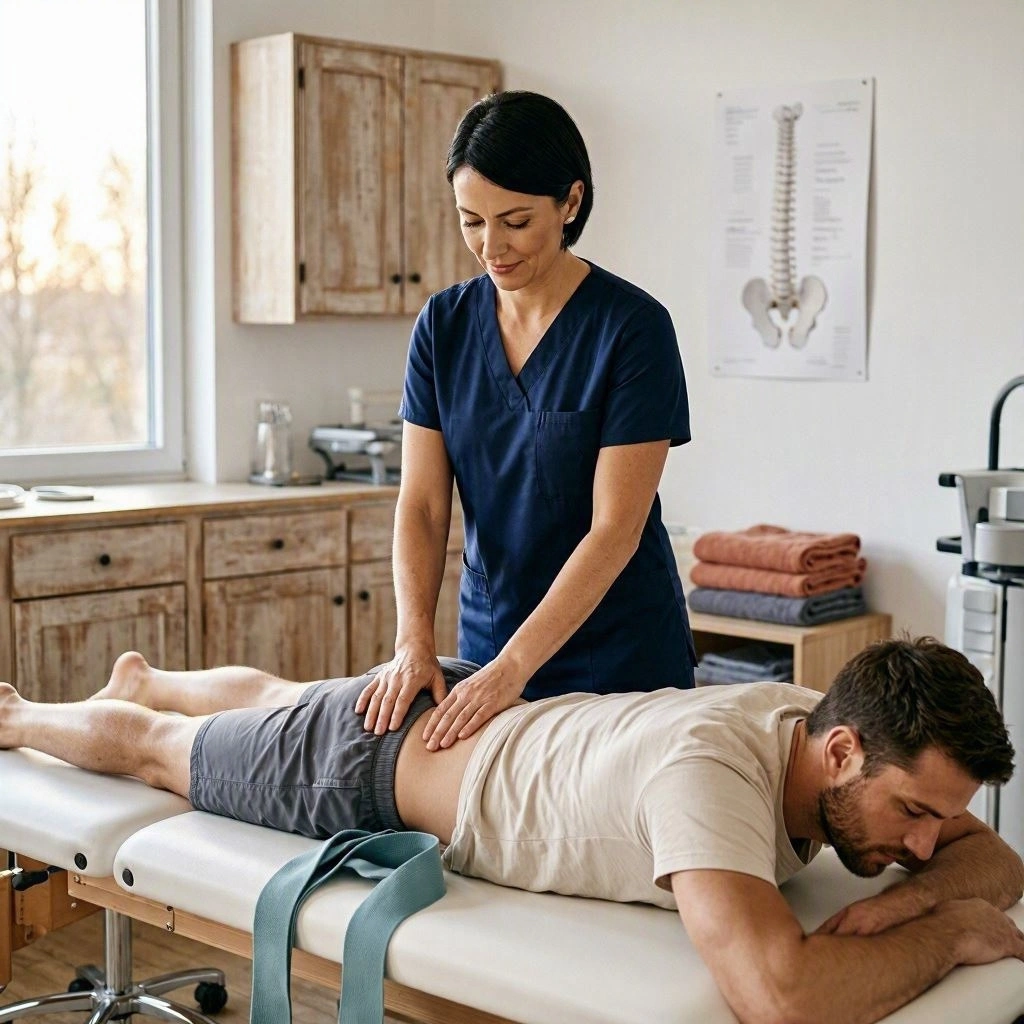
Lower-back muscle imbalance
The trunk muscles work with the hips and other structures to support movement and transfer forces during everyday activities.
Differences in endurance, strength, or movement habits may be relevant for some people with back discomfort. However, there is no single ideal pattern of muscle activation that applies to everyone.
A plan may include gradually progressed strengthening, comfortable movement, and strategies for returning to daily activities.
Severe back pain accompanied by new bladder or bowel problems, numbness around the groin or saddle region, or progressive leg weakness requires emergency medical assessment.
Neck and upper-back muscle imbalance
The neck and upper-back muscles help control head and shoulder movement during work, exercise, and daily tasks.
Prolonged activity in one position can contribute to discomfort for some people, but posture alone is not a complete explanation for neck pain.
Depending on the findings, treatment may include movement breaks, suitable strengthening, mobility exercises, and selected manual techniques.
Sudden severe neck pain, significant trauma, fever with neck stiffness, or new neurological symptoms should be medically assessed.
How Long Does It Take to Improve Muscle Imbalance?
There is no universal timeline for improving muscle imbalance.
A small difference in strength caused by inconsistent training may respond differently from a limitation following surgery or a significant injury. Progress also depends on training frequency, recovery, overall health, and whether the underlying cause has been identified.
Some people notice changes in movement confidence or comfort relatively early. Measurable strength and endurance improvements generally require consistent practice over time.
A useful plan should establish realistic goals and review progress periodically. Goals might include improving a particular exercise, increasing comfortable range of motion, returning to a sport, or completing daily activities with less difficulty.
If progress stalls, symptoms worsen, or new signs develop, the plan should be reassessed rather than continued automatically.
When Should You Seek Medical Advice?
Although many movement-related problems can be managed conservatively, some symptoms require medical assessment before osteopathic treatment or exercise.
Seek prompt medical attention for:
- Sudden or progressive muscle weakness
- New numbness or significant changes in sensation
- Severe pain following a major injury
- A hot, swollen joint accompanied by fever or feeling unwell
- Unexplained muscle wasting
- Persistent symptoms that worsen despite appropriate care
Seek emergency care for new bladder or bowel dysfunction, numbness around the groin or saddle area alongside back pain, or rapidly developing neurological symptoms.
An unexplained difference in strength between the limbs, particularly when it appears suddenly or is associated with numbness, facial weakness, difficulty speaking, or difficulty walking, should not be assumed to be a simple muscle imbalance.
A healthcare professional can determine whether further tests or referral to another specialist are needed.
Osteopathy Versus Physiotherapy for Muscle Imbalance
Osteopathy and physiotherapy can both involve musculoskeletal assessment, exercise advice, and selected hands-on techniques. The exact services and approaches depend on the practitioner’s qualifications, training, and clinical setting.
Osteopathy may incorporate manual techniques alongside movement advice and exercises. Physiotherapy often places a strong emphasis on exercise-based rehabilitation, functional goals, and progressive return to activity.
Neither approach can guarantee that every muscle imbalance will be corrected. A suitable practitioner should identify the relevant functional limitations, explain the treatment rationale, and adjust the plan according to progress.
For some people, a combination of manual therapy and structured exercise may be appropriate. For others, exercise-based rehabilitation or medical evaluation may be the more suitable starting point.
At Ritz Clinic, you can learn more about the clinic’s physiotherapy services. Contact the clinic to confirm which services are available and whether an appointment is appropriate for your needs.
Frequently Asked Questions
1. Can osteopathy correct muscle imbalance?
Osteopathy may help some people manage musculoskeletal pain or movement restrictions that occur alongside muscle imbalance. However, manual treatment alone cannot be expected to correct every strength, endurance, or coordination difference. The approach should be based on an assessment and clear functional goals.
2. What are the common signs of muscle imbalance?
Possible signs include differences in strength, restricted movement, reduced endurance, changes in movement technique, or recurring discomfort. These signs are not specific to muscle imbalance, so other possible causes should be considered.
3. Is muscle imbalance always a problem?
No. Natural differences between the sides of the body are common. An asymmetry is more relevant when it affects function, is associated with symptoms, or limits a person’s ability to perform important activities.
4. Can muscle imbalance cause back pain?
Differences in strength, endurance, or movement control may be relevant for some people with back discomfort. However, back pain has many potential causes, and muscle imbalance should not be assumed to be the primary explanation without assessment.
5. Is exercise better than hands-on treatment for muscle imbalance?
Exercise is generally important when the goal is to improve strength, endurance, or coordination. Hands-on treatment may help selected people manage pain or movement restrictions, but its role should be considered alongside active rehabilitation rather than as a guaranteed standalone solution.
6. How often should I see an osteopath?
There is no universal appointment schedule. The appropriate frequency depends on the person’s symptoms, goals, response to treatment, and clinical needs. Progress should be reviewed regularly, and treatment should not continue indefinitely without a clear rationale.
7. Can muscle imbalance develop after an injury?
Yes. Pain, reduced activity, and movement restrictions can contribute to changes in strength and coordination after an injury. A suitable rehabilitation plan can help rebuild physical capacity when it is safe to do so.
8. Do I need to stretch tight muscles?
Not necessarily. Tightness does not always mean that a muscle is physically shortened. Depending on the cause, strengthening, movement practice, activity modification, or other approaches may be more appropriate than additional stretching.
9. Can osteopathy help with shoulder muscle imbalance?
Osteopathy may be considered when shoulder discomfort or movement restrictions are suitable for conservative care. However, shoulder symptoms can have several causes, and treatment should be based on the assessment. Progressive weakness or significant pain following an injury requires medical evaluation.
10. When should I see a healthcare professional?
Seek an assessment if the imbalance is associated with persistent pain, reduced function, unexplained weakness, or worsening symptoms. Sudden weakness, significant neurological symptoms, or other emergency warning signs require urgent medical attention.
Conclusion
Osteopathy for muscle imbalance may be an option for people who experience musculoskeletal discomfort or movement restrictions alongside differences in strength, endurance, or coordination. Depending on the assessment, osteopathic care may include selected manual techniques, movement advice, and exercises designed to support comfortable function.
However, muscle imbalance is not a single diagnosis, and not every asymmetry requires correction. Hands-on treatment should not be presented as a guaranteed way to permanently realign muscles or eliminate every difference between the sides of the body.
A well-planned approach begins by identifying the limitations that actually affect the person. When appropriate, progressive strengthening, mobility work, movement practice, and professional guidance can help improve physical capacity and everyday function.
If symptoms are persistent, unexplained, or worsening, seek an appropriate assessment rather than assuming that muscle imbalance is the only cause.