Physiotherapy for Workplace Injuries: A Complete Guide to Treatment, Rehabilitation, and Return to Work
Physiotherapy for workplace injuries can help employees recover from pain, restore movement, rebuild strength, and return to their normal work activities safely. Workplace injuries can occur in many different environments, from offices and warehouses to construction sites, healthcare facilities, factories, retail stores, and professional workplaces.
Some injuries happen suddenly, such as a fall, lifting injury, sprain, or muscle strain. Others develop gradually because of repetitive movements, prolonged sitting, awkward positions, insufficient recovery, or repeated physical workloads.
Physiotherapy provides a structured approach to assessing these problems and developing an individualized rehabilitation program. Depending on the injury, treatment may include therapeutic exercise, strengthening, mobility training, manual therapy, movement retraining, ergonomic education, functional rehabilitation, and return-to-work planning.
The objective is not simply to reduce symptoms. Effective rehabilitation aims to restore the physical abilities required for everyday life and work while helping individuals develop strategies that may reduce the risk of future problems.
What Are Workplace Injuries?
Workplace injuries are physical problems that occur during work activities or develop as a result of occupational demands.
They can include:
- Muscle strains
- Ligament sprains
- Back injuries
- Neck pain
- Shoulder injuries
- Knee injuries
- Ankle injuries
- Wrist problems
- Repetitive strain conditions
- Tendon problems
- Overuse injuries
The type of injury often depends on the physical demands of the job.
For example, construction workers may experience lifting and impact-related injuries, while office workers may experience neck, shoulder, or back discomfort associated with prolonged computer use.
Common Causes of Workplace Injuries
Workplace injuries can result from many different factors.
Common contributors include:
- Heavy lifting
- Repetitive movements
- Awkward positions
- Slips and falls
- Sudden movements
- Poor physical conditioning
- Prolonged sitting
- Repeated reaching
- Excessive workload
- Insufficient recovery
Not every workplace injury has a single identifiable cause. A combination of physical, environmental, and individual factors may contribute to symptoms.
How Physiotherapy Helps Workplace Injuries
Physiotherapy provides a personalized approach to workplace rehabilitation.
A physiotherapist may help with:
- Pain management
- Mobility
- Strength
- Balance
- Functional movement
- Exercise progression
- Work-related movement strategies
- Ergonomic recommendations
- Return-to-work planning
The treatment program depends on the individual’s injury and job requirements.
Physiotherapy Assessment
An appropriate assessment is an important first step.
A physiotherapist may review:
- Medical history
- Injury history
- Current symptoms
- Work duties
- Physical activity
- Previous injuries
- Movement limitations
- Strength
- Mobility
- Balance
Functional tasks related to the individual’s occupation may also be assessed.
For example, a warehouse worker may need assessment of lifting and carrying, while an office employee may need assessment of prolonged sitting and computer use.
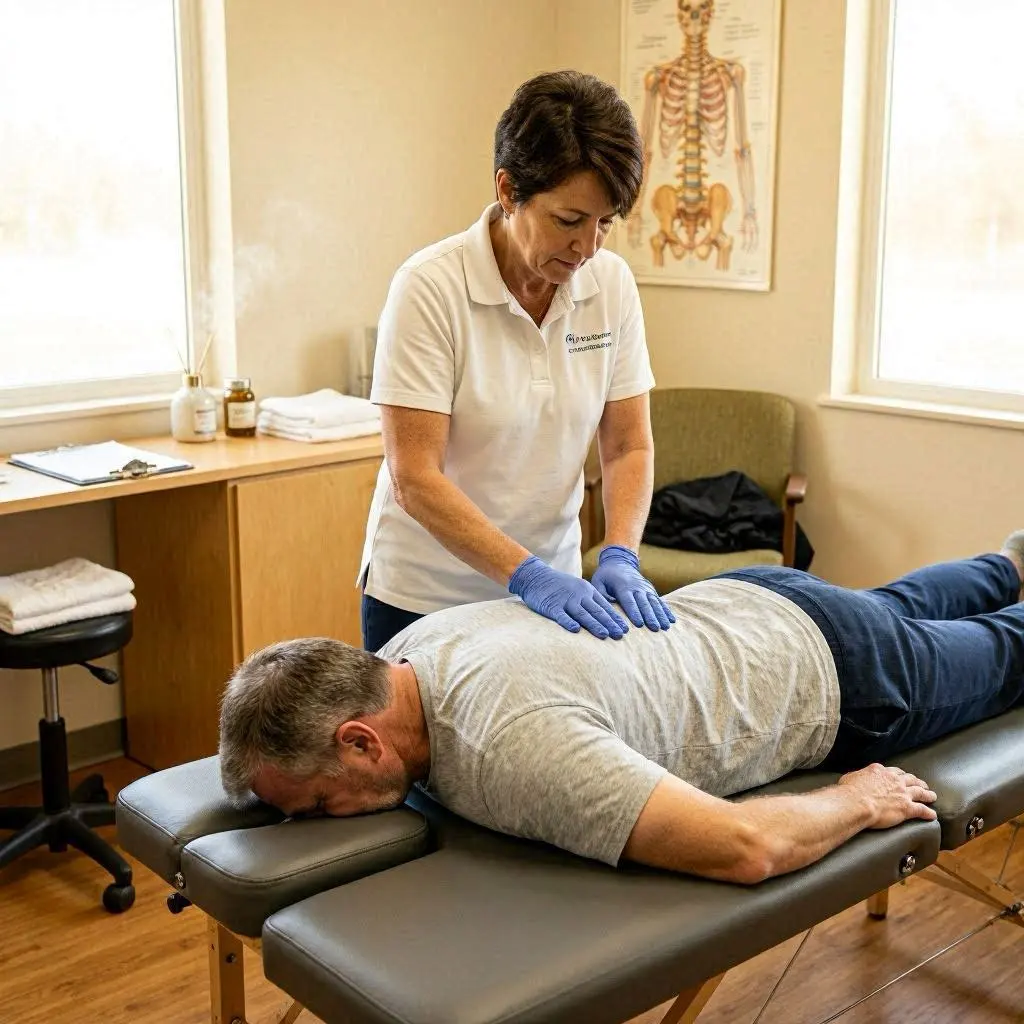
Back Injuries at Work (Physiotherapy for Workplace Injuries)
Back injuries are common across many occupations.
They may occur following:
- Lifting
- Carrying
- Bending
- Repetitive work
- Prolonged sitting
- Sudden movements
Physiotherapy may assess spinal movement, hip mobility, leg strength, trunk strength, and functional movement.
Treatment can include progressive strengthening, mobility exercises, education, and gradual return to normal activity.
Neck and Shoulder Injuries
Neck and shoulder problems may occur in both physically demanding and sedentary jobs.
Office workers may experience discomfort associated with prolonged computer work, while workers in construction, healthcare, or manufacturing may repeatedly lift or reach.
Treatment may include:
- Neck mobility exercises
- Shoulder strengthening
- Upper-back exercises
- Scapular control
- Functional movement training
Workstation or task modifications may also be recommended when appropriate.
Wrist and Hand Injuries
Repetitive hand and wrist activities can contribute to discomfort in some workers.
Examples include:
- Typing
- Assembly work
- Tool use
- Repeated gripping
- Manual handling
A physiotherapist can assess wrist and forearm movement and strength.
Treatment may include appropriate strengthening, mobility exercises, activity modification, and ergonomic advice.
Persistent numbness or significant weakness may require further medical evaluation.
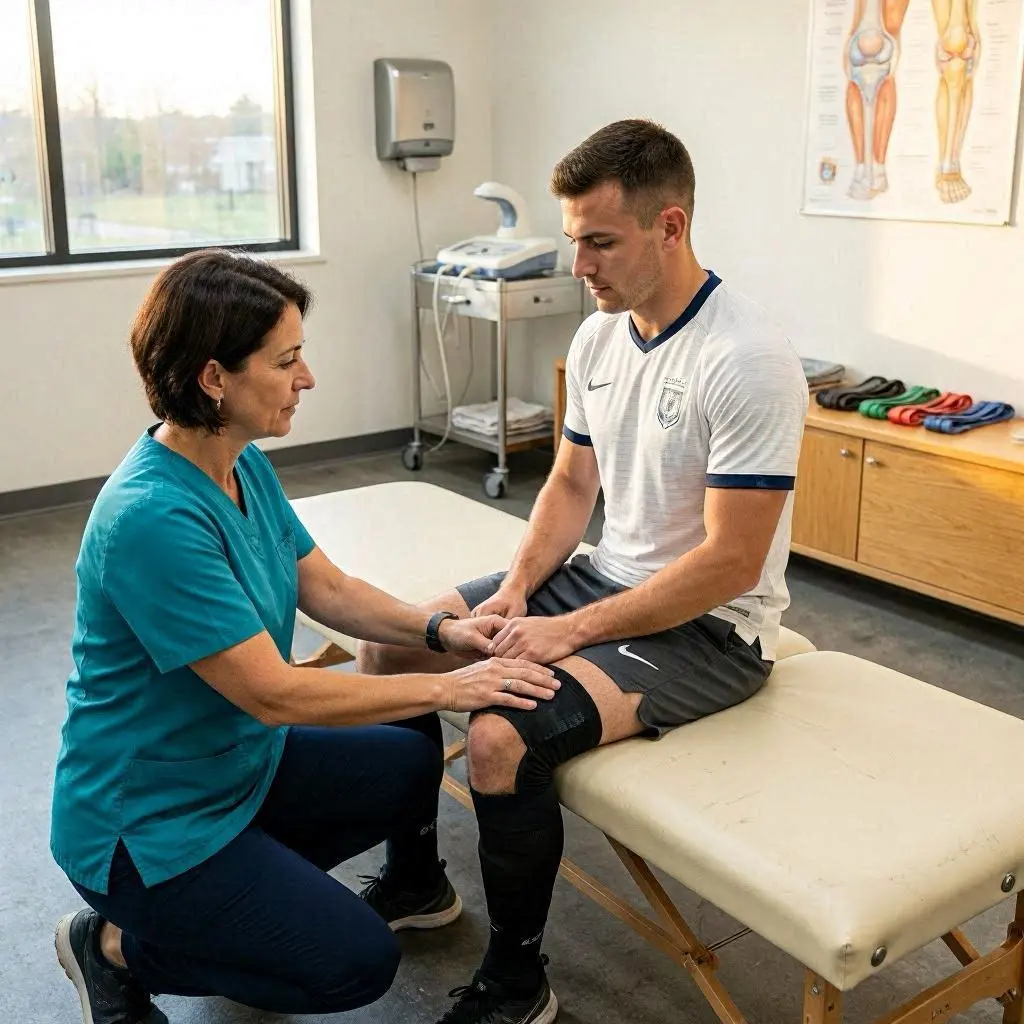
Knee Injuries at Work
Jobs involving frequent kneeling, squatting, climbing, lifting, or walking may place significant demands on the knees.
Physiotherapy may focus on:
- Quadriceps strength
- Hamstring strength
- Hip strength
- Knee mobility
- Balance
- Functional movement
Exercises can be progressively adapted to the employee’s job requirements.
Ankle and Foot Injuries
Workplace falls, uneven surfaces, and physically demanding tasks can contribute to ankle injuries.
Rehabilitation may include:
- Ankle mobility
- Calf strengthening
- Balance exercises
- Walking rehabilitation
- Functional strengthening
The goal is to restore the ability to perform work and daily activities safely.
Acute Workplace Injuries
Some workplace injuries occur suddenly.
Examples include:
- Falls
- Sprains
- Muscle strains
- Impact injuries
- Sudden lifting injuries
The initial management depends on the injury.
A physiotherapist can assess the condition and determine an appropriate rehabilitation strategy or recommend medical evaluation when necessary.
Repetitive Strain Injuries (Physiotherapy for Workplace Injuries)
Repetitive strain problems can develop gradually when tissues are exposed to repeated physical demands.
They may involve the:
- Wrist
- Hand
- Elbow
- Shoulder
- Neck
Treatment may involve modifying the aggravating activity, improving strength, restoring mobility, and gradually increasing tolerance to work-related movements.
Manual Therapy
Manual therapy may be included in workplace rehabilitation when appropriate.
Techniques can address temporary limitations involving:
- Joint movement
- Soft tissues
- Muscle tension
Manual therapy may provide short-term symptom or mobility changes, but active rehabilitation is generally an important part of long-term recovery.
Therapeutic Exercise
Exercise is one of the central components of workplace injury rehabilitation.
Exercises may improve:
- Strength
- Mobility
- Balance
- Endurance
- Coordination
- Functional capacity
The program should be adapted to the person’s current abilities.
Strength Training for Workers
Strength training can help employees rebuild capacity following an injury.
Depending on the occupation, exercises may focus on:
- Legs
- Hips
- Back
- Shoulders
- Arms
- Core
For a manual worker, rehabilitation may eventually include lifting and carrying exercises that resemble occupational demands.
Functional Rehabilitation (Physiotherapy for Workplace Injuries)
Functional rehabilitation connects exercise with real-world activities.
A physiotherapist may recreate tasks such as:
- Lifting
- Carrying
- Reaching
- Pushing
- Pulling
- Climbing stairs
- Squatting
- Walking
This allows the individual to progressively develop the physical capacity needed for work.
Ergonomic Assessment
Ergonomics can be particularly useful for jobs involving repetitive or prolonged tasks.
A physiotherapist may assess:
- Workstation design
- Chair setup
- Desk height
- Monitor position
- Tool placement
- Lifting environment
- Repetitive movements
The objective is to make work tasks more manageable rather than searching for one perfect posture.
Ergonomics for Office Workers
Office workers often spend long periods at computers.
A comfortable workstation may include:
- Appropriate monitor placement
- Comfortable chair positioning
- Keyboard and mouse accessibility
- Adequate desk height
- Space to change position
However, ergonomics should be combined with regular movement.
Remaining in one position for hours is generally not ideal, even if the workstation is well designed.
Ergonomics for Manual Workers (Physiotherapy for Workplace Injuries)
Manual workers may face different physical challenges.
Work may involve:
- Heavy lifting
- Carrying
- Pushing
- Pulling
- Reaching
- Repetitive movements
Physiotherapy can provide education on movement strategies and help employees develop strength and physical capacity appropriate to their tasks.
Lifting and Manual Handling
Lifting is a common component of many occupations.
There is not one universal lifting technique that is guaranteed to prevent injury.
Instead, safe manual handling can involve:
- Assessing the load
- Planning the movement
- Using appropriate equipment
- Avoiding unnecessary twisting
- Keeping loads manageable
- Sharing heavy tasks when appropriate
Physical conditioning can also help workers tolerate occupational demands.
Workplace Injury Prevention
Physiotherapy can support injury prevention through:
- Strength training
- Mobility exercises
- Balance training
- Movement education
- Ergonomic recommendations
- Workload management
Prevention cannot eliminate every workplace injury, but improving physical capacity and addressing relevant risks may help reduce some problems.
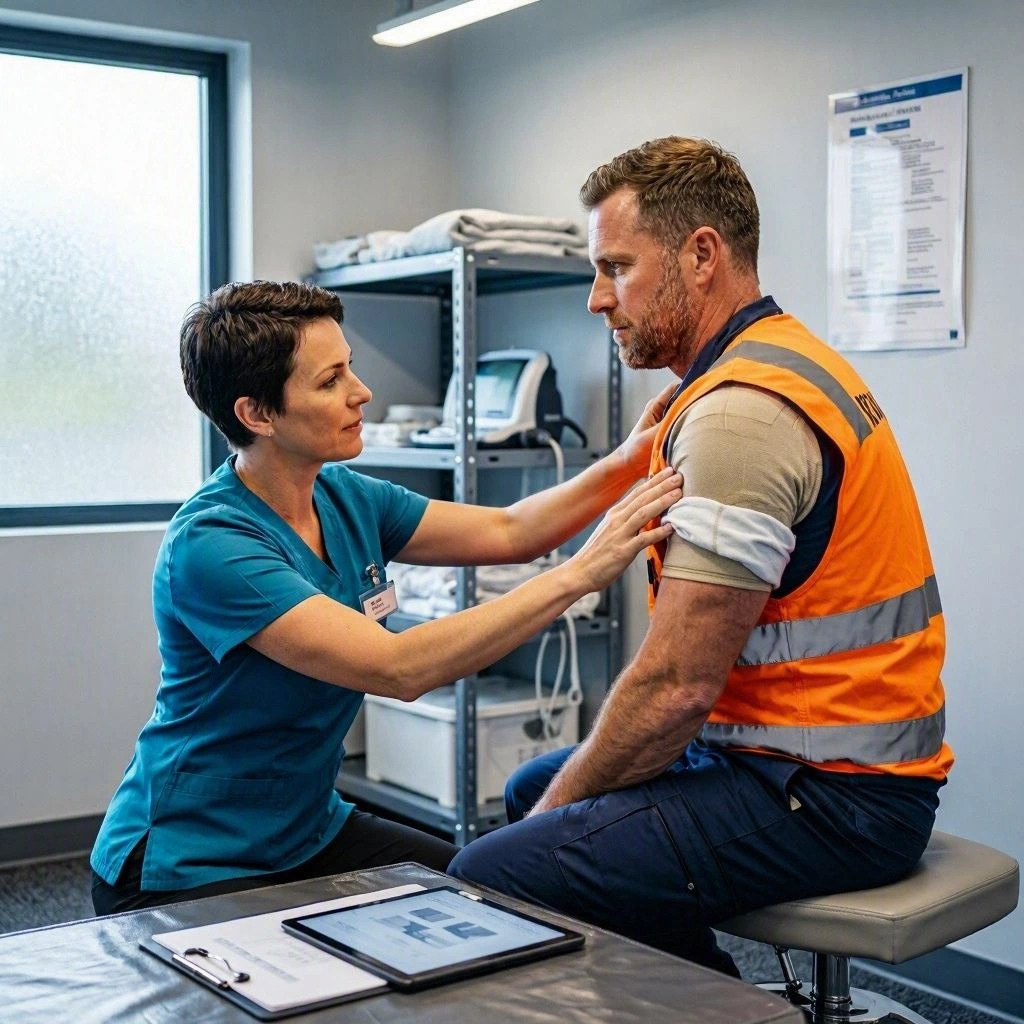
Return-to-Work Rehabilitation (Physiotherapy for Workplace Injuries)
Returning to work after an injury should be based on physical readiness and the requirements of the job.
A return-to-work program may involve:
Modified Duties
The employee may temporarily perform less demanding tasks.
Reduced Workload
Work duration or physical demands may initially be adjusted.
Gradual Progression
Tasks can become more demanding as physical capacity improves.
Full Duties
The employee can progressively return to their normal workload when appropriate.
The exact process depends on the injury, occupation, workplace policies, and medical recommendations.
Why Return-to-Work Planning Matters
Returning too quickly may expose an injured area to demands it is not yet prepared to tolerate.
On the other hand, unnecessary avoidance of activity can sometimes contribute to reduced physical conditioning.
A structured progression can help bridge the gap between rehabilitation exercises and actual work requirements.
Workplace Conditioning
Some jobs require high levels of physical fitness.
Examples include:
- Construction
- Firefighting
- Warehousing
- Healthcare
- Emergency services
- Manufacturing
Rehabilitation for these occupations may eventually involve work-specific conditioning.
Exercises can progressively simulate occupational tasks while monitoring tolerance.
Physiotherapy for Desk Workers (Physiotherapy for Workplace Injuries)
Desk workers may benefit from programs addressing:
- Neck strength
- Shoulder strength
- Upper-back mobility
- Core conditioning
- Hip mobility
- General physical activity
Regular movement breaks can also help interrupt prolonged sitting.
Physiotherapy for Healthcare Workers
Healthcare professionals may perform:
- Patient transfers
- Lifting
- Standing
- Walking
- Repetitive movements
Physiotherapy can help address physical conditioning and recovery from musculoskeletal injuries.
Return-to-work rehabilitation may need to reflect the specific demands of patient care.
Physiotherapy for Construction Workers
Construction work can involve:
- Lifting
- Carrying
- Climbing
- Kneeling
- Bending
- Reaching
- Tool use
Rehabilitation should progressively address the physical requirements of the worker’s role.
Physiotherapy for Warehouse Workers (Physiotherapy for Workplace Injuries)
Warehouse employees may repeatedly lift and move objects.
Treatment can include:
- Leg strengthening
- Core conditioning
- Grip training
- Carrying exercises
- Functional lifting
- Endurance training
The progression should be based on the individual’s injury and job demands.
Pain Management
Physiotherapy can help manage many musculoskeletal pain conditions.
Treatment may involve:
- Exercise
- Education
- Activity modification
- Strengthening
- Mobility training
- Functional rehabilitation
Pain does not always indicate tissue damage, and symptoms can be influenced by many factors.
A physiotherapist can help identify appropriate strategies for managing symptoms while improving physical function.
Workplace Stress and Physical Symptoms
Work-related stress can influence how people experience pain and muscle tension.
High workloads, poor sleep, and psychological stress may interact with physical symptoms.
Physiotherapy can address physical factors while individuals may need additional support for significant psychological or workplace stress.
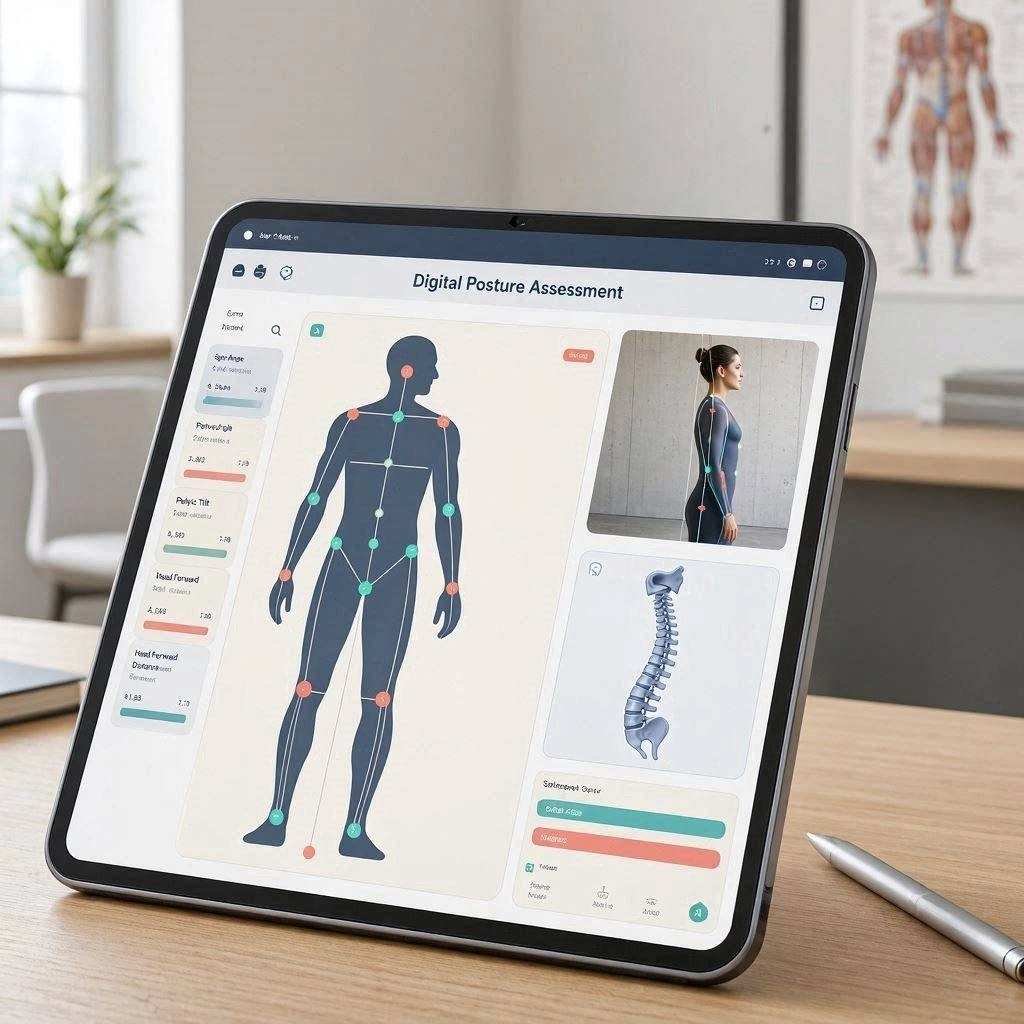
Technology in Workplace Rehabilitation (Physiotherapy for Workplace Injuries)
Modern physiotherapy may use technology to monitor movement and physical performance.
Examples include:
- Video analysis
- Digital movement assessment
- Strength testing
- Wearable devices
- Exercise-monitoring platforms
These tools can provide useful information but should complement clinical assessment.
Home Exercise Programs
A home exercise program can help employees continue rehabilitation outside the clinic.
Exercises may include:
- Strength training
- Mobility
- Balance
- Core exercises
- Stretching
- Functional movements
The program should fit realistically into the employee’s schedule.
How Long Does Workplace Injury Rehabilitation Take?
Recovery varies significantly.
Factors include:
- Type of injury
- Severity
- Previous injuries
- General health
- Physical demands of the job
- Rehabilitation consistency
- Individual recovery
A minor injury may require a relatively short rehabilitation period, while a complex injury may require several months.
There is no universal timeline.
Measuring Rehabilitation Progress
A physiotherapist may monitor:
- Pain
- Strength
- Mobility
- Balance
- Walking
- Functional ability
- Work tolerance
Work-specific tasks may also be reassessed.
This allows the rehabilitation program to be adjusted as the employee improves.
Choosing a Physiotherapist for a Workplace Injury
When selecting a physiotherapist, consider their experience with:
- Workplace injuries
- Musculoskeletal rehabilitation
- Ergonomics
- Functional rehabilitation
- Return-to-work programs
- Occupational demands
A physiotherapist should be able to explain how the proposed rehabilitation relates to the individual’s work requirements.
When Should You See a Physiotherapist?
A physiotherapy assessment may be appropriate if a workplace injury causes:
- Persistent pain
- Reduced mobility
- Muscle weakness
- Difficulty walking
- Difficulty lifting
- Reduced work capacity
- Recurrent symptoms
- Difficulty returning to normal duties
Early assessment can help establish an appropriate rehabilitation strategy.
When Medical Attention Is Necessary
Some workplace injuries require urgent medical assessment.
These may include:
- Severe trauma
- Suspected fractures
- Significant deformity
- Sudden loss of strength
- Severe neurological symptoms
- Chest pain
- Difficulty breathing
- Loss of consciousness
- Severe bleeding
Emergency symptoms should not be managed solely through routine physiotherapy.
Employer and Employee Communication (Physiotherapy for Workplace Injuries)
Successful workplace rehabilitation may involve communication between relevant parties.
Depending on the situation, this can include:
- Employee
- Physiotherapist
- Physician
- Employer
- Occupational health professional
- Insurance or workplace rehabilitation provider
Any communication should respect privacy and applicable workplace regulations.
Long-Term Workplace Health
Recovery should ideally go beyond returning to work.
Long-term strategies can include:
- Regular exercise
- Strength training
- Mobility work
- Adequate recovery
- Appropriate workstation setup
- Workload management
- Movement breaks
Maintaining physical capacity can help employees better tolerate everyday work demands.
Conclusion (Physiotherapy for Workplace Injuries)
Physiotherapy for workplace injuries provides a structured approach to recovering from occupational pain, injuries, and physical limitations. Whether an employee works at a computer, performs manual labor, drives for long periods, works in healthcare, or performs physically demanding industrial tasks, rehabilitation should reflect the specific requirements of the job.
Physiotherapy can begin with a detailed assessment of symptoms, strength, mobility, balance, movement, work activities, and previous injuries. Treatment may then include therapeutic exercise, progressive strengthening, mobility training, manual therapy, ergonomic education, functional rehabilitation, and return-to-work planning.
A major advantage of workplace-focused physiotherapy is the ability to connect clinical rehabilitation with real-world work demands. An employee who needs to lift objects may require progressive lifting and carrying exercises, while an office worker may benefit more from mobility, strength, workstation, and movement strategies.
Return-to-work rehabilitation should also be progressive. Modified duties or reduced workloads may sometimes be appropriate before gradually returning to full responsibilities. The appropriate approach depends on the injury, job requirements, medical advice, and workplace policies.
Prevention is another important part of workplace physiotherapy. Building strength, maintaining mobility, improving physical conditioning, and addressing relevant ergonomic factors may help employees better tolerate occupational demands.
Ultimately, workplace injury rehabilitation should focus on restoring physical function rather than simply reducing symptoms. With appropriate assessment, individualized exercise, gradual progression, and effective communication, physiotherapy can help employees work toward a safe and sustainable return to their normal activities.