
What Causes Pain on the Outside of My Ankle? 8 Common Causes and Treatments
Pain on the outside of my ankle is a common concern among people who walk, run, exercise, or spend long hours standing. This discomfort can develop suddenly after twisting the foot or gradually due to repetitive stress on the ankle. Sometimes, the pain is mild and temporary. In other cases, it may indicate an injury involving ligaments, tendons, bones, or the ankle joint.
Understanding what causes outer ankle pain is important because different conditions require different treatment approaches. For example, a lateral ankle sprain affects the supporting ligaments, while peroneal tendinopathy involves the tendons that run along the outside of the ankle.
In this guide, we explain the most common causes of lateral ankle pain, associated symptoms, treatment options, helpful exercises, and situations when professional assessment is necessary.
What Causes Pain on the Outside of My Ankle?
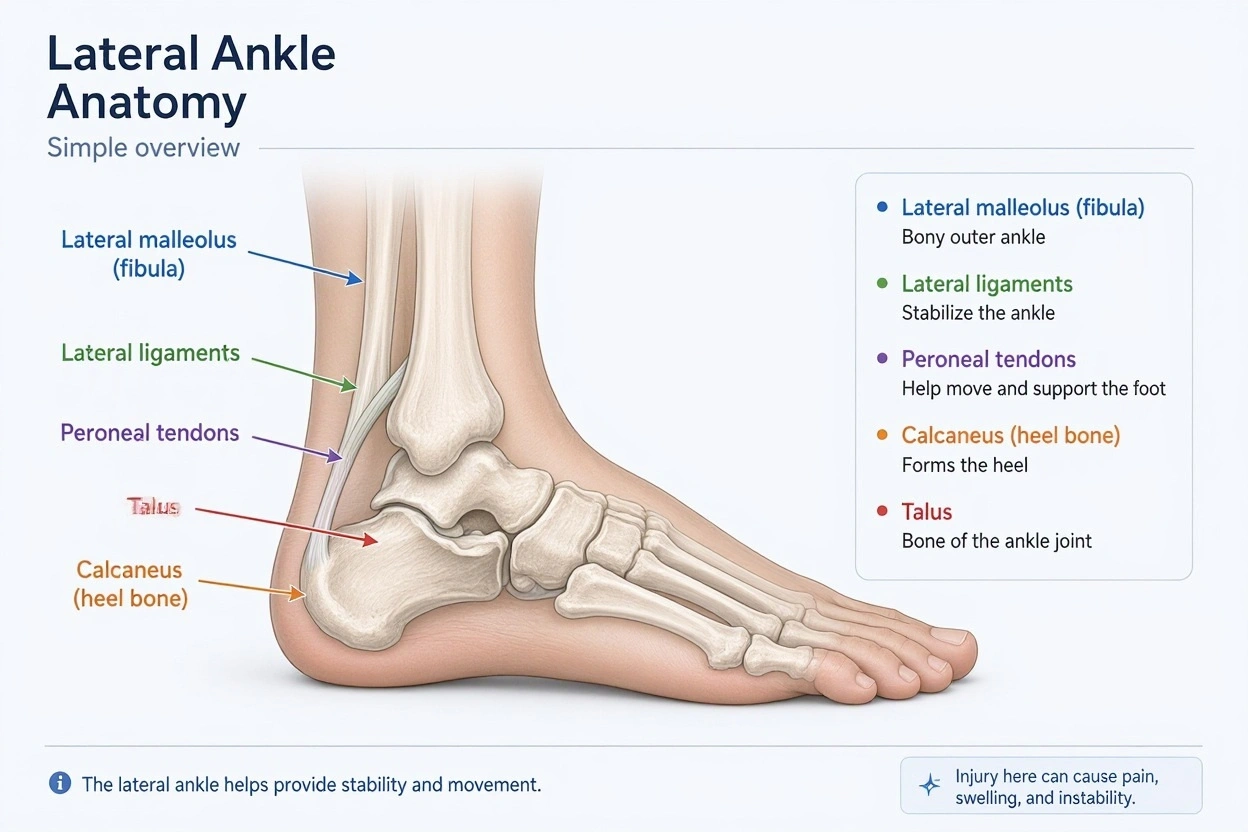
Pain on the outside of the ankle can result from an injury, repetitive overuse, inflammation, or changes affecting the ankle joint.
The most common causes include:
- Lateral ankle sprains.
- Peroneal tendinopathy.
- Peroneal tendon tears or instability.
- Ankle fractures.
- Stress fractures.
- Ankle joint arthritis.
- Sinus tarsi syndrome.
- Nerve irritation or compression.
The location, timing, and nature of the discomfort can provide useful clues. For instance, pain that begins after the foot rolls inward may suggest a ligament injury. In contrast, discomfort that gradually increases during running may indicate an overuse problem.
However, symptoms alone cannot confirm a diagnosis. A healthcare professional may need to examine the ankle and determine whether further testing is appropriate.
8 Common Causes of Pain on the Outside of the Ankle
According to the NHS guide to ankle pain, ankle pain can develop for several reasons, including injuries, overuse, and underlying medical conditions. Understanding the possible causes can help identify when self-care may be appropriate and when professional assessment is necessary.
1. Lateral Ankle Sprain
A lateral ankle sprain is one of the most common causes of pain around the outer ankle.
It occurs when the foot rolls inward unexpectedly, stretching or damaging the ligaments that support the outside of the ankle. The anterior talofibular ligament (ATFL) is particularly vulnerable, although other ligaments may also be affected.
This injury frequently happens during sports, running, jumping, walking on uneven surfaces, or missing a step.
Common symptoms include:
- Pain around the outer ankle bone.
- Swelling and tenderness.
- Bruising around the ankle or foot.
- Difficulty walking comfortably.
- A feeling that the ankle is unstable.
- Reduced ankle movement.
The severity varies. A mild sprain may involve ligament stretching, while a more significant injury can involve a partial or complete ligament tear.
Treatment depends on the severity of the injury. Early management generally involves protecting the ankle, temporarily reducing painful activities, controlling swelling, and gradually restoring movement.
Physical rehabilitation may later include strengthening and balance exercises to improve ankle stability.
2. Peroneal Tendinopathy
Peroneal tendinopathy is another important cause of pain on the outside of the ankle.
The peroneal tendons run along the outer lower leg, pass behind the outer ankle bone, and continue toward the foot. They help control foot movement and stabilize the ankle during walking, running, and other activities.
When these tendons experience repeated stress or excessive loading, they can become irritated and painful.
This condition may develop following an ankle sprain or after a sudden increase in walking, running, or exercise intensity.
Typical symptoms include:
- Pain behind or below the outer ankle bone.
- Tenderness along the tendon.
- Swelling around the outside of the ankle.
- Discomfort during walking or running.
- Pain that increases with certain foot movements.
- Stiffness after periods of inactivity.
Unlike an acute sprain, peroneal tendinopathy often develops gradually.
Treatment generally involves modifying activities that aggravate symptoms, improving footwear support when necessary, and following an appropriate rehabilitation program.
A physiotherapist can assess tendon function and recommend progressive exercises based on the individual’s symptoms and physical abilities.
3. Peroneal Tendon Tear or Subluxation
The peroneal tendons can also develop a partial or complete tear.
In some cases, the tendons may move out of their normal position behind the outer ankle bone. This is known as peroneal tendon subluxation.
These problems can occur after an ankle injury or repeated mechanical stress.
Possible symptoms include:
- Persistent pain along the outer ankle.
- Noticeable weakness.
- Swelling around the tendon.
- A snapping or popping sensation.
- Difficulty maintaining ankle stability.
- Discomfort during physical activity.
A tendon tear or tendon displacement requires proper assessment. A healthcare professional may recommend ultrasound or MRI imaging when clinically appropriate.
Treatment depends on the extent of the injury. Some cases respond to conservative management, while more significant tendon injuries may require specialist treatment or surgery.
4. Ankle Fracture
An ankle fracture occurs when one or more bones around the ankle joint break.
The fibula, which forms the outer ankle bone, can be involved in these injuries.
Fractures may happen following a fall, direct impact, sports injury, or significant twisting movement.
Common signs include:
- Sudden pain around the ankle.
- Significant swelling.
- Bruising.
- Difficulty standing or walking.
- Tenderness directly over the bone.
- Visible changes in ankle shape in severe cases.
Not every fracture produces obvious deformity. Some smaller fractures can initially resemble a sprain.
If a fracture is suspected, medical assessment is important. An X-ray may be required to identify the injury.
Do not attempt to exercise through suspected fracture pain or rely on home treatment alone.
5. Stress Fractures
A stress fracture is a small crack in a bone caused by repeated loading over time.
It can develop when the amount of physical activity increases faster than the body can adapt.
Runners, people who participate in repetitive jumping activities, and individuals who suddenly increase their walking distance may be at risk.
Symptoms may include:
- Gradually developing pain.
- Tenderness in a specific area.
- Pain that initially occurs during exercise.
- Discomfort that may progress to ordinary walking.
- Localized swelling.
Unlike an acute fracture, a stress fracture may not result from one specific accident.
Persistent, localized bone pain should be assessed by a healthcare professional. Early X-rays may sometimes appear normal, so additional assessment or imaging may be considered.
Continuing high-impact activity despite suspected bone stress injury can worsen the condition.
6. Ankle Osteoarthritis
Osteoarthritis is a joint condition involving changes to the cartilage and surrounding structures.
Although ankle osteoarthritis is less common than osteoarthritis in some other joints, it can cause persistent ankle discomfort.
Previous ankle fractures and significant ligament injuries may contribute to the development of ankle joint degeneration.
Possible symptoms include:
- Pain during walking or standing.
- Joint stiffness, especially after resting.
- Reduced ankle mobility.
- Swelling around the joint.
- Discomfort when climbing stairs.
- Grinding or clicking sensations.
Symptoms may develop gradually and become more noticeable during activities that place weight on the ankle.
Management can involve activity modification, appropriate footwear, physiotherapy, strengthening exercises, and medical treatment when necessary.
The goal is to maintain mobility, support joint function, and manage symptoms.
7. Sinus Tarsi Syndrome
Sinus tarsi syndrome involves pain around a small anatomical space located on the outer side of the foot, just in front of the outer ankle bone.
This area contains ligaments, connective tissue, and other structures that contribute to foot stability.
The condition may develop after repeated ankle sprains, instability, or injuries involving the surrounding structures.
Common symptoms include:
- Pain on the outer side of the foot near the ankle.
- Tenderness in front of the outer ankle bone.
- Discomfort when walking on uneven ground.
- A feeling of instability.
- Pain during certain weight-bearing activities.
Because its symptoms can resemble those of other ankle conditions, clinical assessment is important.
Treatment may include activity modification, rehabilitation, strengthening, balance training, and addressing any underlying ankle instability.
8. Nerve Irritation or Compression
Sometimes, outer ankle pain is associated with irritation of nerves around the lower leg, ankle, or foot.
Nerve-related discomfort may feel different from ligament or tendon pain.
Instead of localized tenderness alone, a person may experience burning, tingling, numbness, or unusual sensations.
Possible contributing factors include nerve compression, previous injuries, or certain medical conditions.
Persistent numbness, tingling, weakness, or changes in sensation should be assessed by a healthcare professional.
Treatment depends on identifying the underlying cause rather than simply treating the painful area.
How to Recognize the Symptoms of Outer Ankle Pain
The symptoms of lateral ankle pain vary depending on the affected structure.
Recognizing the pattern may help explain what is happening, although it cannot replace a professional diagnosis.
Pain Around the Outer Ankle Bone
Pain directly around the outer ankle bone may occur after a ligament injury or fracture.
Swelling, bruising, and tenderness can accompany the discomfort.
Pain Behind the Outer Ankle Bone
Pain behind the outer ankle bone may involve the peroneal tendons.
It can become more noticeable during walking, running, or movements that require the ankle to stabilize the foot.
Pain During Walking
Pain while walking may result from a sprain, tendon problem, joint condition, or bone injury.
If walking becomes difficult or you cannot comfortably bear weight, medical assessment is important.
Pain After Running or Exercise
Discomfort that appears after repetitive physical activity may suggest tendon irritation or a bone stress injury.
A recent increase in exercise duration, intensity, or frequency can contribute to these problems.
Swelling and Bruising
Swelling and bruising commonly occur following ankle injuries.
However, significant swelling, worsening discoloration, or severe pain should not be ignored.
How Is Pain on the Outside of the Ankle Diagnosed?
An accurate diagnosis starts with understanding the symptoms and examining the affected ankle.
A healthcare professional may ask:
- When did the pain begin?
- Did it start after an injury?
- Is the pain constant or activity-related?
- Does walking make it worse?
- Have you experienced previous ankle sprains?
- Is there swelling, bruising, numbness, or instability?
Physical Examination
The examination may include checking tenderness, swelling, joint movement, muscle strength, balance, and walking ability.
Specific clinical tests may help identify ligament injuries, tendon problems, or other conditions.
Imaging Tests
Imaging is not necessary for every case of ankle pain.
However, depending on the findings, a healthcare professional may recommend:
- X-rays: To evaluate possible fractures and certain joint changes.
- Ultrasound: To examine tendons and some soft-tissue problems.
- MRI: To assess ligaments, tendons, cartilage, and bone stress injuries.
The choice depends on the suspected condition and clinical examination.
How to Treat Pain on the Outside of the Ankle
Treatment depends on the underlying cause, injury severity, and individual recovery needs. There is no single treatment that works for every type of outer ankle pain.
A structured physiotherapy injury recovery program can help improve mobility, rebuild strength, and support a gradual return to everyday activities. The right rehabilitation approach should be based on an accurate assessment of the affected structures and the patient’s functional limitations.
1. Modify Activities That Increase Pain
Temporarily reduce activities that significantly aggravate symptoms.
For example, running, jumping, or walking on uneven surfaces may need to be modified.
However, prolonged complete inactivity is not always necessary. Appropriate movement can help maintain joint mobility when it is safe.
2. Use Ice When Appropriate
For a recent ankle injury involving swelling, a cold pack may help relieve discomfort.
Wrap the cold pack in a towel and apply it for approximately 15 to 20 minutes.
Never place ice directly against the skin.
3. Consider Compression and Elevation
A comfortable compression bandage may help manage swelling following certain soft-tissue injuries.
The bandage should not be tight enough to cause numbness, tingling, discoloration, or increased pain.
Elevating the ankle while resting may also help reduce swelling.
4. Choose Supportive Footwear
Footwear can influence the amount of stress placed on the ankle.
Consider shoes that provide:
- Comfortable cushioning.
- Appropriate support.
- A secure fit.
- Adequate room for the toes.
- A stable base for walking.
Avoid footwear that consistently increases discomfort.
5. Follow an Individualized Physiotherapy Program
Physiotherapy can be useful when ankle pain is related to weakness, restricted mobility, reduced balance, or incomplete recovery after an injury.
A rehabilitation program may include:
- Gentle range-of-motion exercises.
- Progressive strengthening.
- Balance and coordination training.
- Walking rehabilitation.
- Gradual return to physical activity.
The exercises should match the diagnosis and recovery stage.
Helpful Exercises for Ankle Mobility and Stability

Exercises can help restore ankle function after certain injuries. However, they are not appropriate for every condition or stage of recovery.
Do not begin strengthening or balance exercises if you suspect a fracture, have severe swelling, or cannot comfortably bear weight. Seek professional assessment first.
Once cleared for movement, the following exercises may be considered.
1. Ankle Circles
Purpose: Maintain gentle ankle mobility.
How to perform:
- Sit comfortably with your foot slightly raised.
- Slowly move your ankle in a circular direction.
- Repeat in the opposite direction.
- Keep the movement controlled and comfortable.
Avoid forcing the ankle into painful positions.
2. Ankle Alphabet
Purpose: Encourage controlled ankle movement.
How to perform:
- Sit with your leg supported.
- Imagine writing letters in the air using your big toe.
- Move your ankle gently through the available range.
- Stop if the exercise increases pain.
3. Seated Calf Raises
Purpose: Support lower-leg strength.
How to perform:
- Sit in a chair with both feet on the floor.
- Slowly raise your heels while keeping your toes on the ground.
- Pause briefly.
- Lower your heels in a controlled manner.
Begin with a comfortable range of movement.
4. Supported Balance Practice
Purpose: Improve balance and ankle control.
How to perform:
- Stand near a stable counter or support.
- Place your feet comfortably apart.
- Shift your weight gently from one foot to the other.
- Maintain control throughout the movement.
Progression to single-leg balance should only occur when appropriate and safe.
A physiotherapist can determine which exercises are suitable and how to progress them.
Can Physiotherapy Help With Outer Ankle Pain?
Yes. Physiotherapy may help people experiencing ankle pain caused by certain soft-tissue injuries, weakness, restricted movement, or ongoing instability.
At Ritz Clinic, physiotherapy-based rehabilitation can focus on understanding the cause of discomfort and identifying movement limitations that may affect recovery.
Depending on the assessment, treatment may involve:
Movement assessment: Evaluating ankle mobility, walking patterns, balance, and functional limitations.
Strengthening exercises: Improving the capacity of muscles that support the ankle and foot.
Balance training: Developing better control during standing and walking.
Mobility work: Addressing movement restrictions when appropriate.
Progressive rehabilitation: Gradually rebuilding tolerance for daily activities, exercise, and sport.
Treatment should always be individualized. A person recovering from a mild sprain may need a different program from someone with persistent tendon symptoms or a more significant injury.
Learn more about physiotherapy services at Ritz Clinic.
How to Prevent Pain on the Outside of Your Ankle
Although not every ankle injury can be prevented, certain habits may reduce the risk of recurring problems.
Wear Appropriate Footwear
Choose shoes that fit properly and provide suitable support for your activities.
Replace footwear when it becomes excessively worn or no longer provides adequate support.
Increase Exercise Gradually
Avoid sudden increases in running distance, training duration, or exercise intensity.
Allow your body time to adapt to new physical demands.
Warm Up Before Exercise
Begin with gentle movements and gradually increase activity intensity.
A suitable warm-up prepares the body for more demanding movements.
Improve Ankle Strength and Balance
When appropriate, strengthening and balance exercises can help improve ankle function.
These are particularly useful components of rehabilitation after certain ankle sprains.
Pay Attention to Uneven Surfaces
Be careful when walking, running, or exercising on uneven ground.
Appropriate footwear and controlled movement may help reduce unnecessary ankle stress.
Allow Time for Recovery
Rest and recovery are important parts of physical activity.
Avoid repeatedly pushing through significant ankle pain.
When Should You See a Doctor for Outer Ankle Pain?
Some ankle problems improve with appropriate self-care. Others require medical assessment.
Seek urgent medical attention if you experience:
- Severe ankle pain following an injury.
- Inability to stand or walk.
- Significant swelling or bruising.
- An ankle that appears deformed.
- A sudden snapping sensation accompanied by severe pain.
- A foot that becomes cold, pale, or unusually discolored.
- Fever with a hot, red, swollen, and painful ankle.
You should also arrange a professional assessment if:
- Pain keeps returning.
- Symptoms interfere with normal daily activities.
- Swelling does not improve.
- You experience persistent numbness or tingling.
- Pain does not improve after approximately two weeks of appropriate self-care.
- You have diabetes and develop new foot or ankle pain.
Early assessment can help identify the cause and prevent inappropriate treatment.
Frequently Asked Questions About Pain on the Outside of the Ankle
1. Why does the outside of my ankle hurt when I walk?
Pain during walking may result from a lateral ankle sprain, peroneal tendon irritation, joint problems, or a bone injury.
The exact cause depends on the location of the pain, how it started, and whether other symptoms are present.
If walking is difficult or the pain is severe, seek medical assessment.
2. What causes pain behind the outer ankle bone?
Pain behind the outer ankle bone is commonly associated with the peroneal tendons.
These tendons pass behind the fibula and help stabilize the foot and ankle.
Overuse, previous ankle sprains, and tendon injuries may contribute to discomfort in this area.
3. Can running cause pain on the outside of my ankle?
Yes. Running can place repetitive stress on the ankle and surrounding tendons.
Increasing running distance too quickly, inadequate recovery, changes in training surfaces, and previous injuries may contribute to symptoms.
Persistent or localized pain should be assessed rather than ignored.
4. Is outer ankle pain always caused by a sprain?
No. Although lateral ankle sprains are common, outer ankle pain can also involve tendons, bones, joints, or nerves.
An accurate diagnosis is important because treatment differs depending on the affected structure.
5. How long does outer ankle pain take to heal?
Recovery time depends on the underlying condition.
Mild soft-tissue injuries may improve over a relatively short period, while more significant ligament injuries, tendon problems, and fractures may require considerably longer.
A healthcare professional can provide a more realistic recovery estimate after assessment.
6. Should I walk if the outside of my ankle hurts?
It depends on the severity and cause of the pain.
If walking is comfortable and no serious injury is suspected, gentle movement may be appropriate.
However, do not force weight-bearing activity when it causes significant pain or when a fracture or serious injury is possible.
7. Can physiotherapy help with peroneal tendon pain?
Physiotherapy may help manage peroneal tendon problems through activity modification, progressive strengthening, mobility work, and functional rehabilitation.
The treatment plan should be based on the severity of the tendon problem and the individual’s symptoms.
8. Why does my ankle hurt on the outside without an injury?
Not all ankle pain begins with a specific accident.
Repetitive loading, changes in physical activity, tendon irritation, joint conditions, and nerve-related problems may develop gradually.
Persistent symptoms should be assessed to identify the underlying cause.
9. Is swelling around the outside of my ankle serious?
Mild swelling can occur after a soft-tissue injury. However, significant or worsening swelling, especially when accompanied by severe pain, bruising, or difficulty walking, requires prompt assessment.
Sudden swelling and redness around a tendon may also indicate a more significant tendon problem.
10. Can ankle exercises prevent future pain?
Appropriate strengthening, mobility, and balance exercises may help improve ankle function and reduce the risk of certain recurring injuries.
However, exercises should be selected according to the individual’s needs, previous injuries, and current physical condition.
Final Thoughts
Pain on the outside of the ankle can have several causes, ranging from a common lateral ankle sprain to peroneal tendon problems, fractures, and joint conditions.
The most important step is identifying the structure responsible for the discomfort. Pain location, swelling, activity-related symptoms, and previous injuries can provide useful information, but a professional assessment may be necessary to confirm the diagnosis.
Appropriate treatment may include activity modification, supportive footwear, symptom management, and individualized physiotherapy.
If ankle pain is persistent, severe, worsening, or affecting your ability to walk, do not ignore it. Seeking appropriate medical advice can help identify the problem and guide a safe recovery.
At Ritz Clinic, physiotherapy and rehabilitation can support people working toward improved ankle mobility, strength, balance, and everyday function.
Medical Disclaimer
This article is intended for general educational and informational purposes only. It does not replace professional medical advice, diagnosis, or treatment.
Ankle pain can have different causes, and treatment should be based on an appropriate clinical assessment. Do not use the exercises or self-care recommendations in this article as a substitute for medical evaluation when symptoms are severe or a significant injury is suspected.
Always consult a qualified healthcare professional regarding persistent pain, suspected fractures, significant swelling, or other concerning symptoms.