Physiotherapy for Core Stability: A Complete Guide to Core Strength, Control, and Rehabilitation
Core stability is an important part of efficient movement. The muscles around the abdomen, back, pelvis, and hips work together to control the trunk and provide a stable foundation for movement. When these muscles are weak, poorly coordinated, or unable to respond effectively to physical demands, everyday activities and exercise may become more difficult. Physiotherapy for core stability focuses on improving trunk control, strength, coordination, balance, and functional movement. A physiotherapist can assess how the core functions during different activities and develop a personalized exercise program based on the individual’s condition, physical abilities, and goals.
Core stability is not simply about having strong abdominal muscles. It involves the coordinated control of the entire trunk and its relationship with the hips, pelvis, spine, and limbs. Effective core rehabilitation can therefore be useful for people recovering from injuries, managing movement limitations, improving athletic performance, or developing better physical capacity.
What Is Core Stability?
Core stability refers to the body’s ability to control and maintain the position and movement of the trunk during static and dynamic activities.
The core includes muscles around the:
Abdomen
Lower back
Pelvis
Hips
Diaphragm
These muscles work together to control movement and transfer forces between the upper and lower body.
Good core stability allows the trunk to remain controlled while the arms and legs move.
For example, when lifting an object, the core helps control the trunk while the hips and legs generate force. During running, the trunk must remain sufficiently stable while the arms and legs move rapidly.
Why Is Core Stability Important?
The trunk acts as a central connection between the upper and lower body.
Good trunk control can support:
Balance
Posture
Walking
Running
Lifting
Reaching
Jumping
Changing direction
Sports performance
Core stability is also relevant to rehabilitation because reduced trunk control may affect how a person performs functional movements.
However, core stability is only one component of physical health. Strong core muscles do not automatically prevent pain or injury, and rehabilitation should address the individual’s complete movement needs.
How Does Physiotherapy Assess Core Stability?
Before recommending core exercises, a physiotherapist may perform a comprehensive physical assessment.
The assessment can include:
Posture
Spinal mobility
Hip mobility
Muscle strength
Balance
Functional movement
Trunk control
Breathing patterns
Movement coordination
The physiotherapist may observe how the trunk behaves during activities such as walking, squatting, lifting, reaching, or single-leg movements.
This helps determine which exercises are appropriate.
Core Stability and Posture
Core control can contribute to the way a person maintains their trunk during different activities.
However, posture is dynamic rather than fixed. People naturally change positions throughout the day.
Physiotherapy may therefore focus on helping individuals develop:
Trunk control
Movement awareness
Strength
Mobility
Postural endurance
Instead of trying to maintain one perfect position, patients can learn how to move efficiently between different positions.
Core Stability and Lower-Back Health
Core stability exercises are commonly included in rehabilitation programs for people with lower-back problems.
Lower-back symptoms can have many possible causes, and core exercises are not appropriate as the sole treatment for every condition.
A physiotherapist may assess:
Hip mobility
Spinal movement
Trunk strength
Leg strength
Functional movement
Daily activities
Based on the assessment, a rehabilitation program may combine core exercises with mobility training, strengthening, education, and gradual return to activity.
Core Stability Exercises
Core rehabilitation should usually progress from simple exercises to more challenging functional movements.
Abdominal Bracing
Abdominal bracing involves gently activating the abdominal muscles while maintaining normal breathing.
It can help individuals learn how to control the trunk during movement.
The goal is not to hold the stomach rigidly for long periods. Instead, the exercise teaches controlled muscular activation.
Pelvic Tilts
Pelvic tilts involve controlled movement of the pelvis while lying down.
They can help develop awareness of pelvic movement and trunk control.
Bridges
Bridges strengthen the gluteal muscles while requiring control of the pelvis and trunk.
They can be modified according to the individual’s ability.
Dead Bug Exercises
Dead bug exercises challenge the ability to maintain trunk control while moving the arms and legs.
They can be progressed by increasing movement range or resistance.
Bird Dog Exercises
Bird dog exercises involve extending an arm and opposite leg while maintaining trunk control.
They challenge:
Balance
Coordination
Core control
Hip stability
Plank Exercises
Planks challenge the muscles of the trunk while maintaining a stable body position.
Variations can include:
Modified planks
Forearm planks
Side planks
Elevated planks
The appropriate version depends on the person’s strength and physical condition.
Core Stability and Hip Strength (Physiotherapy for Core Stability)
The hips and core work together during many functional movements.
Weakness in the hip muscles may affect how the pelvis and trunk are controlled during:
Walking
Running
Squatting
Jumping
Stair climbing
For this reason, physiotherapy core programs often include hip strengthening.
Exercises may include:
Clamshells
Side-lying leg raises
Hip bridges
Step-ups
Controlled lunges
Core Stability and Balance
Balance requires coordinated control of the trunk, hips, and legs.
Core exercises can therefore be combined with balance training.
Examples include:
Single-leg standing
Reaching while standing
Controlled step exercises
Single-leg bridges
Dynamic balance drills
As control improves, exercises can become more challenging.
Core Stability for Athletes
Athletes require strong trunk control to transfer force efficiently between the lower and upper body.
Sports involving running, jumping, throwing, and rotation can place significant demands on the core.
Athletic core training may include:
Anti-rotation exercises
Rotational exercises
Single-leg stability
Medicine-ball exercises
Loaded carries
Dynamic trunk exercises
The exercises should reflect the demands of the athlete’s sport.
Core Stability for Runners
Running requires continuous coordination between the trunk, pelvis, and lower limbs.
Core rehabilitation for runners may focus on:
Pelvic control
Hip strength
Single-leg stability
Trunk endurance
Movement coordination
Exercises can include bridges, side planks, bird dogs, single-leg exercises, and running-specific drills.
The goal is to develop the capacity to maintain controlled movement during repeated running cycles.
Core Stability for Office Workers (Physiotherapy for Core Stability)
People who spend long periods sitting may experience reduced physical activity and trunk endurance.
A physiotherapy program may include:
Core strengthening
Hip mobility
Upper-back exercises
Walking
Movement breaks
Functional strengthening
Regular movement throughout the workday is important. Core exercises alone cannot compensate for prolonged inactivity.
Core Stability After Injury
Injury and inactivity can reduce muscle strength and movement confidence.
A rehabilitation program may gradually restore core control following injuries involving the:
Back
Hip
Pelvis
Knee
Shoulder
The exercises should be appropriate for the stage of healing.
Following surgery or significant injury, rehabilitation should be coordinated with the appropriate healthcare professionals.
Core Stability After Surgery
Surgical rehabilitation varies significantly depending on the procedure.
A physiotherapist may begin with basic exercises before progressing toward more demanding activities.
The stages may include:
Basic muscle activation
Controlled mobility
Low-load strengthening
Functional strengthening
Dynamic exercises
Sport or work-specific movements
The exact progression depends on medical recommendations and the individual’s recovery.
Breathing and Core Control
Breathing and trunk control are closely related.
The diaphragm is one of the muscles involved in both breathing and trunk function.
Physiotherapy may teach individuals to coordinate breathing with exercise rather than unnecessarily holding their breath during low-load movements.
For more demanding resistance exercises, breathing strategies may vary according to the activity.
Functional Core Training (Physiotherapy for Core Stability)
Core stability should eventually transfer into real-life movement.
Functional exercises may include:
Squatting
Lifting
Carrying
Reaching
Stepping
Rotating
Pushing
Pulling
These activities challenge the trunk in ways that resemble everyday tasks.
Core Stability and Injury Prevention
Core training is sometimes promoted as a way to prevent all injuries, but injury prevention is more complex.
Injury risk can be influenced by:
Training load
Strength
Mobility
Technique
Recovery
Previous injury
Sport demands
Sleep
Overall physical conditioning
Core stability can be one useful component of a broader injury-prevention strategy.
Progressive Core Training
Progression is an important principle of physiotherapy.
An exercise should become more challenging as the individual’s physical capacity improves.
Progression may involve:
Increasing repetitions
Increasing duration
Adding resistance
Increasing movement range
Reducing external support
Adding balance challenges
Introducing dynamic movements
The goal is to gradually increase physical demands while maintaining good movement quality.
Common Mistakes With Core Exercises
Performing core exercises incorrectly can reduce their effectiveness.
Common mistakes include:
Holding the Breath (Physiotherapy for Core Stability)
People may hold their breath while trying to create tension. Breathing should generally remain controlled unless a specific exercise requires otherwise.
Using Excessive Tension
More muscular tension does not always mean better core control.
Focusing Only on the Abdominals
The core involves more than the abdominal muscles.
Progressing Too Quickly
Advanced exercises may be inappropriate before basic control is established.
Ignoring Pain
Sharp or worsening pain should not simply be ignored during rehabilitation.
How Often Should You Perform Core Exercises?
The appropriate frequency depends on the exercise and the individual’s goals.
Some low-load exercises may be performed frequently, while heavier strengthening exercises may require more recovery time.
A physiotherapist can recommend:
Exercise frequency
Number of sets
Repetitions
Rest periods
Progression strategy
Consistency is generally more important than performing a large number of exercises occasionally.
Core Stability and Mobility (Physiotherapy for Core Stability)
Strength and mobility should work together.
A person may have strong muscles but limited movement, or good mobility but insufficient strength and control.
A comprehensive physiotherapy program may therefore combine:
Mobility exercises
Strength training
Core control
Balance exercises
Functional movement
This approach supports overall physical capacity.
Core Stability for Older Adults
Core training can be adapted for older adults.
The focus may be on:
Trunk control
Balance
Functional strength
Walking
Chair transfers
Safe lifting
Exercises can be performed standing, sitting, or lying down depending on the person’s abilities.
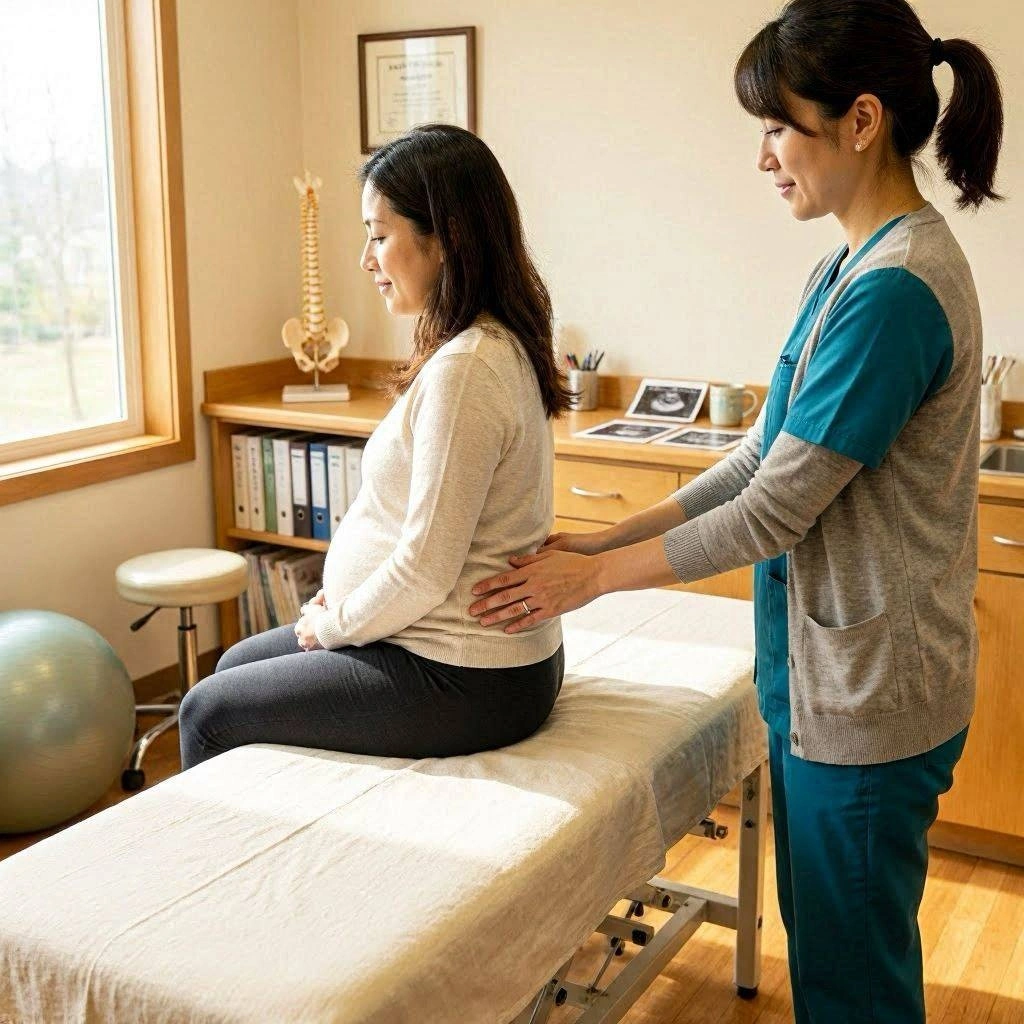
Core Stability During Pregnancy (Physiotherapy for Core Stability)
Pregnancy creates significant physical changes and may affect posture, balance, and abdominal function.
Core exercises during pregnancy should be adapted to the individual’s stage of pregnancy, symptoms, and medical needs.
A physiotherapist with appropriate training can provide individualized guidance.
Pregnant individuals should discuss exercise plans with their healthcare provider when necessary.
When Should You See a Physiotherapist?
Professional assessment may be useful if you experience:
Persistent back discomfort
Reduced trunk control
Muscle weakness
Balance problems
Difficulty lifting
Reduced athletic performance
Recurrent injuries
Difficulty returning to exercise
Movement limitations
A physiotherapist can determine whether core stability training is appropriate and which exercises best match your needs.
Warning Signs Requiring Medical Attention (Physiotherapy for Core Stability)
Core exercises should not be used to self-treat potentially serious symptoms.
Seek urgent medical attention if you experience:
Sudden weakness
Significant numbness
Loss of bowel or bladder control
Severe pain following major trauma
Chest pain
Difficulty breathing
Sudden neurological changes
Loss of consciousness
These symptoms require appropriate medical evaluation.
How Physiotherapy Creates a Personalized Core Program
A professional core rehabilitation program is based on assessment rather than simply selecting popular exercises.
The physiotherapist may consider:
Current strength
Mobility
Pain
Balance
Exercise experience
Work requirements
Sport participation
Previous injuries
Personal goals
The program can then be adjusted as the patient improves.
Conclusion (Physiotherapy for Core Stability)
Physiotherapy for core stability is a comprehensive approach to improving trunk control, strength, coordination, balance, and functional movement. The core is much more than the abdominal muscles. It includes a network of muscles that work together with the pelvis, hips, spine, and limbs to support movement.
A physiotherapy program may include abdominal activation, bridges, bird dogs, planks, balance exercises, hip strengthening, functional training, and sport-specific movements. Exercises can be progressed gradually as strength and movement control improve.
Core stability can be valuable for people recovering from injuries, athletes, office workers, older adults, and individuals looking to improve their overall physical capacity. However, core exercises should be selected according to the person’s condition rather than following a generic routine.
With appropriate assessment, progressive exercise, consistent practice, and professional guidance when necessary, core stability training can become an important part of a broader physiotherapy and rehabilitation program. The goal is not simply to strengthen the abdominal muscles but to develop better control and capacity for the movements people perform in everyday life, work, exercise, and sport.