Physiotherapy for Return to Sport: A Complete Guide to Safe Athletic Recovery
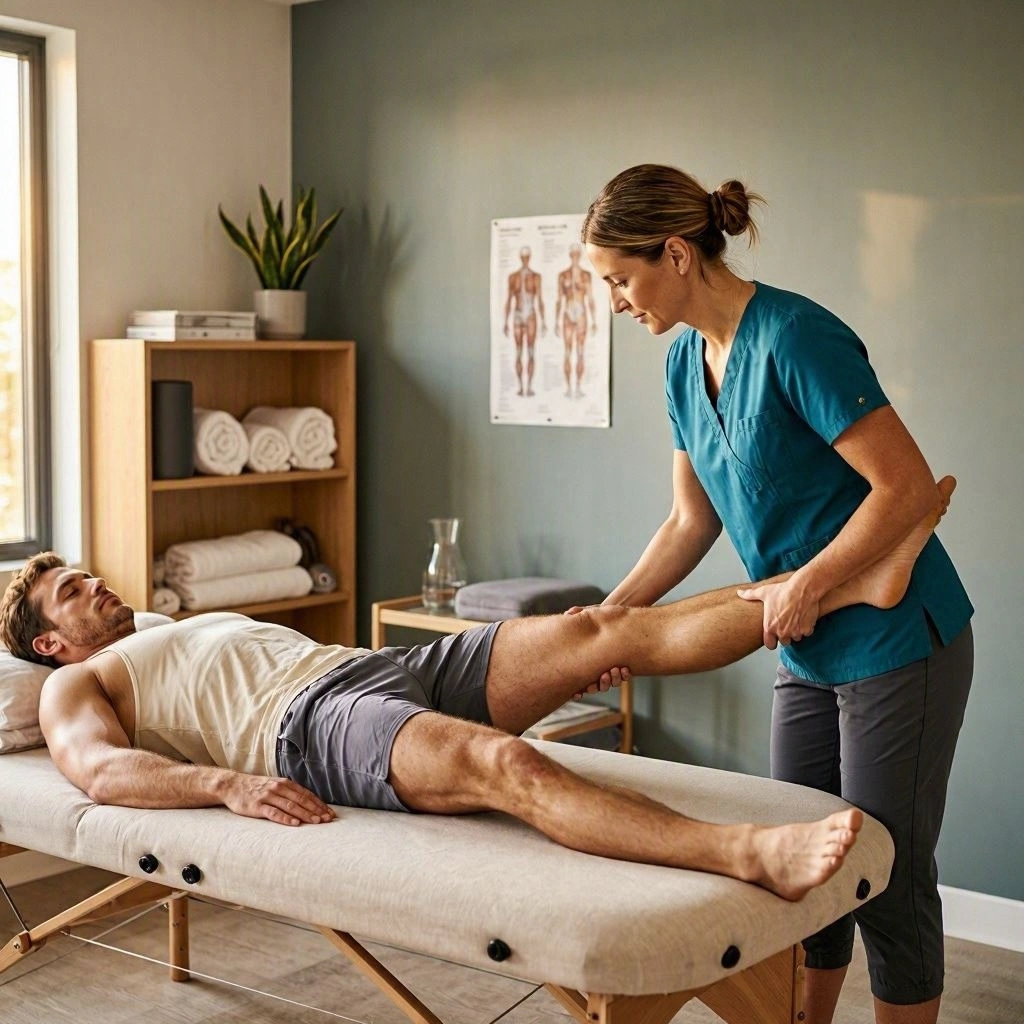
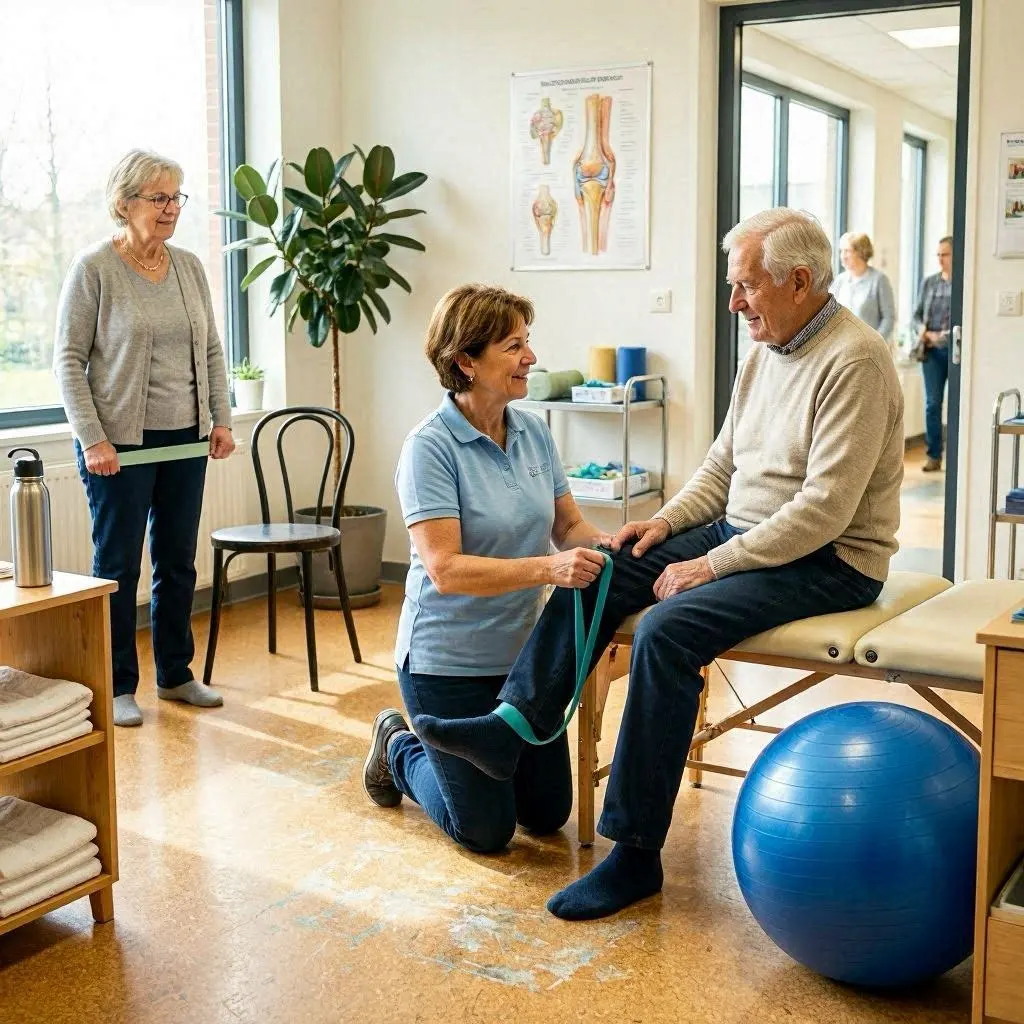
Returning to sport after an injury is an important stage of rehabilitation. Athletes often want to return to their previous level of training as quickly as possible, but the body may need additional time to rebuild strength, mobility, coordination, stability, and confidence. Physiotherapy for return to sport provides a structured approach that helps athletes gradually transition from injury rehabilitation to normal training and competition.
Returning to sport is not simply about waiting until pain disappears. An athlete may feel comfortable during everyday activities while still having reduced strength, limited mobility, poor balance, or insufficient tolerance for high-intensity movements. Running, jumping, cutting, lifting, and rapid changes of direction can place significantly greater demands on the body than walking or normal daily activities.
A personalized physiotherapy program addresses these differences and helps prepare the athlete for the specific physical requirements of their sport.
What Is Physiotherapy for Return to Sport?
Physiotherapy for return to sport is a progressive rehabilitation approach designed to help athletes safely resume physical activity after injury, surgery, illness, or a period of reduced training.
A physiotherapist may evaluate:
Muscle strength
Joint mobility
Flexibility
Balance
Coordination
Stability
Movement mechanics
Functional capacity
Sport-specific movements
Training tolerance
The information gathered during the assessment helps create an individualized rehabilitation plan.
The program usually progresses from basic exercises toward increasingly demanding activities that resemble the athlete’s sport.
Why Is Return-to-Sport Rehabilitation Important?
Returning to intense exercise before the body is ready can increase physical stress and potentially contribute to reinjury.
For example, an athlete recovering from a knee injury may be able to walk normally but still struggle with single-leg jumping or rapid changes of direction. Similarly, a person recovering from a shoulder injury may be able to perform everyday movements but lack the strength needed for throwing or overhead sports.
Return-to-sport rehabilitation helps bridge the gap between normal daily activity and competitive performance.
Potential benefits include:
Restoring physical capacity
Improving movement quality
Rebuilding strength
Increasing confidence
Improving balance
Preparing for sport-specific demands
Managing training load
Supporting injury prevention
The Initial Physiotherapy Assessment
A return-to-sport program usually begins with a detailed physical assessment.
The physiotherapist may discuss:
The original injury
Previous injuries
Current symptoms
Previous treatment
Training history
Sport and playing position
Competition requirements
Personal recovery goals
Physical testing may then evaluate strength, flexibility, range of motion, balance, stability, and functional movement.
The assessment establishes a baseline and helps identify areas that still require rehabilitation.
Managing Pain and Symptoms (Physiotherapy for Return to Sport)
Pain management may be an early component of rehabilitation.
The goal is not always to eliminate every sensation immediately. Instead, physiotherapy aims to help the athlete understand which activities are appropriate and how to gradually increase physical demands.
Treatment may include:
Therapeutic exercise
Mobility work
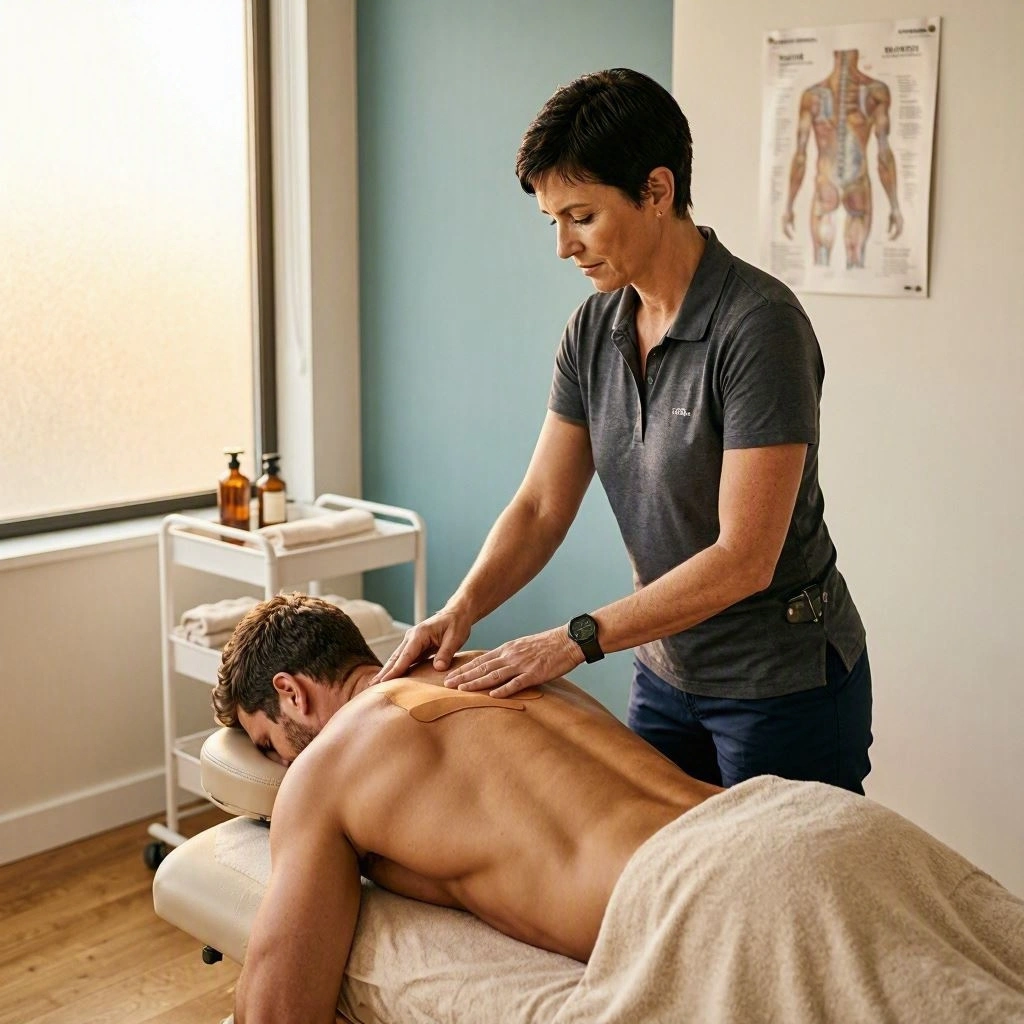
Manual therapy when appropriate
Activity modification
Education
Progressive loading
Athletes should communicate changes in symptoms to their healthcare professionals rather than attempting to push through significant or worsening pain.
Restoring Joint Mobility
Limited joint mobility can affect athletic performance and movement mechanics.
Depending on the injury, physiotherapy may focus on restoring mobility in areas such as:
Ankles
Knees
Hips
Spine
Shoulders
Elbows
Wrists
Mobility exercises may include controlled joint movements, stretching, and functional mobility drills.
The objective is to restore appropriate movement while respecting the healing process.
Rebuilding Muscle Strength
Strength is one of the most important factors in return-to-sport rehabilitation.
Injury, surgery, and inactivity can result in muscle weakness. Athletes need sufficient strength to tolerate the demands of their sport.
A strengthening program may include:
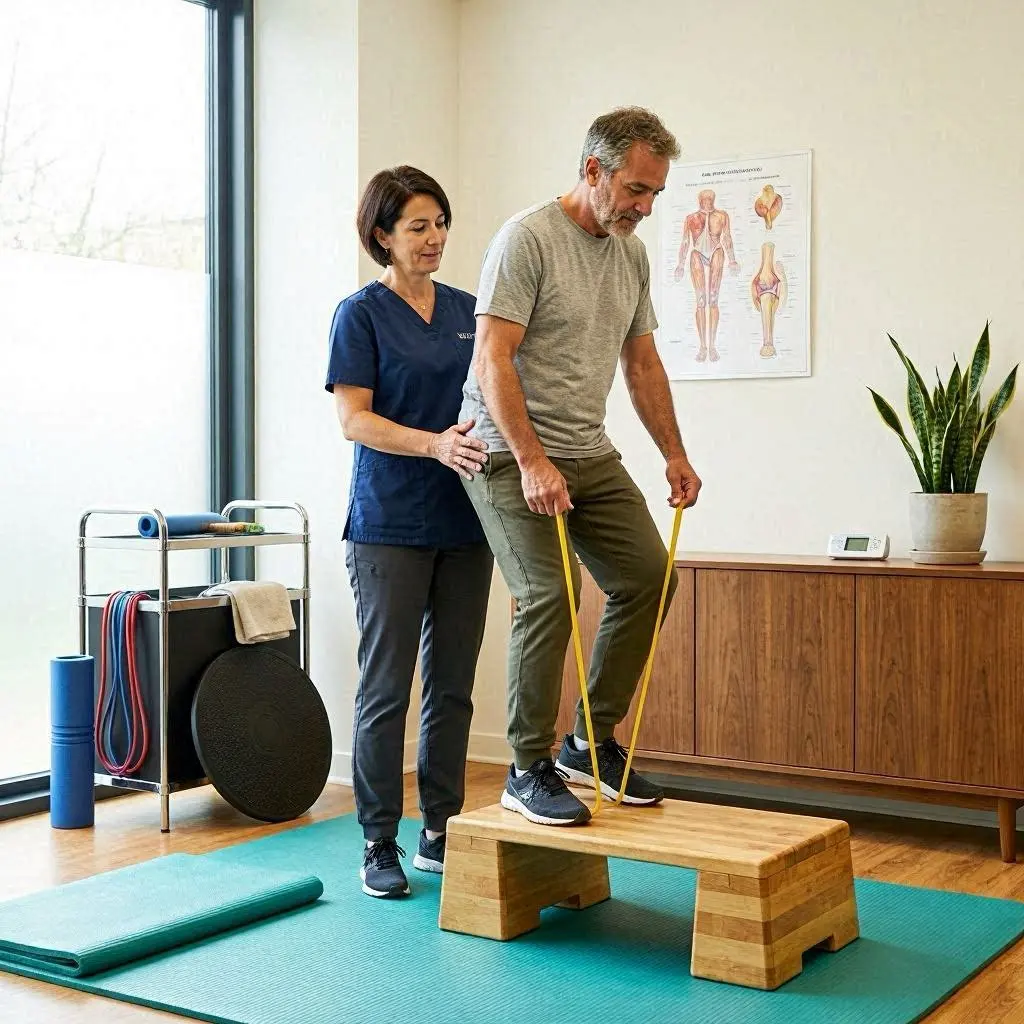
Bodyweight exercises
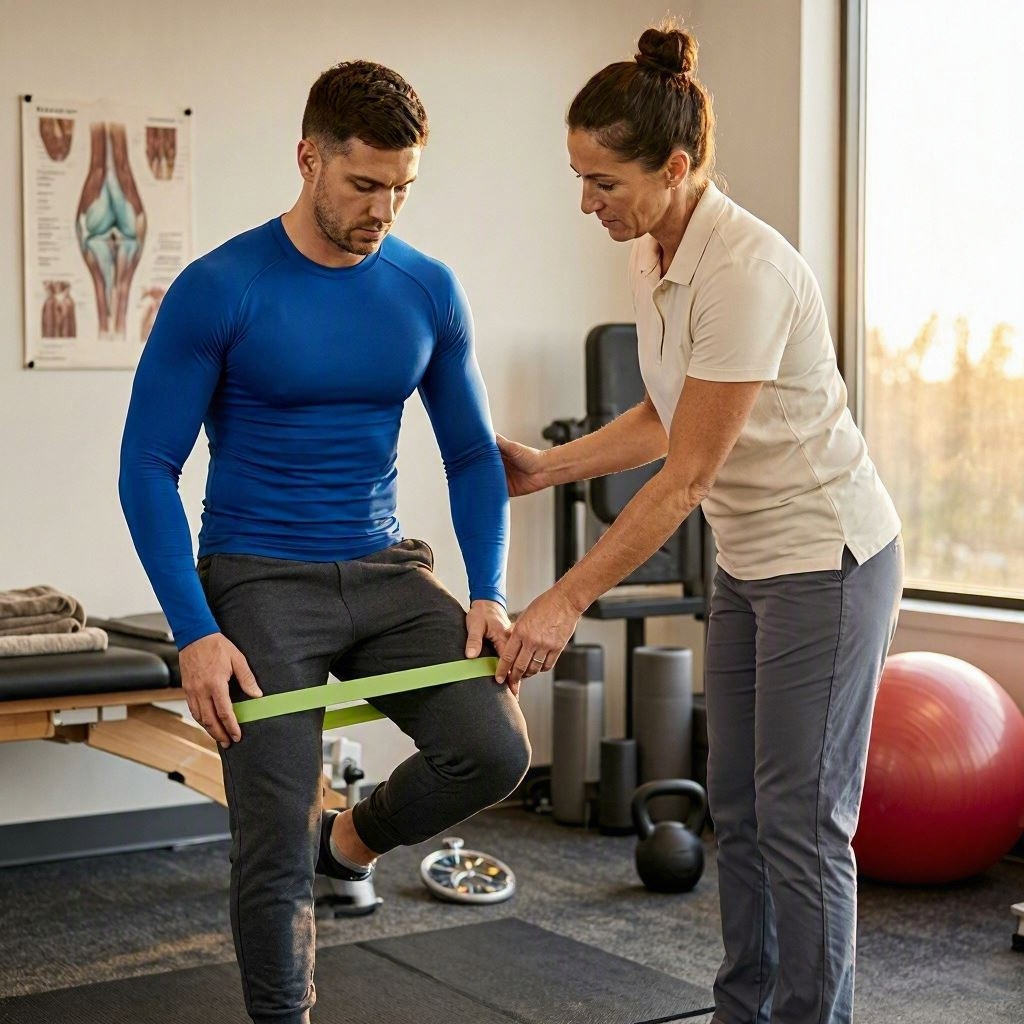
Resistance bands
Free weights
Resistance machines
Single-leg exercises
Core strengthening
Sport-specific resistance exercises
Progressive resistance training allows the body to gradually adapt to increasing demands.
Improving Balance and Stability
Balance and stability are essential for athletes because many sports involve unpredictable movement.
Athletes must control their bodies while:
Landing
Running
Jumping
Turning
Stopping
Changing direction
Contacting opponents
Balance exercises may include single-leg activities, dynamic reaching, controlled landing drills, and sport-specific stability exercises.
As the athlete improves, exercises can become more complex and dynamic.
Movement Retraining (Physiotherapy for Return to Sport)
After an injury, athletes may unconsciously change their movement patterns.
For example, someone recovering from a lower-limb injury may avoid loading the affected side. Even after symptoms improve, this compensation may remain.
Movement retraining helps athletes develop more efficient and controlled mechanics.
A physiotherapist may assess:
Squatting
Lunging
Running
Jumping
Landing
Cutting
Lifting
Throwing
Correct movement patterns can be practiced progressively rather than immediately placing the athlete into full-speed sport situations.
Developing Core Stability
Core stability is important for transferring force between the upper and lower body.
A strong and well-controlled trunk can support movements involved in running, lifting, jumping, and rotational activities.
Core rehabilitation may include:
Planks
Dead bugs
Bird dogs
Controlled trunk rotations
Anti-rotation exercises
Functional lifting movements
Exercises should progress according to the athlete’s ability and sport requirements.
Sport-Specific Rehabilitation
General exercises are important during rehabilitation, but eventually athletes need to practice movements that closely resemble their sport.
A soccer player may need to progress toward:
Sprinting
Kicking
Cutting
Deceleration
Direction changes
A basketball player may need:
Jumping
Landing
Sprinting
Lateral movement
Rapid changes of direction
A tennis player may require:
Rotational movements
Lateral movement
Overhead activities
Repeated acceleration
Sport-specific exercises help prepare the body for real-world athletic demands.
Running Progression (Physiotherapy for Return to Sport)
Running should generally be reintroduced gradually after an injury that has affected the lower body.
A progression may begin with:
Walking
Walk-jog intervals
Easy continuous running
Increased running duration
Faster running
Acceleration drills
Sprinting
Sport-specific running
The progression depends on the injury, athlete, and sport.
Running volume should not increase dramatically from one stage to another.
Plyometric Training
Plyometric exercises develop the ability to produce and absorb force quickly.
They can be particularly important for sports involving jumping, sprinting, and rapid changes of direction.
Examples include:
Hopping
Bounding
Squat jumps
Box jumps
Lateral jumps
Drop landings
Plyometric exercises should generally be introduced after an athlete has developed sufficient strength and movement control.
Agility and Change-of-Direction Training
Many sports require athletes to move quickly in different directions.
Agility training can progress from predictable movements to more complex and reactive exercises.
Examples include:
Shuttle runs
Cone drills
Lateral movements
Deceleration drills
Cutting exercises
Reactive direction changes
The intensity should increase gradually as the athlete demonstrates appropriate control.
Managing Training Load (Physiotherapy for Return to Sport)
Training load is an important part of successful return-to-sport rehabilitation.
Athletes may need to gradually increase:
Training duration
Running distance
Exercise intensity
Resistance
Repetitions
Sprinting volume
Practice frequency
Increasing several factors simultaneously can create excessive physical stress.
A physiotherapist can work with coaches and athletes to develop a manageable progression.
Psychological Readiness
Physical recovery is not the only consideration when returning to sport.
Some athletes experience fear of reinjury or reduced confidence, particularly when performing movements associated with their original injury.
Gradual exposure to increasingly challenging activities can help athletes rebuild confidence.
For example, an athlete may progress from controlled jumping to higher jumps, then to repeated jumps, and eventually to sport-specific jumping under realistic conditions.
If anxiety or fear significantly affects participation, professional psychological support may also be appropriate.
Return-to-Sport Testing
Before returning to full competition, functional testing may be used to evaluate readiness.
Depending on the sport and injury, testing may include:
Strength tests
Single-leg strength tests
Hop tests
Jump tests
Balance tests
Agility drills
Running assessments
Sport-specific movements
Testing can provide useful objective information about an athlete’s physical capabilities.
However, no single test can guarantee that an athlete will not experience another injury. Return-to-sport decisions should consider the complete clinical picture.
Returning to Practice (Physiotherapy for Return to Sport)
Returning to practice can be different from returning to competition.
An athlete may initially participate in selected portions of training while limiting high-risk activities.
For example, the athlete might begin with:
Warm-up activities
Technical drills
Low-intensity conditioning
Controlled practice
Limited contact
Gradual full practice
This allows the body to adapt before full competitive demands are introduced.
Injury Prevention After Returning
Rehabilitation should not necessarily stop once the athlete returns to competition.
Preventive training can include:
Strength training
Mobility exercises
Balance work
Sport-specific conditioning
Proper warm-ups
Recovery sessions
Appropriate workload management
Athletes should continue addressing weaknesses identified during rehabilitation.
Recovery and Lifestyle
Training is only one part of athletic recovery.
Important recovery habits include:
Adequate sleep
Balanced nutrition
Proper hydration
Rest days
Stress management
Appropriate training progression
Insufficient recovery can reduce the body’s ability to adapt to increasing physical demands.
Common Return-to-Sport Mistakes
Several mistakes can interfere with rehabilitation.
Returning Too Quickly
Feeling better does not always mean the body is ready for competition.
Ignoring Weakness (Physiotherapy for Return to Sport)
Pain reduction without strength recovery may leave the athlete unprepared.
Skipping Rehabilitation
Inconsistent rehabilitation can delay progress.
Increasing Workload Too Fast
Large changes in training volume can place excessive stress on recovering tissues.
Ignoring Movement Quality
Poor technique may continue to place unnecessary stress on the body.
Comparing Recovery With Other Athletes
Every injury and recovery process is different. Comparing timelines can encourage athletes to progress faster than is appropriate for them.
When Should You See a Physiotherapist?
Professional physiotherapy may be appropriate if you experience:
Persistent pain
Reduced strength
Limited mobility
Recurrent injuries
Difficulty running
Problems jumping or landing
Balance difficulties
Reduced athletic performance
Fear of returning to sport
A physiotherapist can assess the athlete and create a personalized rehabilitation program.
Warning Signs That Require Medical Attention
Some symptoms require urgent medical evaluation.
Seek medical attention if you experience:
Severe pain following major trauma
Inability to bear weight
Significant deformity
Sudden weakness
Progressive numbness
Loss of consciousness
Chest pain
Difficulty breathing
Loss of bowel or bladder control
These symptoms may indicate a serious injury or medical condition.
Conclusion (Physiotherapy for Return to Sport)
Physiotherapy for return to sport provides athletes with a structured pathway from injury recovery to training and competition. A successful program addresses much more than pain. It considers strength, mobility, balance, stability, coordination, movement mechanics, training load, psychological confidence, and sport-specific demands.
The return-to-sport process should be progressive and individualized. Athletes should first restore basic movement and physical capacity before progressing toward running, jumping, agility, and sport-specific activities. Functional testing and professional assessment can provide additional information when determining readiness.
With consistent physiotherapy, appropriate exercise progression, proper recovery, and continued injury-prevention training, athletes can work toward a confident and sustainable return to their sport. The ultimate objective is not simply to get back on the field or court, but to rebuild the physical capacity needed to participate safely and perform effectively over the long term.